
FAAC Gate Repair in Chula Vista: A Homeowner’s Guide
FAAC gate repair in Chula Vista usually comes down to one of three things: a hydraulic fluid issue that every technician should catch but many skip, a control board that’s actually fine but got blamed anyway, or a mechanical component worn past tolerance on a system that’s seen ten-plus years of daily cycles. If you’d rather skip the diagnosis rabbit hole and have someone who works on FAAC every week handle it, call (833) 593-7101. Otherwise, here’s what you need to know before you book anyone.
We pulled a 400-series operator out of a hillside property over in Rolling Hills Ranch last month where the homeowner had been quoted $1,800 for a new control board by another company. The actual problem was a capacitor that cost under forty dollars. That’s not an unusual story in Chula Vista, and it’s exactly why FAAC owners need baseline knowledge before a tech ever touches the gate.
Why FAAC Gates Get Misdiagnosed in Chula Vista
FAAC’s hydraulic operators are engineered to a tighter tolerance than most North American brands. LiftMaster, Linear, and Elite operators dominate the Chula Vista market, which means most local technicians learned their craft on electromechanical systems with entirely different failure profiles. When that tech encounters a FAAC, the diagnostic logic that served them well on a LiftMaster gets applied to a machine it doesn’t fit.
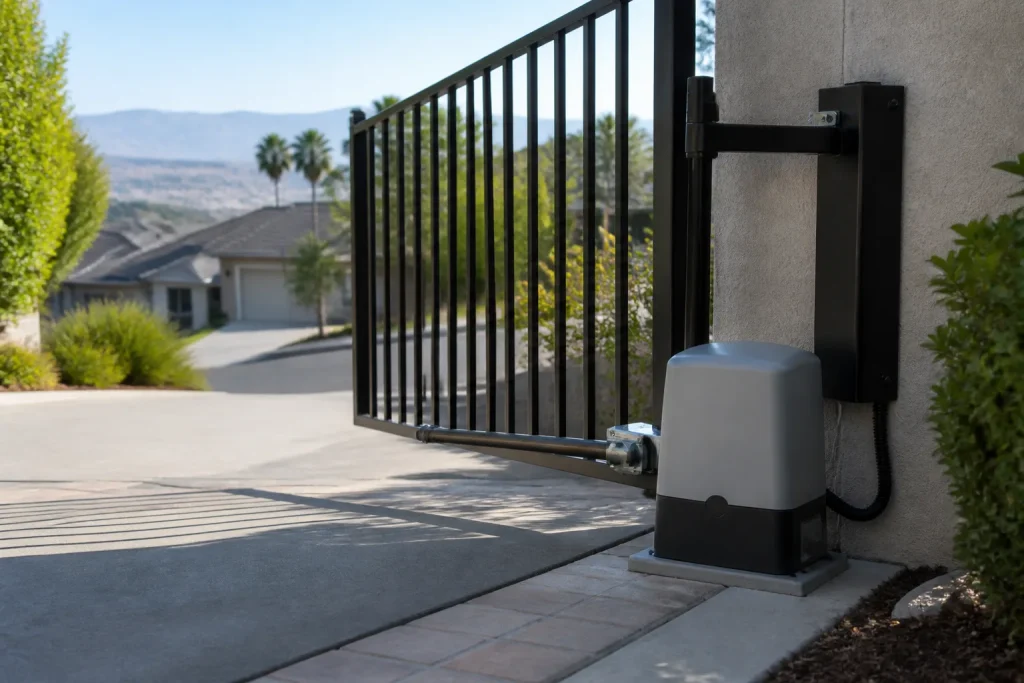
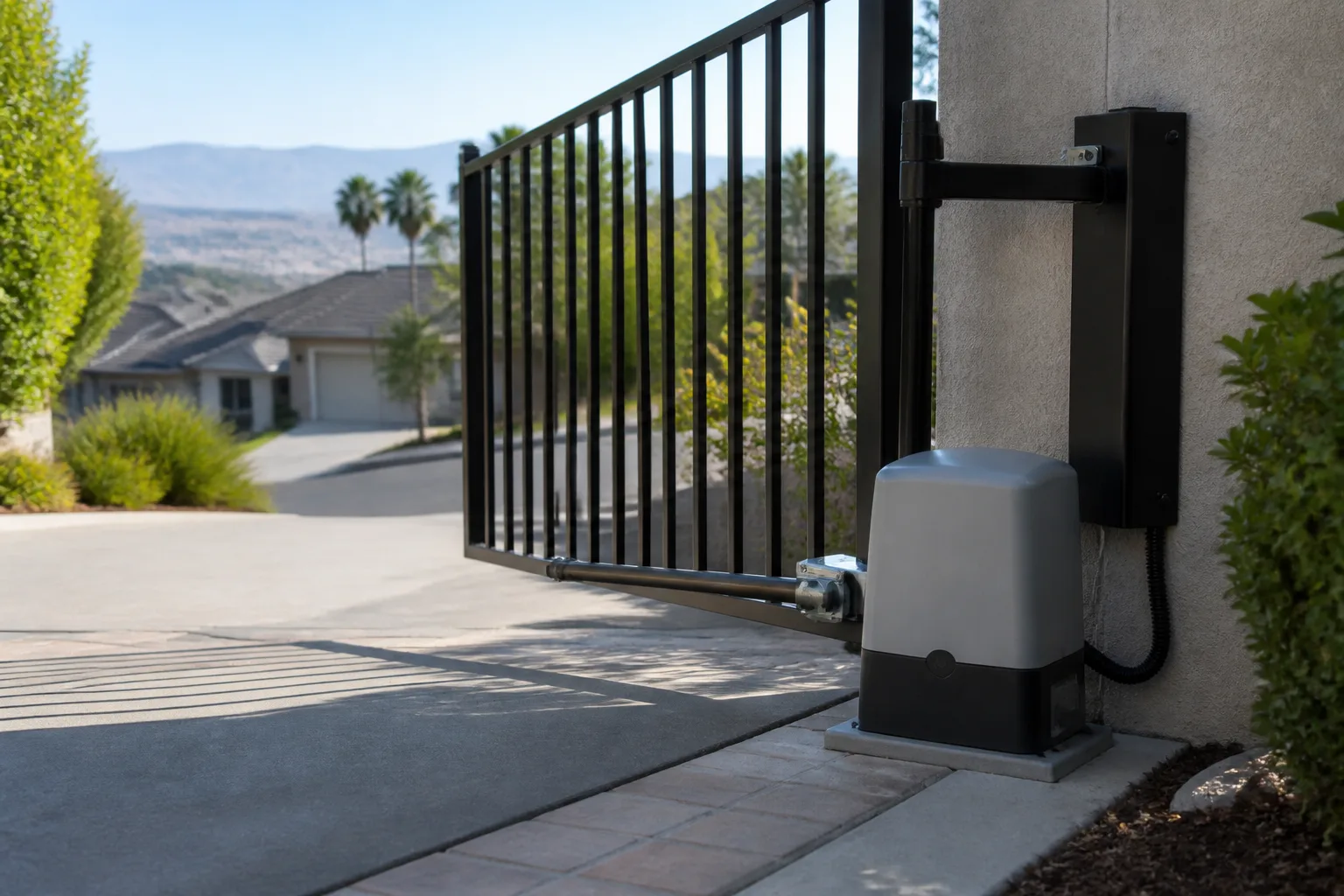
Here’s what that looks like in practice: FAAC hydraulic systems move the gate using pressurized fluid rather than a direct-drive motor and chain assembly. When a hydraulic FAAC gate starts moving slowly or stops mid-cycle, a tech unfamiliar with the brand often assumes the motor is failing. In reality, the hydraulic fluid level is low, or the fluid has degraded to the point where it can’t maintain proper pressure. The repair is an hour of work and minimal parts. The misdiagnosis is a motor replacement quote.
We work on your brand. That’s the whole point of being a Gate Repair Chula Vista home specialist rather than a generalist. When a FAAC shows up on the work order, we already know which series it is, what it’s supposed to sound like, and what typically fails at the ten-year mark in this climate. Chula Vista’s salt air and heat cycles create specific wear patterns on hydraulic seals and control board connectors. If your technician isn’t thinking about those local conditions, they’re guessing.
This is the core of what makes FAAC repair different from general gate work: the brand rewards technicians who understand its engineering philosophy. It punishes everyone else, and the homeowner pays for that punishment.
FAAC 400-Series vs. 500-Series vs. 800-Series: What You Own Matters
Before you call anyone for FAAC gate repair in Chula Vista, look at your operator housing and find the series number. The repair profile for each series is different enough that describing your system accurately over the phone will tell you immediately whether the person on the other end knows FAAC or is just nodding along.
FAAC 400-series: This is the residential workhorse, most commonly found on single-family driveway gates in Chula Vista neighborhoods like Eastlake and Otay Ranch. The 400-series uses a hydraulic piston system, and its most common failure points are the hydraulic fluid and the release mechanism. When a 400-series gate won’t open fully but the motor runs, it’s almost always a fluid-level or pressure issue, not a control board problem. These units are generally the easiest to repair, and parts are the most readily available in San Diego County.
FAAC 500-series: These are mid-range operators that show up on larger residential properties and light commercial applications. The 500-series runs hotter than the 400-series because it’s designed for heavier gates and more cycles per day. In Chula Vista, where summer temperatures regularly push into the 90s, that heat accelerates capacitor degradation on the control board. A 500-series that works fine in the morning but fails in the afternoon heat often has a heat-related capacitor issue that’s a simple component swap, not a board replacement.
FAAC 800-series: These are heavy-duty commercial operators, typically found on multi-unit complexes, industrial properties, and HOA entrances across Chula Vista. The 800-series is built for high-cycle use, but it’s also the most likely to be neglected because property managers assume commercial equipment doesn’t need regular maintenance. The most common 800-series failure we see is limit switch drift from mechanical wear, which causes the gate to stop short or overtravel. This requires recalibration and sometimes switch replacement, both of which are straightforward for a technician who knows FAAC’s adjustment procedure.
Know your series number before you call. It filters out the wrong technicians instantly.
FAAC Fault Codes: What E1, E2, and E5 Actually Mean
FAAC control boards display fault codes that tell you exactly what the system thinks is wrong. The problem is that these codes are diagnostic starting points, not final answers. A technician who reads an E1 and immediately quotes a board replacement didn’t actually diagnose anything. Here’s what the common codes mean in plain language:
- E1 (obstruction detected): The gate hit something or thinks it hit something. In Chula Vista, brush and vegetation encroaching on gate tracks is a constant issue, especially on canyon-facing properties. Before anyone quotes parts, check that the track is clear. If that’s clean, the issue is likely a safety edge or photo-eye misalignment. These are adjustment or cleaning fixes most of the time.
- E2 (motor overload): The system is working harder than it should. On a hydraulic FAAC, this often traces back to degraded fluid forcing the pump to strain. It can also mean the gate itself has a mechanical binding issue, like a hinge seizing up in the salt air common near Chula Vista’s western neighborhoods. A skilled tech checks the fluid and the mechanics before touching the motor.
- E5 (limit switch error): The gate can’t find its open or closed position. On 800-series units, this is usually mechanical wear on the limit switch assembly. On 400-series units, it can be a control board programming issue that a reset procedure resolves without any parts at all.
This is your accountability tool. When a technician tells you what’s wrong with your FAAC, ask which fault code the board is showing and what specifically that code led them to check. If they can’t walk you through that chain of reasoning, they’re not doing FAAC-level diagnosis. They’re doing parts replacement.
The Control Board Replacement Upsell: When It’s Legitimate vs. Not
Here’s the uncomfortable reality of FAAC gate repair in Chula Vista: control board replacement is the most profitable repair a technician can sell you, and it’s the one most likely to be recommended before the actual diagnosis is complete. FAAC boards are expensive, ranging from $400 to over $1,200 depending on the series, and installation is quick. From a business perspective, it’s a great ticket. From a homeowner’s perspective, it’s a great scam if the board wasn’t actually the problem.
Legitimate board replacement looks like this: visible damage to the board itself, burnt traces from a power surge, water intrusion that’s corroded the connectors, or multiple failed components on the board confirmed through testing. These are real failures that happen to FAAC systems in Chula Vista, particularly on properties near the coast where salt air accelerates corrosion.
Illegitimate board replacement looks like this: the gate won’t open, the board shows any fault code at all, and the tech says “it’s the board” without testing individual components. In our experience, a significant percentage of FAAC boards blamed for failure are actually fine. The problem is a bad capacitor, a failed relay, a disconnected sensor wire, or low hydraulic fluid. These are repairs that cost a fraction of a board replacement and take similar time to complete.
The question to ask before approving any board work: “What specifically on the board failed, and which components did you test to confirm that?” Demand an answer, not a shrug. A real FAAC tech will tell you exactly what they found. Anyone who can’t should not be replacing your control board.
Parts Availability in Chula Vista and San Diego County
FAAC parts in Chula Vista are available, but they’re not always sitting on a shelf waiting for you. This is a real factor in repair timelines, and you should ask about component sourcing before signing any estimate. Here’s what the parts landscape looks like right now for FAAC systems in Chula Vista:
Common wear items like hydraulic fluid, capacitors, safety edge components, and basic mechanical parts are generally available same-day or next-day through local distributors that serve San Diego County. These are the parts you need for routine repairs, and any established gate specialist in Chula Vista should either stock them or be able to get them within 24 hours.
FAAC-specific electronic components are a different story. Series-specific control boards, certain limit switch assemblies, and proprietary hydraulic pump components are often special-order items with lead times ranging from three days to two weeks depending on the distributor’s inventory. If a technician tells you the part is three days out, that’s normal. If they tell you they’ll have it same-day and it’s a proprietary FAAC board, be skeptical.
What to ask before you sign: “Do you have this part locally, or are you sourcing it from a distributor? What’s the realistic lead time?” A straight answer tells you you’re dealing with someone who actually does this work in Chula Vista rather than someone figuring it out as they go. Our approach at Gate Repair in Chula Vista is simple: we tell you the lead time before you commit to anything. No surprises.
One more local reality worth knowing: if you have an older FAAC model that’s been discontinued, aftermarket and refurbished parts become the path forward. This is where brand-specific knowledge matters most. Knowing which aftermarket components are reliable and which aren’t is the difference between a fix that lasts and a fix that fails in six months.
What a Proper FAAC Repair Visit Should Include
When you book FAAC gate repair in Chula Vista, the technician should do more than swap a part and drive away. FAAC systems, particularly the hydraulic series, require a specific maintenance checklist that directly affects repair outcomes. Here’s what a complete visit includes:
- Hydraulic fluid level and condition check: This applies to 400-series and other hydraulic FAAC models. The fluid level should be checked on every visit, and the fluid type must match FAAC’s specification. Using the wrong fluid degrades seals and shortens component life. Ask your tech if they checked the fluid and what they found. If they didn’t, they skipped the most basic FAAC diagnostic step.
- Component-level board testing: A real technician tests the board’s individual components rather than reading a fault code and concluding the board is dead. This is the single biggest differentiator between skilled FAAC work and parts-swapping.
- Mechanical inspection of the gate itself: The operator and the gate are one system. Hinges, wheels, tracks, and posts all affect how the operator performs. In Chula Vista’s salt air, metal components corrode faster than inland locations, so this inspection matters more here than it would in, say, El Cajon.
- Safety system verification: Photo eyes, safety edges, and loop detectors should be tested after any repair to confirm they’re still functioning. A gate that opens and closes but doesn’t stop for an obstruction is a liability, not a repair.
- Cycle testing: After the repair, the gate should be run through multiple full cycles to confirm the problem is actually solved, not just temporarily disappeared.
If a technician does all five of these things, you’re in good hands. If they replace a part and leave without checking fluid or testing cycles, call someone else next time.
When to call a pro: if your FAAC gate is showing fault codes, moving erratically, or making sounds it didn’t make before, and you’re not certain what’s causing it, that’s the moment to stop guessing and get a dedicated gate technician involved. Hydraulic fluid is pressurized, and control board testing without proper training risks further damage. This is not a YouTube tutorial situation. If you need Electric Gate Repair in Chula Vista, we handle both the mechanical and electronic sides of every FAAC series.
The Bottom Line
FAAC gate repair in Chula Vista requires a technician who knows the brand’s engineering philosophy, checks hydraulic fluid on every visit, tests board components before recommending replacement, and gives you straight answers about parts lead times. That combination is rarer than it should be in this market, which is why FAAC owners benefit enormously from knowing their series number, understanding their fault codes, and asking the right questions before work begins.
If you’re in Chula Vista and your FAAC needs attention, we can help. Gate Installation in Chula Vista is also part of what we do, so whether you need a repair on an existing FAAC or a full replacement down the line, the same team handles it. Call (833) 593-7101 for a free estimate. We’ll tell you what’s wrong, what it costs to fix, and how long parts will take, before any work starts.
Frequently Asked Questions
FAAC gate repair in Chula Vista typically ranges from $150 to $600 for most common repairs, including hydraulic fluid service, capacitor replacement, limit switch adjustment, and safety edge replacement. Control board replacement runs higher, typically $400 to over $1,200 depending on the series. Get a written quote before work starts, and ask what specifically was diagnosed rather than accepting a board replacement recommendation at face value. Call (833) 593-7101 for an exact quote on your system.
If your FAAC gate stops mid-cycle and reverses, the most likely causes are an obstruction triggering the safety system, low hydraulic fluid causing insufficient pressure to complete the cycle, or a binding hinge or wheel creating mechanical resistance. Fault code E1 specifically indicates the system detected an obstruction. Check that the track is clear of brush and debris first, which is a common issue for Chula Vista canyon properties. If the track is clear, have a technician check fluid and mechanical components.
Yes. Many FAAC control board issues are repairable at the component level, particularly failed capacitors, relays, and corroded connectors. A technician with genuine FAAC experience will test individual board components before recommending replacement. A technician who reads a fault code and immediately quotes a board replacement without component testing is not doing FAAC-level work. Always ask what specifically failed on the board before approving replacement.
Yes. We handle both residential and commercial FAAC gate systems throughout Chula Vista, including the 800-series operators common on multi-unit and HOA properties. The same brand-specific diagnostic approach applies whether it’s a single-family driveway gate in Eastlake or a high-cycle commercial entrance off Telegraph Canyon Road. Call (833) 593-7101 to schedule service.
Written by the team at Gate Repair Chula Vista, serving Chula Vista since 2016.
Need Gate Repair Help?
Call Gate Repair Chula Vista - licensed & insured, here with fast help in Chula Vista.
(833) 593-7101