
Last updated November 2, 2026
 Wrought iron
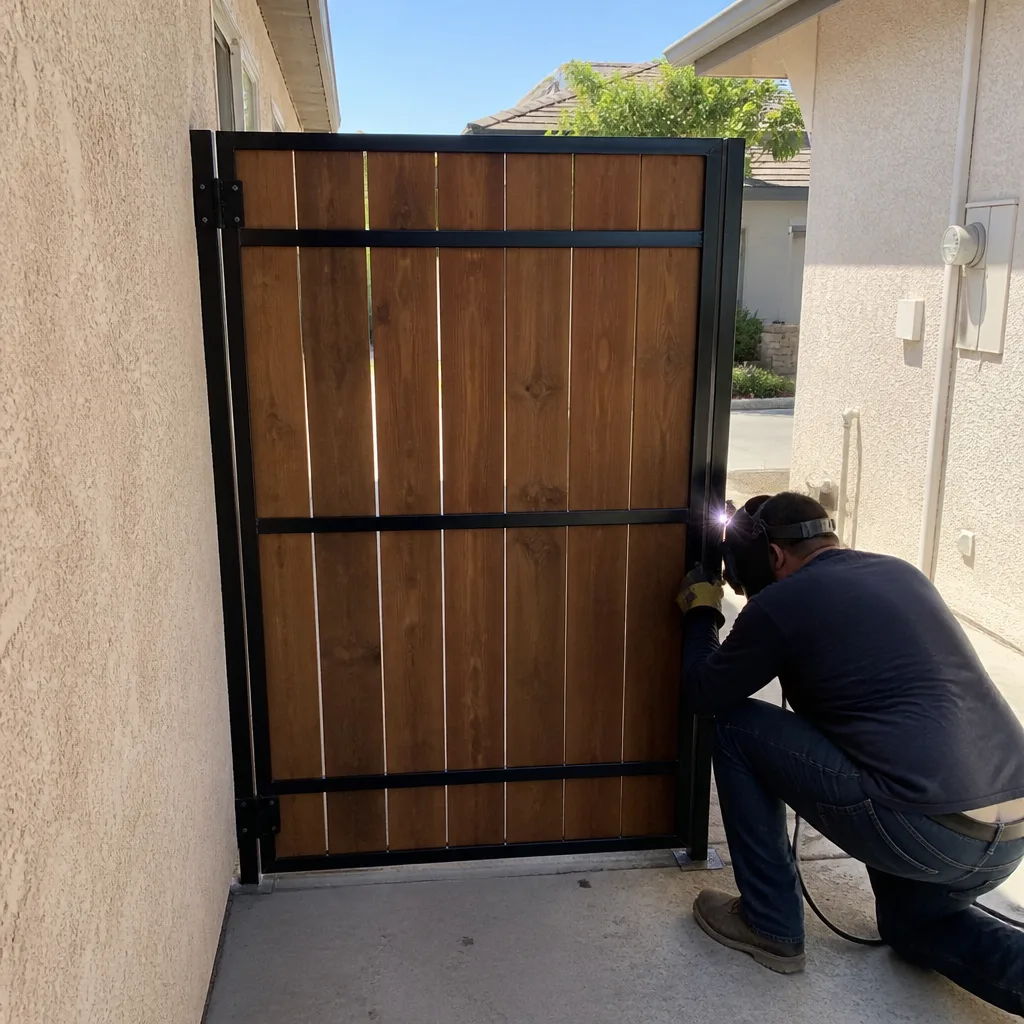
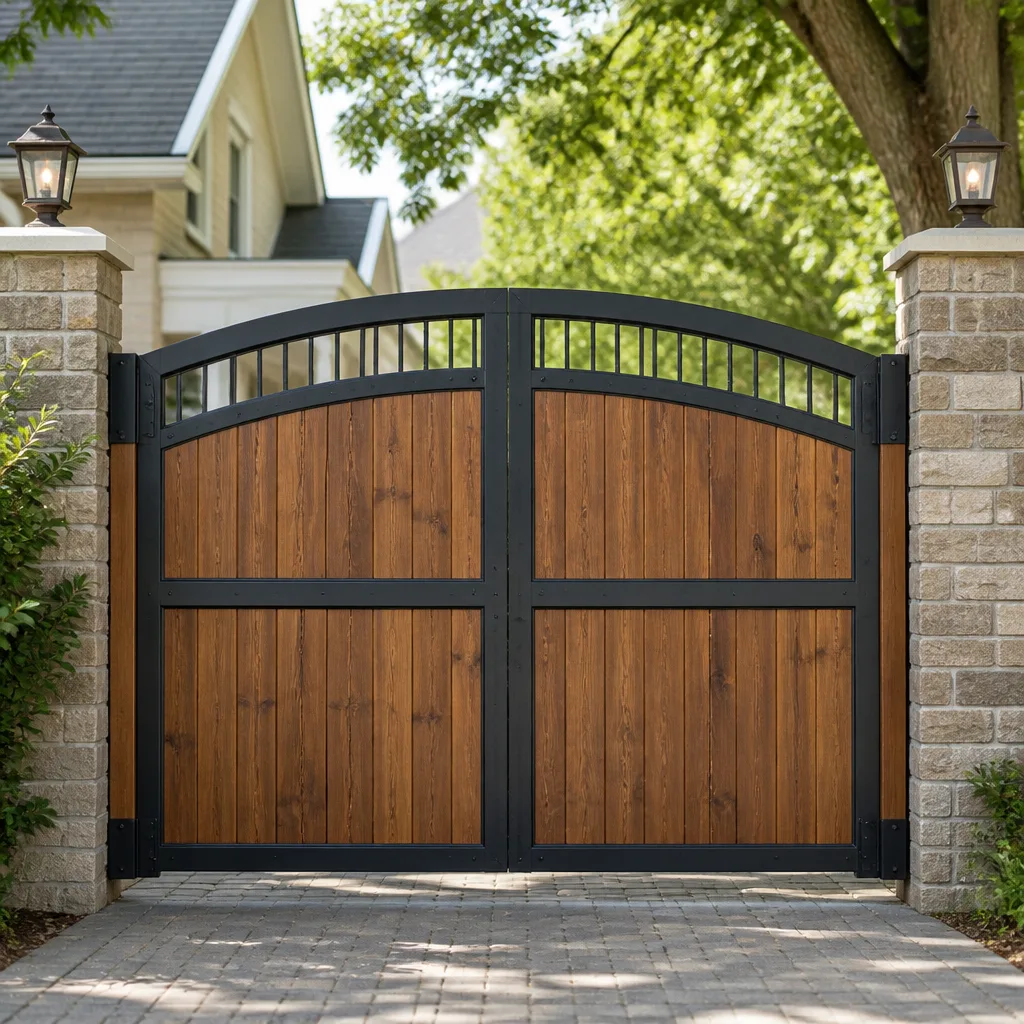 Wood & steel frame
 Farm & ranch
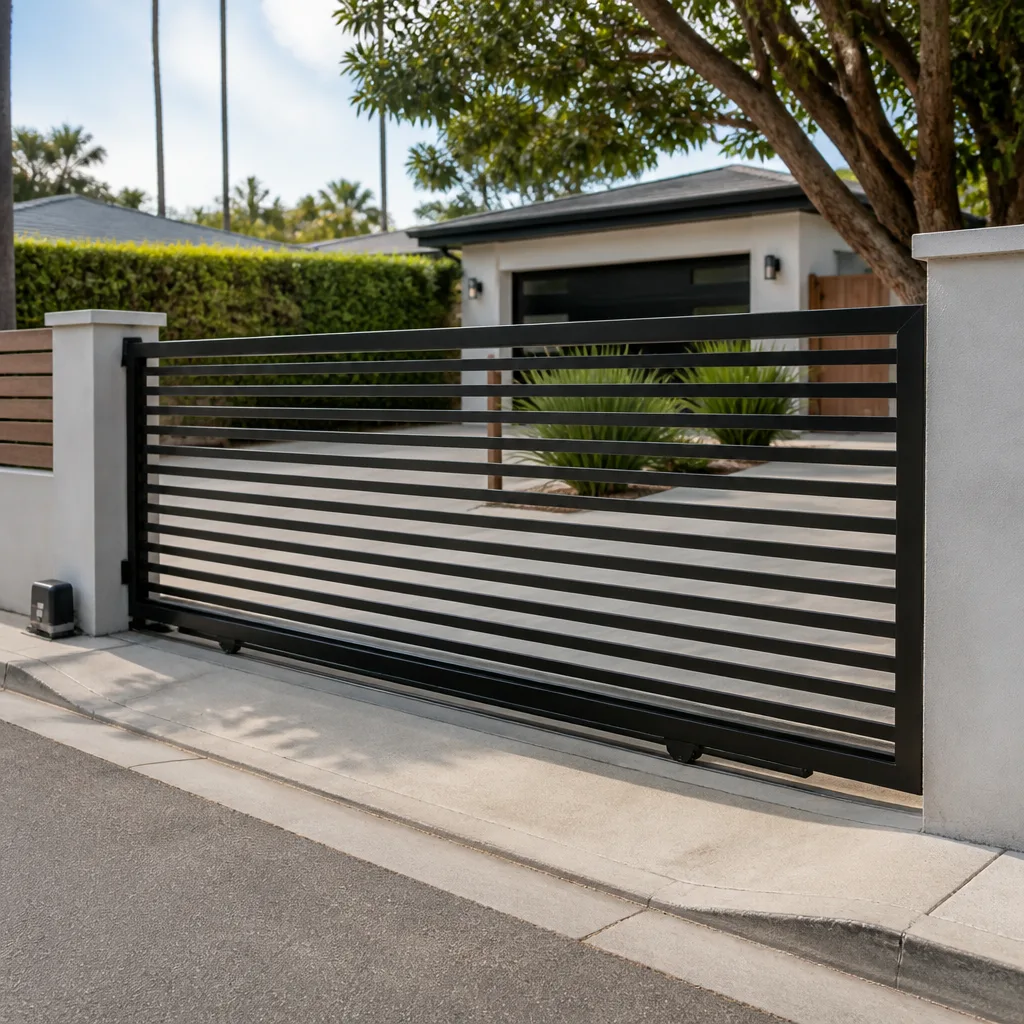 Sliding driveway gates
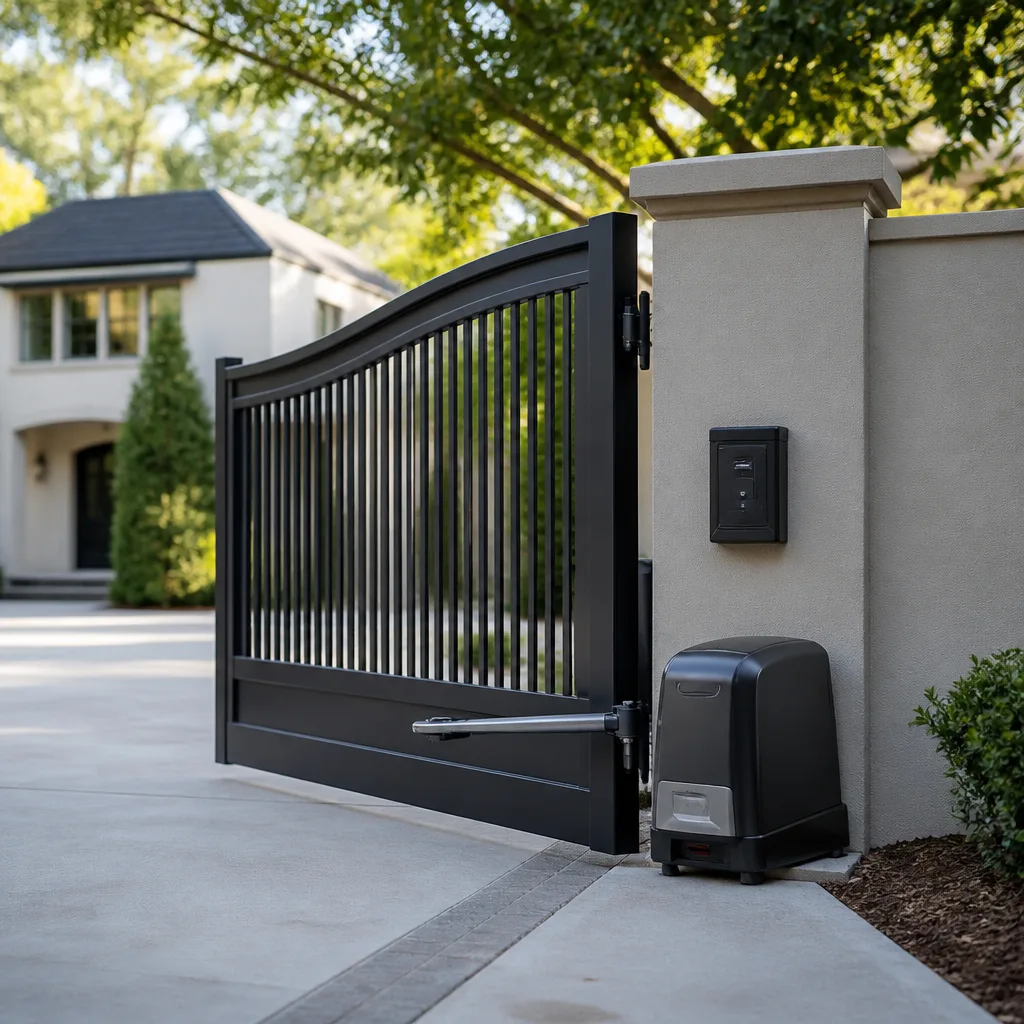 LiftMaster operators
Free on-site gate assessment - hinges, posts, and your LiftMaster or Nice gate operator checked before anything is quoted
The assessment is free and the quote is the invoice.
Get your free estimateSeasonal Gate Repair Care for Chula Vista: Year-Round Homeowner’s Guide
Santa Ana wind events routinely push gate leaves past their mechanical stop limits, bending hinge arms in a single afternoon in ways that don’t show obvious damage until the motor starts straining three weeks later. Chula Vista doesn’t have four distinct seasons in the traditional sense. What we actually get are two gate-stressing periods: the June Gloom moisture window and the November Santa Ana wind corridor. This guide lays out exactly what to check, when to check it, and why a calendar built around Chula Vista’s real weather patterns beats any generic seasonal maintenance chart. For The Complete Gate Repair Guide for Chula Vista Homeowners and more detailed breakdowns, see our resources section. By the end, you’ll know which components fail first in our climate, how to spot early warning signs across LiftMaster, FAAC, BFT, and Linear operators, and what a month-by-month maintenance routine actually looks like for gates in neighborhoods from Eastlake to Bonita.
Styles & brands we work with
- Wrought iron
- Wood & steel frame
- Farm & ranch
- Sliding driveway gates
- LiftMaster operators
Quick Answer
Seasonal gate care in Chula Vista means running two major inspection cycles each year: one in late spring before June Gloom’s sustained humidity settles in, and one in early fall before Santa Ana winds arrive. The most important tasks are cleaning and sealing electrical contacts, checking hinge and weld integrity after wind events, testing battery capacity on solar-powered operators before summer heat peaks, and verifying that gate posts haven’t shifted after heavy rain. A twice-yearly deep inspection plus monthly visual checks keeps most gate systems running reliably year-round without major repair bills.
Table of Contents
- Why Chula Vista Weather Is Different From Every Generic Gate Maintenance Guide
- The June Gloom Moisture Window: Why Humidity Without Rain Corrodes Faster Than Storms
- Santa Ana Prep Protocol: Checks to Run Before and After Eastern Chula Vista Wind Events
- Summer Heat and Solar-Powered Gate Operators: Why January Benchmarks Fail in August
- Winter Rain Response: What to Inspect After Heavy Downpours Shift Posts and Flood Conduit
- Month-by-Month Chula Vista Gate Maintenance Table
- Brand-Specific Maintenance Notes: LiftMaster, FAAC, BFT, and Linear
- Common Mistakes to Avoid
- When to Call a Professional
- Frequently Asked Questions
- The Bottom Line
Why Chula Vista Weather Is Different From Every Generic Gate Maintenance Guide
Most gate maintenance articles are written for places with snow, freezing temperatures, and distinct spring and fall service windows. Chula Vista’s climate operates on a completely different logic. We get roughly 10 inches of rain per year, almost all of it between December and March. We get marine layer moisture that sits on surfaces for hours every morning from May through July. We get offshore wind events that hit 40 to 60 mph in the eastern foothills. And we get summer temperatures that routinely exceed 90 degrees in inland neighborhoods while staying 15 degrees cooler near the bay.
Each of these conditions creates a specific failure pattern in gate hardware. The salt-tinged marine air accelerates rust on hinges, bolts, and control board connections. The Santa Ana winds load gate leaves laterally in ways the original installation rarely accounted for. The temperature swings between coastal and inland Chula Vista mean that two identical gates installed five miles apart can age at measurably different rates.
We work on gates throughout the city, and the patterns are consistent. Gates in the Otay Ranch and Eastlake areas see more wind-related hinge and limit switch failures. Gates near the bay see more corrosion on exposed electrical connections, even when the gates themselves are covered. If you’re planning maintenance around a generic national schedule, you’re reacting to problems late. A Chula Vista-specific schedule catches issues before they become breakdowns.
This guide is built around those two dominant stress windows plus the heat and rain events that follow them. It’s the same structure our technicians use when we run preventive maintenance on gate repair in Chula Vista systems, residential and commercial alike.
The June Gloom Moisture Window: Why Humidity Without Rain Corrodes Faster Than Storms
June Gloom in Chula Vista means low marine layer clouds that sit over the city for weeks, keeping relative humidity between 70 and 90 percent for hours at a stretch. The surprising part is that this sustained moisture causes more electrical corrosion damage than our actual rainstorms do. Rain is intermittent and usually followed by dry air. June Gloom is relentless, and the thin film of condensation it leaves on metal surfaces never fully evaporates before the next morning’s moisture arrives.
Here’s what happens inside your gate operator’s control board during a typical June Gloom stretch. The board sits inside a metal or plastic housing, but that housing breathes. Warm daytime air inside the housing cools overnight, drawing in humid outside air. That humidity condenses on the board, the terminal strip, and the relay contacts. Day after day, week after week. The result is microscopic corrosion on electrical connections that eventually causes intermittent faults: the gate opens but won’t close, the remote works sometimes but not others, the safety loop trips mysteriously.
What to do during the June Gloom window:
- Open the operator housing and look for any visible moisture, white corrosion powder, or green oxidation on terminals
- Check that the housing gasket is still sealing properly and hasn’t cracked from sun exposure
- Apply dielectric grease to exposed electrical connections to create a moisture barrier
- Verify that weep holes in the bottom of the housing are clear and not blocked by debris
- Test the gate’s full open and close cycle in the morning when humidity is highest
One specific component that fails repeatedly during June Gloom is the safety loop detector. These loop wires sit in saw cuts in the driveway, and when moisture infiltrates the sealant, the detector reads a false vehicle presence, causing the gate to refuse to close. If your gate starts behaving erratically in May or June, that’s often the culprit.
We recommend scheduling your June Gloom prep inspection in late April or early May, before the marine layer settles in for its longest stretch. By the time the mornings are consistently overcast, your electrical connections should already be sealed and your gasket checked.
Santa Ana Prep Protocol: Checks to Run Before and After Eastern Chula Vista Wind Events
Santa Ana winds are the single most destructive weather pattern for gates in Chula Vista. They typically arrive between September and November, blowing from the northeast at sustained speeds of 30 to 40 mph with gusts above 60. For neighborhoods east of the 805 and along the Otay foothills, those gusts hit gates with sustained lateral force that most installations were never designed to handle.
Here’s what happens mechanically. A gate leaf that’s six feet wide presents roughly 42 square feet of surface area. A 50 mph gust hits that leaf with about 260 pounds of force, and that force is concentrated at the outermost edge. The result is torque on the hinge points that can bend hinge arms, elongate bolt holes, and push the gate past its mechanical stop. The post itself may not move, but the hardware connecting gate to post takes a beating. And the damage isn’t always obvious. A hinge arm that’s slightly bent may still let the gate operate fine, but the motor now has to work against misalignment, and that extra strain shows up as a burned-out motor or stripped gear three weeks later.
Before Santa Ana season, run this checklist:
- Inspect every hinge bolt for tightness. Use a torque wrench if you know the spec, and replace any bolt that shows wear or rust streaks
- Check weld points where hinge arms attach to the gate frame. Look for hairline cracks starting at the edge of the weld
- Verify that mechanical stops are properly set so the gate can’t travel past its intended range
- Remove any loose items from the gate path, including decorative planters, trash bins, and yard tools
- Test the operator’s force settings. If the gate senses resistance and reverses, make sure the force limit isn’t set so high it will push through an obstruction and damage itself
- Lubricate hinge pins and pivot points with a dry lubricant that won’t collect blowing dust
After each significant wind event, do a quick visual inspection. Look for gap changes between gate and post, listen for any new grinding or straining sound during operation, and check that the gate still stops at the same open and closed positions. If anything changed, address it immediately rather than waiting for the next maintenance cycle. A gate that’s been pushed past its stops will put accelerated wear on the operator every single day until it’s corrected.
For electric operators, wind events also test the clutch or force settings. A properly adjusted clutch should slip rather than burn out the motor when the gate meets unexpected resistance. If someone has tightened the clutch to fix a sagging gate instead of fixing the sag itself, the first serious Santa Ana event can destroy the operator. That’s a pattern we see regularly with DIY repairs and handyman fixes.
Summer Heat and Solar-Powered Gate Operators: Why January Benchmarks Fail in August
Solar-powered gate operators are popular throughout Chula Vista, especially in properties with long driveway runs where running conduit for line power would be expensive. But solar systems age differently than line-powered operators, and the failure pattern is very specific to our climate.
Here’s the basic dynamic. A solar gate operator runs on a 12-volt or 24-volt battery bank that’s charged by one or more solar panels. The panels produce less power as they age, and the batteries hold less charge as they age. In January, with mild temperatures and shorter gate usage, a degraded system may still function fine because the battery never gets deeply discharged. In August, two things happen: the operator’s motor works harder because high temperatures increase internal resistance, and the battery’s effective capacity drops because heat accelerates chemical degradation and increases self-discharge.
That’s why a battery that passes a January capacity test can fail entirely in August. The heat doesn’t cause the failure. It exposes a battery that was already marginal. This is the most common reason we get solar gate service calls in late summer across Chula Vista, particularly from Otay Ranch and Eastlake where summer temps routinely push past 90 degrees.
What to check on solar systems during summer:
- Run a full cycle count test. Have the gate run ten consecutive open-close cycles and watch for any slowing or stalling on later cycles
- Check battery voltage at rest and under load. A battery showing 12.7 volts at rest but dropping below 10.5 under full motor load needs replacement
- Inspect the solar panel surface for dust, bird droppings, and pollen buildup that reduces charging efficiency
- Verify that the panel angle hasn’t shifted, especially after winter storms
- Test whether the gate completes a full cycle on battery power alone, without solar input, as a diagnostic baseline
If your solar operator has been installed for more than three years, assume the battery is approaching end of life and plan for replacement before summer rather than during it. The cost of a new battery is minor compared to the cost of a dead gate at the worst possible moment. And if your operator is a Mighty Mule or Ghost Controls residential unit, the battery is typically an easy field replacement. If it’s a BFT or FAAC system, the battery configuration may be more involved and worth having a professional evaluate.
Winter Rain Response: What to Inspect After Heavy Downpours Shift Posts and Flood Conduit
Chula Vista’s rain comes fast and hard when it comes at all. A storm that drops two or three inches in a day is enough to saturate the clay-heavy soils in many parts of the city, and saturated soil behaves differently than dry soil. Posts that have been stable for years can shift when the ground around them turns to mush, especially if the original concrete footing was undersized or if drainage has eroded soil away from the base over time.
After any significant rain event, check the following:
- Walk the full gate path and look for changes in clearance between the gate leaf and the ground or the post
- Open and close the gate manually, if your operator allows manual disengagement, to feel for new binding or resistance
- Inspect the area around each post for pooling water, soil erosion, or visible settling cracks in concrete
- Check any below-ground conduit runs for water intrusion by looking for moisture inside junction boxes or operator housings
- Test the safety loop detector, as wet soil can throw off the loop’s inductance reading and cause false obstruction signals
- Look at the gate’s alignment relative to the post. Even a quarter-inch shift at the hinge point translates to a much larger movement at the latch side
Post shifting is the most serious rain-related problem because it doesn’t self-correct. Once a post has moved, every cycle puts additional stress on the hinges, the latch, and the operator. The gate may still function, but the wear accelerates, and eventual failure is just a question of time. If you catch a slight shift early, it can often be corrected by re-shimming the hinges or adjusting the gate leaf. If you catch it late, it means pulling and resetting the post in a new concrete footing, which is a significantly bigger job.
For properties in Bonita and the lower-lying areas near the Sweetwater River, water intrusion into underground conduit is the more common issue. Water that gets into a conduit follows the pipe to the lowest point, which is often the junction box at the operator. From there, it’s a straight path into the control board connections. After any big storm, open the junction boxes, check for moisture, and reseal any conduit fittings that show signs of cracking or separation.
Month-by-Month Chula Vista Gate Maintenance Table
This is the schedule our technicians recommend for Chula Vista gates, complementing our Choosing the Right Gate Repair Brand: A Buyer’s Guide for Chula Vista. It’s built around the actual climate patterns we experience, not a generic four-season template. Each month lists only the tasks that matter for that specific time of year.
- January: Post-rain inspection. Check posts for shifting, test for water in conduit runs, inspect electrical connections for corrosion from winter moisture. Clean debris from gate track if you have a sliding gate.
- February: Grease and lubricate all moving parts: hinges, pivot points, roller bearings on sliding gates. Check limit switches on both open and close positions. Test the reversing mechanism.
- March: Test the safety loops and photo eyes. Clean photo eye lenses with a soft cloth. Check gate frame for rust spots and sand and repaint any exposed metal before summer.
- April: Start June Gloom prep. Open operator housing, inspect gasket integrity, apply dielectric grease to connections, check for corrosion powder on terminals.
- May: Full moisture audit. Review all electrical junctions, check for condensation inside housings in the early morning, test gate performance at peak humidity. Verify that weep holes are clear.
- June: Mid-Gloom check. Run the gate through ten consecutive cycles and listen for any stutter or stalling. Test remote range, as moisture can degrade signal.
- July: Summer heat focus on solar systems. Check battery voltage under load, clean solar panels, test full-cycle performance when temperatures are highest.
- August: Peak heat battery evaluation. Any solar battery older than three years should be tested professionally. Listen for motor strain on hot afternoons.
- September: Start Santa Ana prep. Check hinge bolts, weld points, mechanical stops, and clutch settings. Clear the gate area of anything that could blow into the path.
- October: Full wind readiness audit. Lubricate with dry lubricant, verify that force settings are correct, confirm that the gate doesn’t travel past its stops.
- November: Post-wind inspection after each major event. Check for hinge arm strain, listen for new operating noises, re-check bolt tightness.
- December: Rain readiness. Verify that drainage around posts is clear, check conduit seals, test safety loops on wet ground. Confirm that the manual release works for storms that knock out power.
If this schedule feels like more than you want to manage yourself, we run seasonal maintenance inspections throughout Chula Vista, and we handle everything on this list as part of a single visit. You can find details on our gate installation in Chula Vista page, which also covers our maintenance recommendations for new systems.
Brand-Specific Maintenance Notes: LiftMaster, FAAC, BFT, and Linear
Different operators have different failure tendencies in Chula Vista’s climate. Knowing your brand helps you anticipate what to watch for.
LiftMaster: We see more LiftMaster operators in Chula Vista than any other residential brand. They’re reliable, but their control boards are sensitive to moisture, and June Gloom is the season when intermittent logic faults show up. If your LiftMaster gate starts acting erratically in May or June, the board is the first thing to inspect. Also check the belt tension on slide gates, as Chula Vista’s dusty summer air can cause accelerated belt wear if the tension is off.
FAAC: FAAC units are common in commercial and high-cycle residential settings. They’re robust, but their hydraulic operators depend on proper fluid level and clean hydraulic lines. Check fluid level twice a year, and watch for leaks at the hose fittings, especially after Santa Ana events when vibration can loosen connections. FAAC control boards are also prone to relay contact wear on systems that cycle frequently, so annual contact testing is a good practice.
BFT: BFT operators use a lot of enclosed gear boxes, which generally hold up well to Chula Vista dust. The weak point is the limit switch assembly, which can drift out of adjustment after repeated wind loading. If your BFT gate stops a few inches short of its normal travel position, the limit switch has almost certainly moved. Also inspect the manual release mechanism before rainy season, as a jammed release is harder to fix when the gate is stuck in the open position during a storm.
Linear: Linear operators are popular for simple residential swing gates, and their weakness is the circuit board’s sensitivity to voltage fluctuations. During summer heat waves, if the utility voltage dips, some Linear boards will reset to default settings, wiping out remote codes and travel limits. If your Linear gate loses its programming in August, this is usually why. All of these are patterns we address routinely as part of our electric gate repair in Chula Vista service, since brand-specific diagnosis is where generalist contractors struggle.
Common Mistakes to Avoid
- Lubricating with WD-40 or penetrating oil. These products wash out during June Gloom and leave hinges drier than before. Use a dry lubricant or specific hinge grease that stays in place through moisture cycles.
- Tightening the clutch or force setting to force a sagging gate to work. The gate sag is the problem. Increasing force to overcome it just moves the failure from the hinge to the motor or gearbox.
- Ignoring a gate that runs slower in the morning than it does in the afternoon. Morning sluggishness in Chula Vista often means the motor is working against moisture-swollen seals or corrosion-related resistance. The problem doesn’t go away when the gate warms up. It just becomes less obvious until the next failure.
- Waiting until the gate stops working to address a known solar battery issue. Replacing a degraded battery on a scheduled basis costs less than emergency service, and it prevents the gate from failing at the exact moment you’re leaving for work.
- Painting over rust on hinge bolts without removing the bolts first. The rust that matters is inside the bolt holes and the load-bearing surfaces. Paint on the outside hides the evidence while the bolt continues to weaken internally.
- Assuming a gate that survived last year’s Santa Ana season is fine for this year’s. Wind damage is cumulative. Each event stresses the hinge points further, and the failure often comes during the second or third season, not the first.
- Running a gate on a generator during a power outage without checking the generator’s waveform. Some operators, especially FAAC and BFT models, are sensitive to the dirty power from small portable generators and can fry the control board even when voltage looks correct.
When to Call a Professional
Some gate problems are residential-level maintenance tasks. Hinge lubrication, gasket inspection, cleaning photo eyes, clearing debris. But when you’re dealing with high-tension springs, control board diagnostics, post re-setting, or any situation where the gate leaves can move under power, the risk of injury is real. A gate that slips while you’re working on the hinge can crush fingers or worse. Control boards carry voltage even when the operator is switched off. If you’re not certain about what you’re looking at, the next step is a phone call, not a YouTube video. Gate Repair services in Chula Vista include free estimates throughout the city, and we’ll tell you honestly whether the job is something you can handle yourself or something that needs a dedicated gate technician. Call (833) 593-7101 and we’ll walk through what you’re seeing.
Frequently Asked Questions
Twice a year is the minimum for most Chula Vista gates: once in late April or early May before June Gloom, and once in September before Santa Ana season. Gates with solar operators or high daily cycle counts benefit from quarterly inspections. If you use your gate more than 20 times per day, quarterly is the safer schedule.
June Gloom moisture is the most likely cause. The sustained humidity condenses inside the operator housing, corroding electrical connections and causing intermittent faults in the control board, remote receiver, and safety loop detector. Sealing connections with dielectric grease and checking the housing gasket before the marine layer settles in prevents most of these issues.
Most seasonal maintenance visits in Chula Vista run between $150 and $300 depending on the gate type and the level of electrical inspection involved. Repairs discovered during maintenance are quoted separately and approved before any work is done, so you always know the price before anything happens. Call (833) 593-7101 for an exact quote, and the estimate is free.
You can’t stop the wind, but you can make sure the gate is in condition to withstand it. Tight hinge bolts, intact weld points, properly adjusted mechanical stops, and correct clutch settings all reduce the chance of wind-related damage. The critical move is to inspect these items before wind season starts, not after the damage appears.
Based on our service volume, the most common failures are control board corrosion from June Gloom moisture, battery failure on solar operators during summer heat, and hinge arm strain from Santa Ana winds. All three are preventable with seasonal maintenance, and all three are far cheaper to prevent than to repair after the fact.
We work on all major operator brands, including LiftMaster, FAAC, BFT, Linear, Viking, Ghost Controls, DoorKing, Elite, and Mighty Mule. Our technicians are factory-familiar with the diagnostic logic of each brand, which means faster diagnosis and fewer wrong-part replacements. We’re brand-agnostic when it comes to recommendations: the gate’s condition and your budget determine what we suggest, not a sales push.
The Bottom Line
Chula Vista’s gate maintenance needs don’t follow a standard seasonal calendar. Our climate creates two specific stress windows each year: June Gloom’s moisture attacks the electrical system and corrosion points, while Santa Ana winds attack the mechanical structure and hinge assembly. A maintenance plan built around those events, plus attention to solar battery capacity in summer and post stability after winter rain, catches problems before they become breakdowns. The cost of preventive maintenance is a fraction of what you’ll pay for emergency repair, and more importantly, you’ll never come home to a gate that won’t open. Visit our Gate Repair Chula Vista home page to learn more about our approach, or call (833) 593-7101 to schedule a seasonal inspection.
Written by the team at Gate Repair Chula Vista, serving Chula Vista since 2016.
See the difference
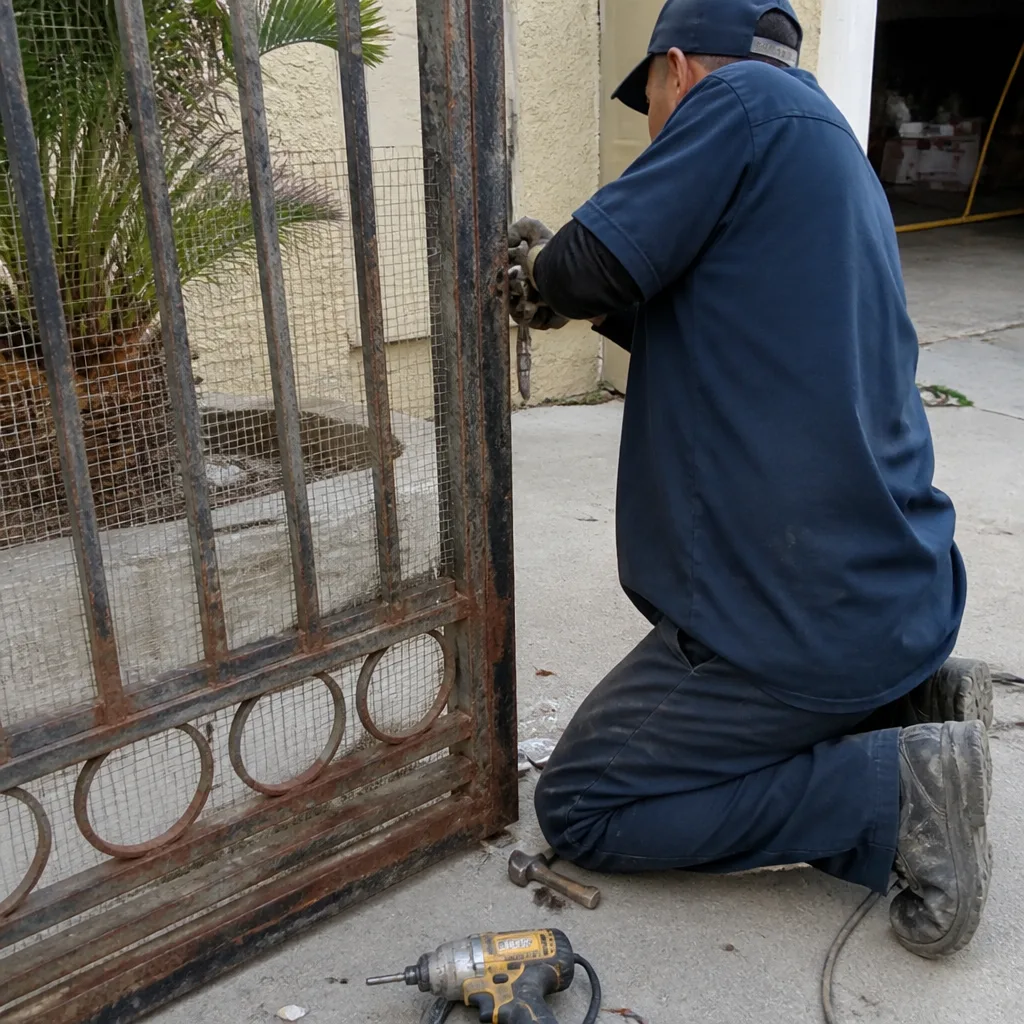 Before
 After
 Before
 After
 Before
 After