
Last updated November 2, 2026
 Wrought iron
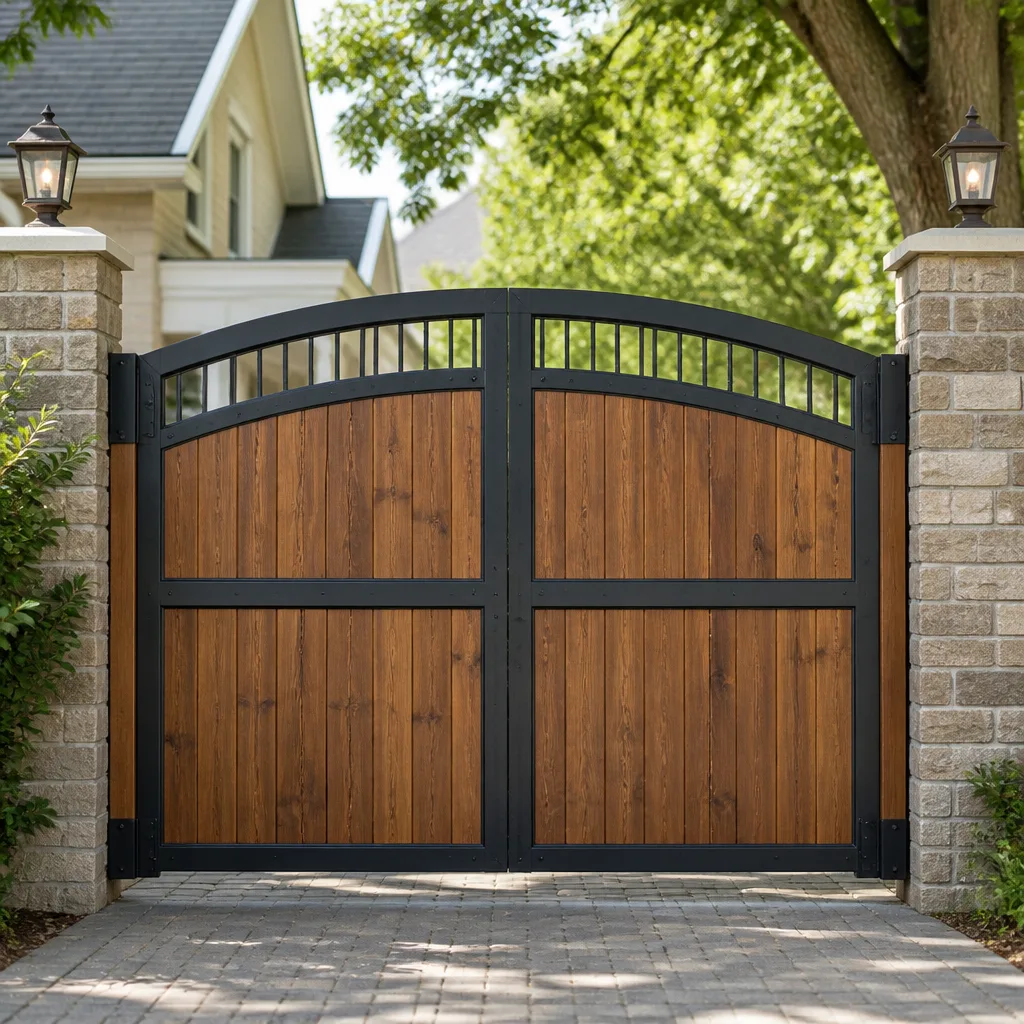 Wood & steel frame
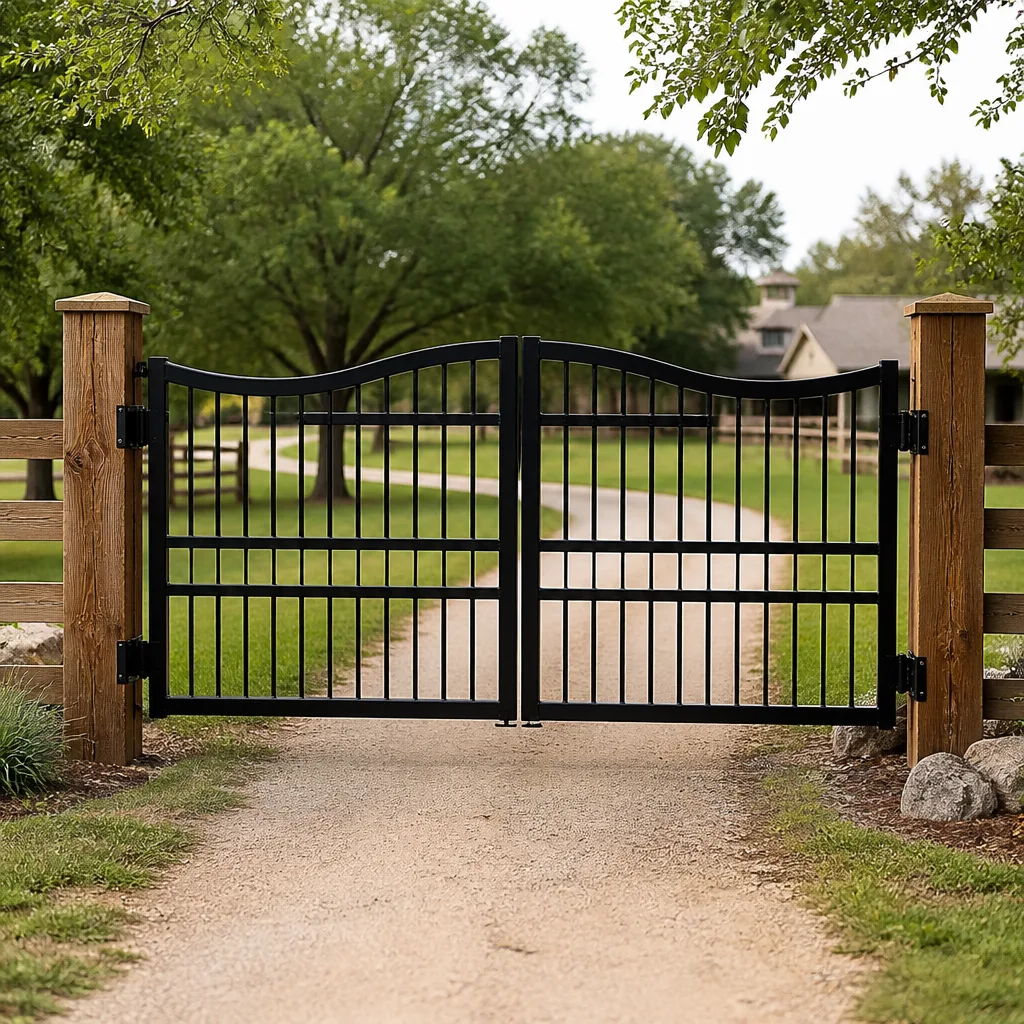 Farm & ranch
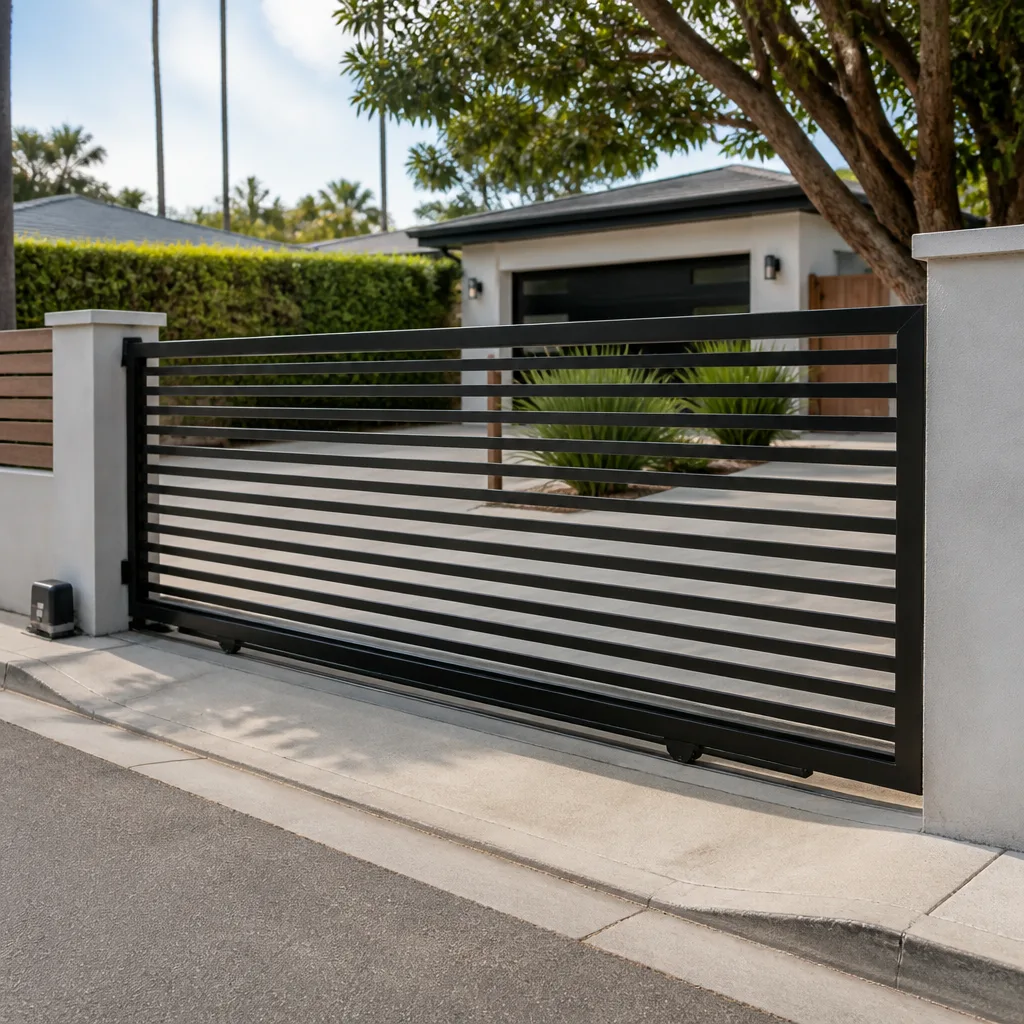 Sliding driveway gates
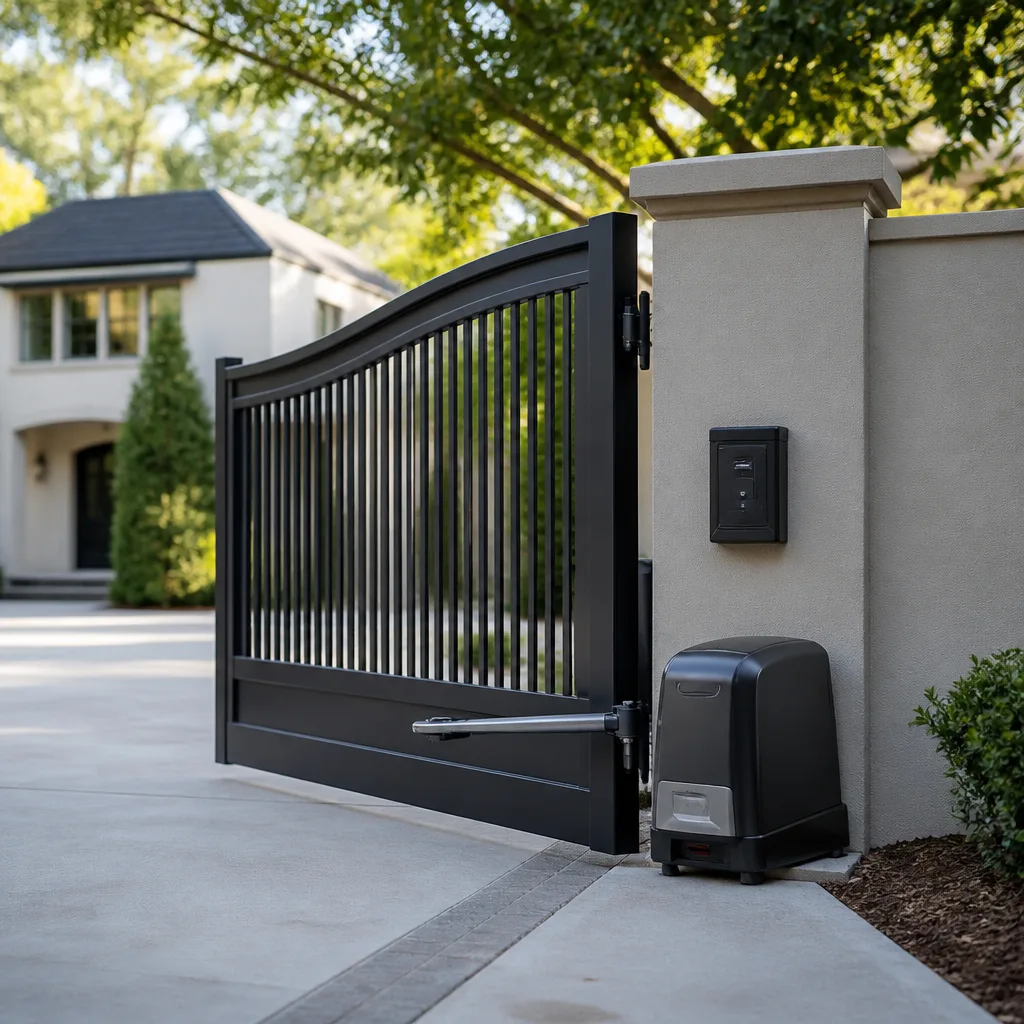 LiftMaster operators
Free on-site gate assessment - hinges, posts, and your LiftMaster or Nice gate operator checked before anything is quoted
The assessment is free and the quote is the invoice.
Get your free estimateDIY vs Professional Gate Repair: The Chula Vista Homeowner’s Decision Guide
Most Chula Vista homeowners don’t realize that the gate operator sitting at the end of their driveway is governed by a federal safety standard written in blood. UL 325 exists because entrapment incidents involving automatic gates killed and maimed people, mostly children, before the Consumer Product Safety Commission stepped in. That means the line between “weekend project” and “licensed technician territory” isn’t arbitrary; it’s drawn by physics, liability law, and the torque curve of a motor that doesn’t care how confident you felt after watching a six-minute video. This guide breaks down exactly which gate repairs you can handle yourself, which ones you shouldn’t touch, and how to make the call without getting hurt or buried in secondary damage costs in Chula Vista.
Quick Answer
For most Chula Vista homeowners, safe DIY gate repair is limited to lubrication, tightening visible hardware, replacing remote batteries, and cleaning photo eye sensors. Anything involving the operator motor, control board, safety loops, spring tension, or hinge realignment on a powered gate crosses into UL 325 territory where a mistake can injure someone or void your homeowner’s insurance. The practical rule: mechanical upkeep is DIY-friendly; electrical and torque-related work is not.
Styles & brands we work with
- Wrought iron
- Wood & steel frame
- Farm & ranch
- Sliding driveway gates
- LiftMaster operators
Table of Contents
- The Real Question Isn’t DIY vs Pro. It’s Which Tasks
- What You Can Safely Do Yourself: The Short List
- The UL 325 Liability Line: Why Entrapment Settings Are Off-Limits
- Professional Territory: Operator Diagnostics, Control Boards, and Safety Systems
- Parts and Tool Sourcing Reality for Chula Vista Homeowners
- The “I Watched a Video” Failure Pattern: Three Costly DIY Mistakes
- The Hybrid Approach: Sourcing Your Own Parts with Professional Labor
- What Chula Vista’s Climate and Housing Stock Do to Gates
The Real Question Isn’t DIY vs Pro. It’s Which Tasks
Framing the decision as “do everything yourself” or “pay someone for everything” misses how gate systems actually fail. A gate isn’t one component; it’s a chain of mechanical and electrical links. Some of those links are designed for routine owner maintenance. Others are calibrated at the factory, protected by service codes, and engineered to stop a 1,000-pound steel leaf from crushing whatever is in its path. When we respond to a gate repair call in Chula Vista, we can usually tell within the first five minutes whether a homeowner’s previous attempt made the original problem worse. Not because homeowners are careless, but because gates hide their complexity behind a very simple exterior. A hinge looks like a hinge. A limit switch doesn’t look like anything at all until you open the operator housing and realize you’re now inside a system that runs on 120 volts and stores enough kinetic energy to remove fingers.
The competent-homeowner test isn’t “can I follow the video.” It’s “do I understand what happens if I set this wrong.” For lubrication, the answer is obvious. For a control board on a BFT operator, the answer for most people is no, and that’s not a character flaw. It’s why gate specialists exist.
What You Can Safely Do Yourself: The Short List
There is a legitimate DIY zone for gate maintenance. These tasks don’t involve stored energy, line voltage, or safety sensor calibration. They also don’t void warranties or create liability exposure. If your gate is slow, noisy, or drifting, start here before calling anyone.
Safe DIY gate maintenance:
- Lubricating hinges, rollers, and the chain drive (if exposed): Use a silicone-based or lithium spray lubricant. Avoid WD-40 as a long-term lubricant; it’s a solvent that cleans and then evaporates, leaving metal dry. In Chula Vista’s coastal air, un-lubricated steel hinges rust faster than inland homeowners expect.
- Replacing remote control batteries: If your gate opens from 30 feet but not from the street, try a fresh battery before anything else. This is the most common non-repair call we get.
- Cleaning photo eye sensors: If your gate reverses immediately after closing or refuses to close at all, wipe the small lenses on both sides of the gate opening with a dry cloth. Chula Vista’s wind picks up fine dust and salt spray that films these lenses within months.
- Tightening visible hinge bolts and bracket hardware: A sagging gate leaf is often just loose hardware. Use a socket wrench, not a drill, and don’t overtighten. If a hinge bolt strips, stop and call a professional; the next step is re-tapping or replacing the hinge, which involves supporting the gate’s full weight.
- Trimming vegetation away from the gate path and safety edges: Overgrown ice plant or bougainvillea in Chula Vista yards frequently triggers false safety-edge reversals. This is pure maintenance and anyone can do it.
These tasks account for maybe 20 percent of the gate service calls we’d otherwise receive. They’re worth doing yourself because they’re genuinely low-risk and they keep you familiar with how your gate behaves when it’s working correctly. That baseline knowledge matters: the sooner you notice a change in sound, speed, or stopping behavior, the cheaper the eventual repair.
The UL 325 Liability Line: Why Entrapment Settings Are Off-Limits
UL 325 is a safety standard published by Underwriters Laboratories that governs automatic gate operators, commercial door operators, and similar equipment. It mandates specific entrapment protection requirements: photo eyes, safety edges, force limiters, and audible alarms, depending on the gate’s classification and application. Here’s what most DIY guides won’t tell you: if you adjust your gate operator’s force settings, travel limits, or entrapment sensors yourself and someone gets injured, your homeowner’s insurance carrier can deny the claim on the grounds that an unqualified person modified a safety-governed device.
That’s not hypothetical. Insurance adjusters look for exactly this kind of modification after gate injury claims. A gate that closes with enough force to injure a child is a foreseeable hazard, and the standard exists precisely because manufacturers and courts agree that end users cannot be trusted to self-police force thresholds. In Chula Vista, where gates are common on both single-family lots in Eastlake and older properties in the downtown grid, the exposure is real. Every school-adjacent street has a gate that gets opened and closed dozens of times a day.
What this means practically:
- Never adjust the force or “obstruction sensitivity” dial on an operator. These settings control how hard the gate pushes against an obstruction before reversing. Setting them too high is how entrapment injuries happen.
- Never change travel limits to compensate for a sagging gate. If the gate no longer opens or closes fully, the cause is usually mechanical wear or hinge sag, not a limit setting. Adjusting limits masks the problem and puts the motor under abnormal strain.
- Never bypass a safety edge or photo eye because it’s “annoying.” If your gate keeps reversing for no visible reason, the sensor is doing its job. The fix is diagnosing why it’s triggering, not disconnecting it.
When we work on Viking and Linear operators in Chula Vista, we verify every UL 325 compliance point as part of the repair. That’s not optional for us and it shouldn’t be optional for anyone touching your gate.
Professional Territory: Operator Diagnostics, Control Boards, and Safety Systems
Once you move past lubrication and hardware tightening, you’re inside the operator. That’s the gray box mounted to the gate post or buried in a cabinet nearby. It contains the motor, the control board, the capacitor, the limit switches, and the wiring that connects to your photo eyes, safety loops, keypad, and intercom. Here’s what’s actually happening when a modern operator fails, and why it’s not a YouTube repair.
Control board failures
The control board is the brain of the operator. When a BFT or Ghost Controls operator stops responding to remotes or behaves erratically, the board is usually the primary suspect. Diagnosing a board requires a multimeter, a wiring diagram for that specific model, and enough brand familiarity to know which failure patterns are board-related versus peripheral. For example, a Ghost Controls residential unit that works fine from the wall button but not the remote is rarely a board problem; it’s usually a receiver or antenna issue. A BFT commercial operator that randomly reverses mid-cycle often has a failing safety loop detector, not a board fault. These distinctions come from working on hundreds of units, not from a troubleshooting flowchart.
Safety loop and photo eye wiring
Underground safety loops are wire coils buried in the driveway that detect vehicles. When they fail, the gate either won’t hold open or won’t auto-close. Replacing a loop means cutting a channel in the driveway, laying new loop wire, sealing it, and re-tuning the detector. That’s a job for a contractor with saw-cutting equipment and the right wire, not a homeowner with a spade. Chula Vista’s heavy clay soil in some areas also causes loops to fail faster than in looser soils, because ground movement stresses the wire insulation.
Capacitor and motor failures
A gate that hums but doesn’t move often has a failed start capacitor. Replacing one on a residential Mighty Mule unit is borderline DIY for someone comfortable with electrical work, but on a commercial Linear or Viking operator, the capacitor can store a charge large enough to shock you even with power disconnected. If you don’t know how to discharge a capacitor safely, don’t open the housing.
Spring tension and hinge realignment
Swing gates rely on their hinges to hold the leaf plumb. When a gate sags, the operator has to work against gravity, which shortens motor life and can trip force limits. Realigning a sagging gate requires lifting the leaf, shimming or replacing hinges, and sometimes welding. This is structural work with stored weight involved. A gate leaf that falls while you’re under it can crush you. This is not hyperbole; it happens to untrained people every year.
For all of this, a dedicated gate technician is the right call. If you’re in Chula Vista, our Gate Repair in Chula Vista service covers both mechanical and electrical diagnostics across all major operator brands.
Parts and Tool Sourcing Reality for Chula Vista Homeowners
One of the biggest hidden costs of DIY gate repair is parts acquisition. It sounds simple: find the part number, order it online, install it. The reality is more complicated, especially for automated gate systems.
What’s available locally:
- Lubricants, bolts, basic hinges, and generic hardware: Home Depot, Lowe’s, and Ace Hardware in Chula Vista carry these. For simple mechanical fixes, you’re covered.
- Universal remote controls: Big-box stores sell universal remotes that work with some LiftMaster, Chamberlain, and Mighty Mule operators. Compatibility is hit-or-miss on newer rolling-code systems.
- Basic weld-and-repair components: If you need a steel plate, angle iron, or replacement chain, local metal suppliers and industrial suppliers in the Chula Vista area can help.
What is NOT available locally:
- Brand-specific control boards: BFT, FAAC, Viking, and DoorKing boards are distributed through dealer channels. You can sometimes find them on eBay or Amazon, but you’re buying a board with no way to verify it’s not a counterfeit, a used pull, or a gray-market unit with the wrong firmware for your operator revision.
- Safety loop detectors and loop wire: These are sold through gate supply distributors, not retail stores. Ordering the wrong detector means the loop fails to tune and the gate behaves worse than before.
- Proprietary remote receivers and intercom modules: Many multi-tenant intercom gate systems in Chula Vista apartment complexes use access control protocols that can’t be matched with retail parts.
- Operator-specific capacitors and limit switch assemblies: These vary by model year and revision. Getting the right one without a supplier relationship often means three orders and two returns.
The parts problem is where many DIY projects stall. A homeowner identifies a bad board on a Linear operator, orders what looks like the right part online, installs it, and the operator still doesn’t work because the board came with default programming that doesn’t match the install. Now they’ve spent money on a part they can’t return and they still need a technician. If you want to reduce cost without taking on board-level work, talk to a professional about the hybrid approach we cover below.
The “I Watched a Video” Failure Pattern: Three Costly DIY Mistakes
We see these three failure patterns repeatedly in Chula Vista when homeowners attempt gate repairs beyond the safe-DIY list. Each one starts with a video, a confident Saturday morning, and a problem that now costs more than the original repair would have – exactly why we recommend our Gate Repair Emergency Preparedness Guide for Chula Vista Homes.
1. Cranking the force dial to “fix” a reversing gate
The gate keeps reversing halfway through its closing cycle, so the homeowner opens the operator housing and turns the force adjustment up. The gate now closes, but it closes with enough force to injure anything in its path. A month later, the motor burns out because it’s been working against a mechanical problem the whole time, usually a sagging hinge or a failing safety edge. The original fix was a $150 hinge adjustment. The new fix is a $400 motor replacement plus the hinge work, and the homeowner has been living with an unsafe gate for weeks. If the gate had injured someone during that time, the liability exposure would be catastrophic.
2. Replacing a control board without matching the revision
A homeowner finds a BFT control board for $80 less than the dealer price and installs it. The operator powers up but the remote programming doesn’t work, or the gate opens in the wrong direction, or the auto-close feature is missing. The board is a different revision with different DIP switch logic. The homeowner has now spent three weekends, $80, and a lot of frustration, and the board can’t be returned because it’s been installed. A gate specialist would have verified compatibility before ordering.
3. Welding a cracked gate frame without disconnecting the operator
A cracked gate frame is common on older wrought-iron gates in Chula Vista neighborhoods like Castle Park and Otay Ranch. The homeowner borrows a welder and fixes the crack in place, without disconnecting the operator or protecting the control board from weld current. The result is a fried control board, a damaged operator, and a weld that might fail anyway because the underlying alignment problem wasn’t addressed. Structural welding on a powered gate should always happen with the operator disconnected and the board isolated.
Each of these mistakes starts from the same place: a belief that gate repair is one skill rather than a stack of skills. The gap between watching a video and doing the repair safely is exactly where these secondary failures live.
The Hybrid Approach: Sourcing Your Own Parts with Professional Labor
There’s a legitimate middle path between full DIY and full-service professional repair. It works like this: you source the parts, and a qualified technician installs them. The benefit is that you control parts cost. The risk is that you buy the wrong part and the technician can’t use it.
When the hybrid approach makes sense:
- You have a specific, common replacement part with a clear part number, like a Mighty Mule remote receiver or a universal keypad, and you want to avoid parts markup.
- You’ve already purchased a part and need a professional to install it correctly. Some contractors will do this; others won’t, for warranty and liability reasons.
- You have a relationship with a parts supplier through a family member or former contractor and can source genuine brand parts below retail.
When it doesn’t work:
- Control boards and safety systems: a gate specialist won’t warranty a board they didn’t source, and boards with unknown provenance fail more often.
- Underground loops: the loop wire, saw-cutting, and detector tuning are a package. Buying the wire yourself saves nothing because the labor dominates the cost.
- Anything involving UL 325 compliance: technicians are accountable for the final safety of the system. They need to know the parts they’re installing are genuine and correctly spec’d.
Before buying parts, call and ask the contractor directly: “Will you install parts I source?” Gate Repair Chula Vista’s policy on customer-sourced parts is determined case by case. The answer often depends on the part type and whether it’s a brand we certify on. For Electric Gate Repair in Chula Vista, we’ll tell you honestly if your sourced part is the problem, and if it’s not, what is.
What Chula Vista’s Climate and Housing Stock Do to Gates
Gates fail differently in Chula Vista than they do in, say, Phoenix or Seattle. The climate and the housing stock create a specific set of failure patterns that every Chula Vista homeowner should understand.
Coastal moisture and salt air: Anything within a few miles of the bay gets salt-laden air, which accelerates corrosion on exposed steel, hinges, and electrical contacts. We see rusted hinge pins and corroded terminal blocks on operators installed less than five years ago in western Chula Vista. Inland areas like Eastlake and Rolling Hills Ranch get less salt but more temperature swing, which stresses plastic components and wiring insulation differently.
Clay soil movement: Parts of Chula Vista sit on expansive clay that swells and contracts with seasonal moisture. This moves gate posts slightly over time, which changes gate alignment, which forces the operator to work harder, which shortens motor life. Safety loops buried in this soil also fail more frequently from ground movement than they do in stable sandy soils.
Housing mix: Chula Vista has everything from 1950s single-family homes with original gate hardware to new-build communities with modern automated entry systems. Older gates are often wrought iron with mechanical latch hardware, while newer developments have tube-steel gates with full automation and sometimes multi-tenant access control. The repair approach is completely different depending on which era your property falls into.
If you’re running an older Mechanical gate and thinking about upgrading, our Gate Installation in Chula Vista service covers the full scope from old-gate removal to new automated installation, including the electrical run and safety compliance.
Common Mistakes to Avoid
- Ignoring a gate that’s getting slower. A gate that cycles slower than it did a month ago is telling you something. In Chula Vista’s salt air, that “something” is often corrosion in the drive mechanism or a failing capacitor. Catching it early saves hundreds.
- Using the wrong lubricant on the chain drive. Heavy grease on an exposed chain attracts dirt and salt, turning into grinding paste. Use a dry-film or silicone lubricant, and wipe away excess.
- Disconnecting the safety edge because it causes false reversals. A false-reversing safety edge is a symptom, not the problem. Disconnecting it converts a nuisance into a life-safety liability. Don’t.
- Buying a replacement board from an auction site to save money. Counterfeit and gray-market control boards are common online. If the board fails, you’re out the money and back to square one. If it fails dangerously, you have a liability problem.
- Ignoring gate post movement. A gate post that’s moving slightly every year will eventually cause operator failure, hinge failure, or both. Stabilize posts before replacing motors.
- Assuming all square operators are interchangeable. A BFT commercial unit and a Mighty Mule residential operator might both open a gate, but their duty cycles, safety features, and electrical requirements are completely different. Replacing one with the other without a load calculation is how you end up with a dead motor in six months.
See the difference
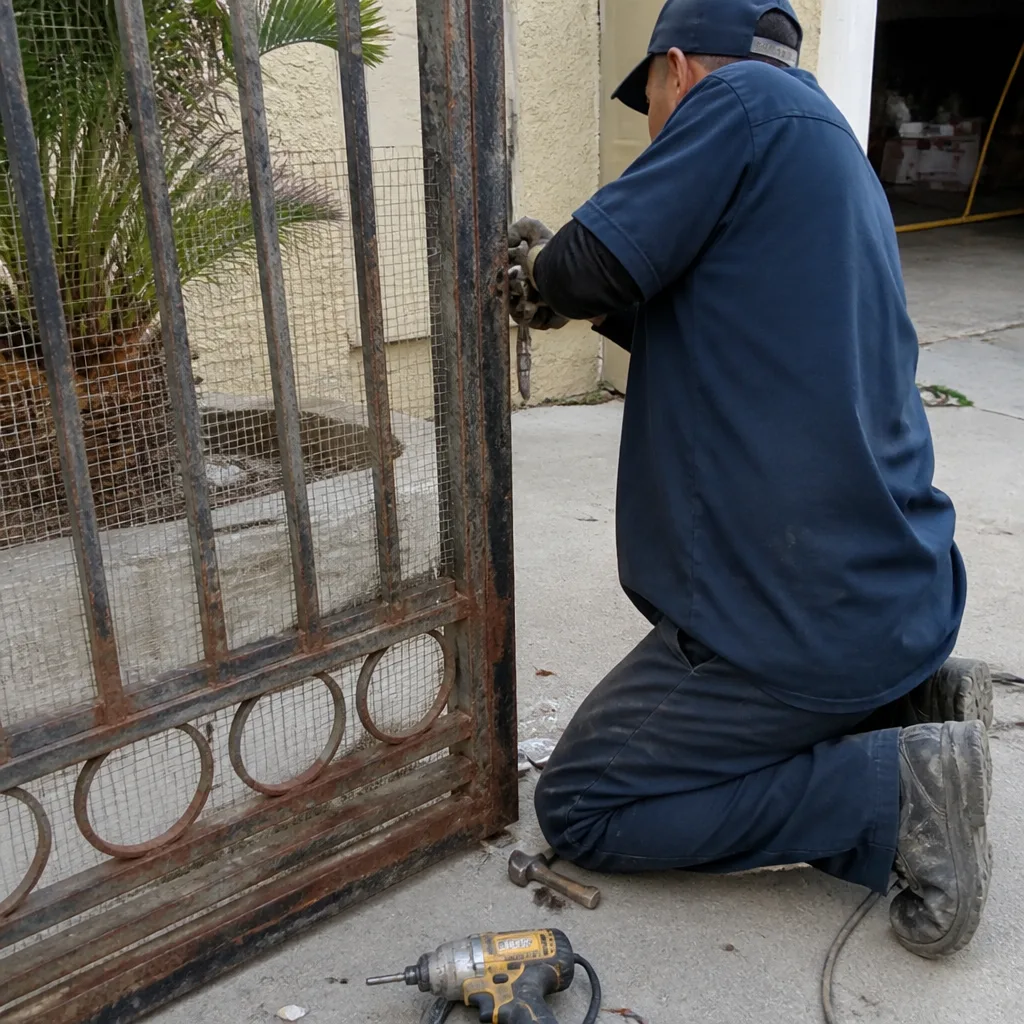 Before
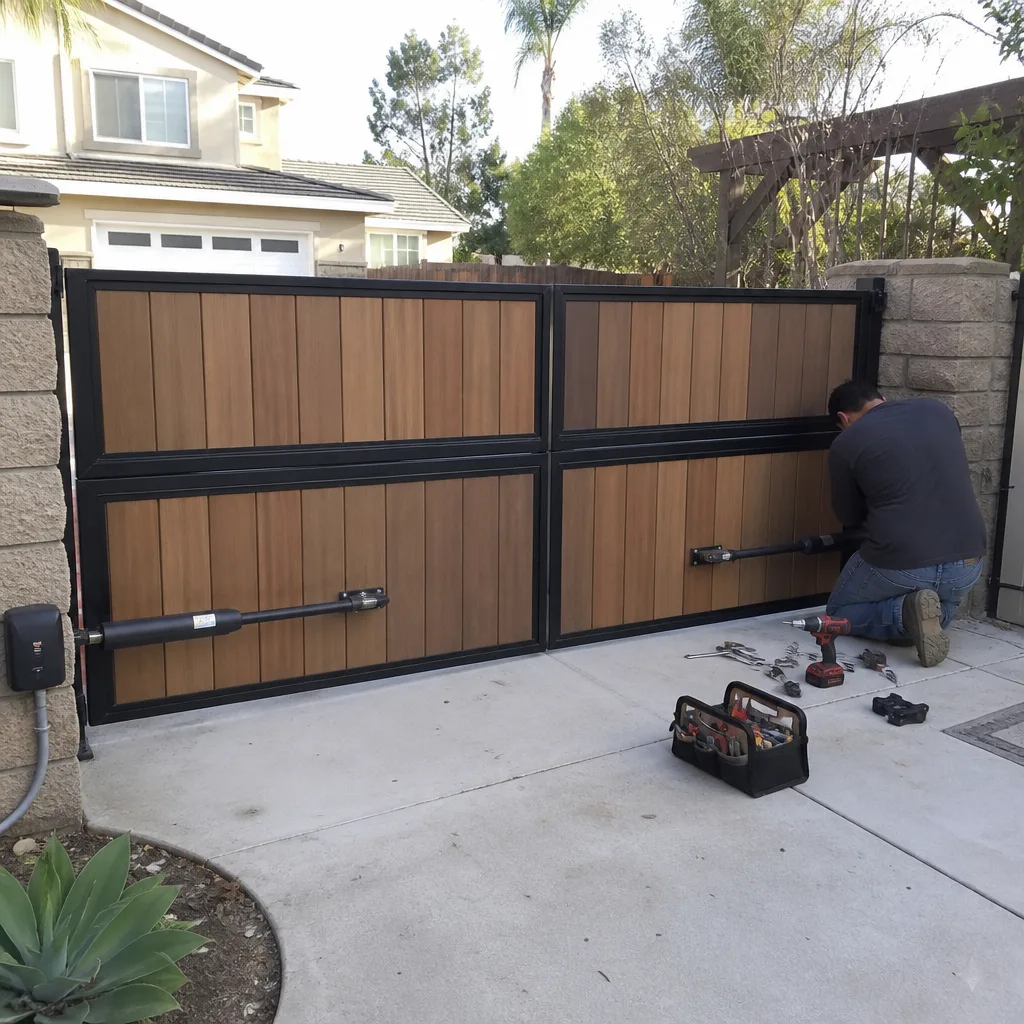 After
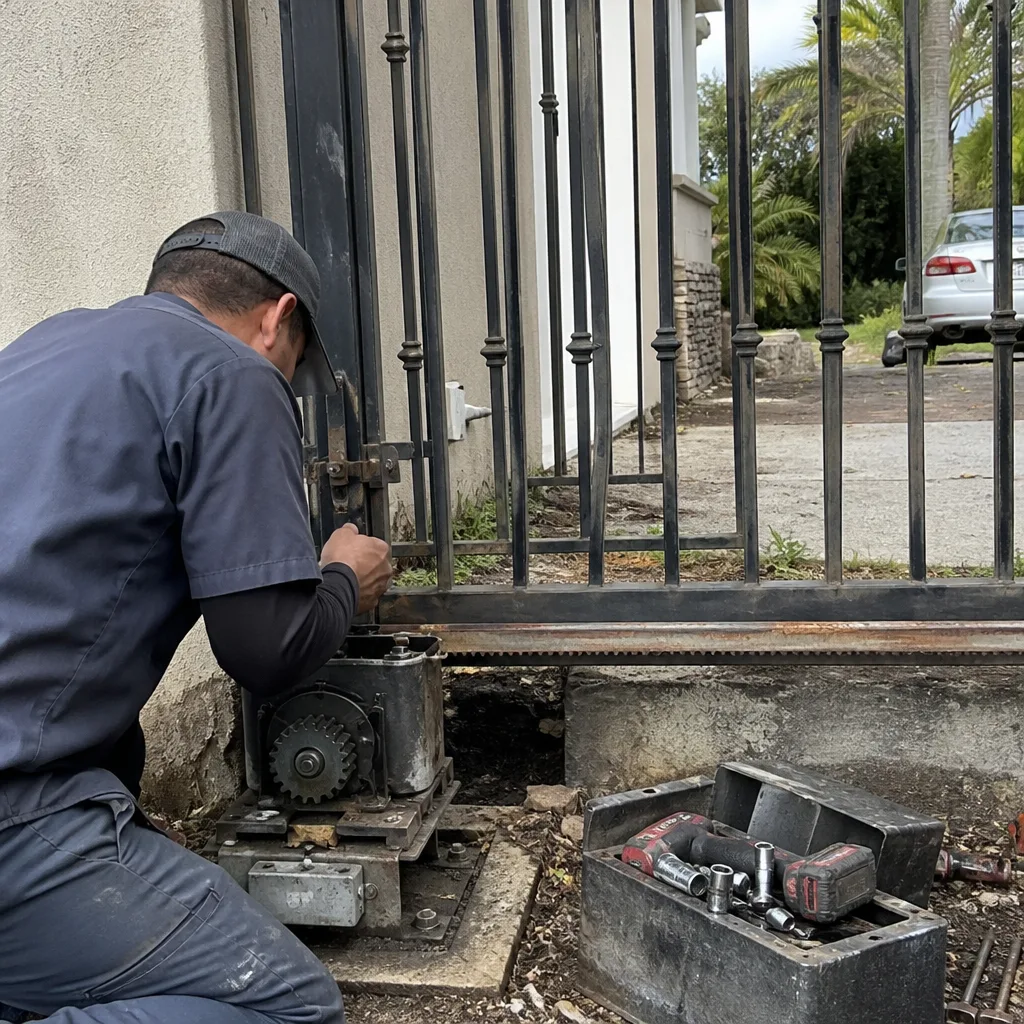 Before
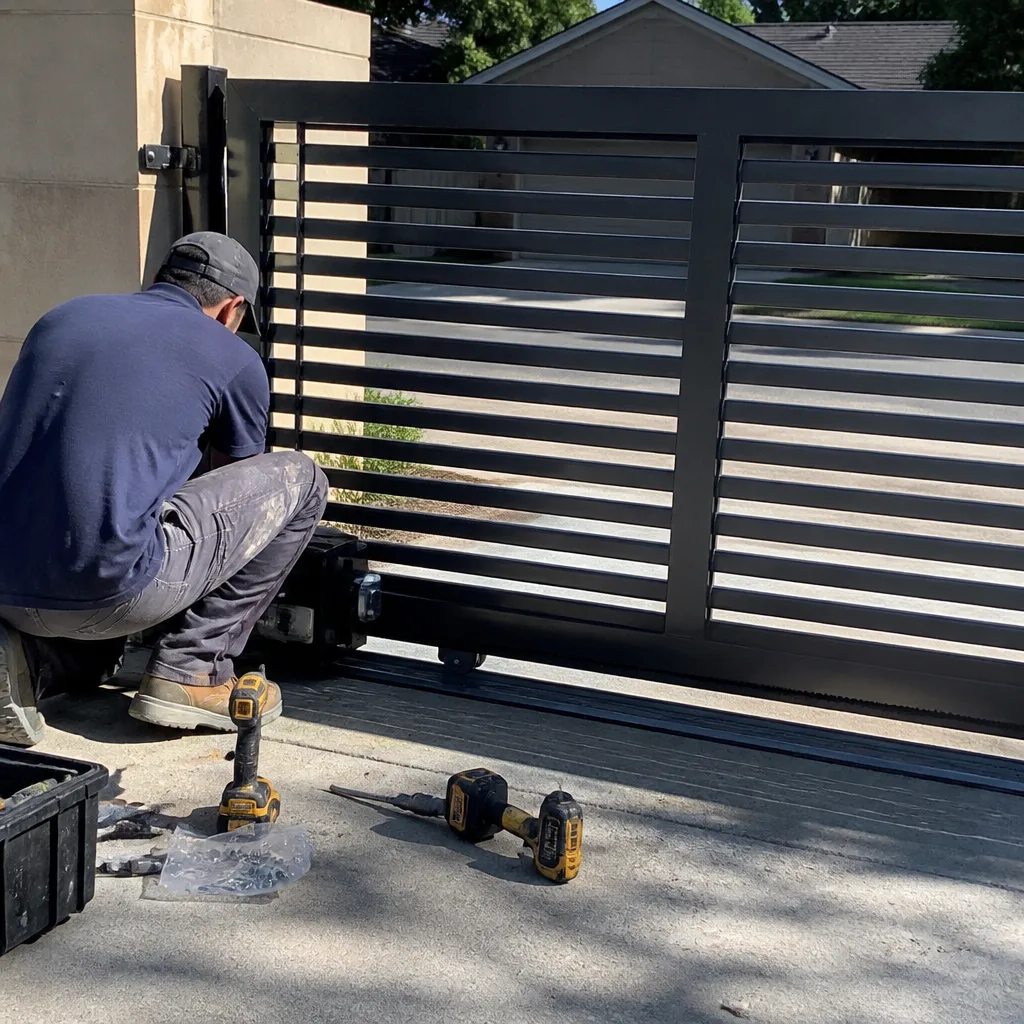 After
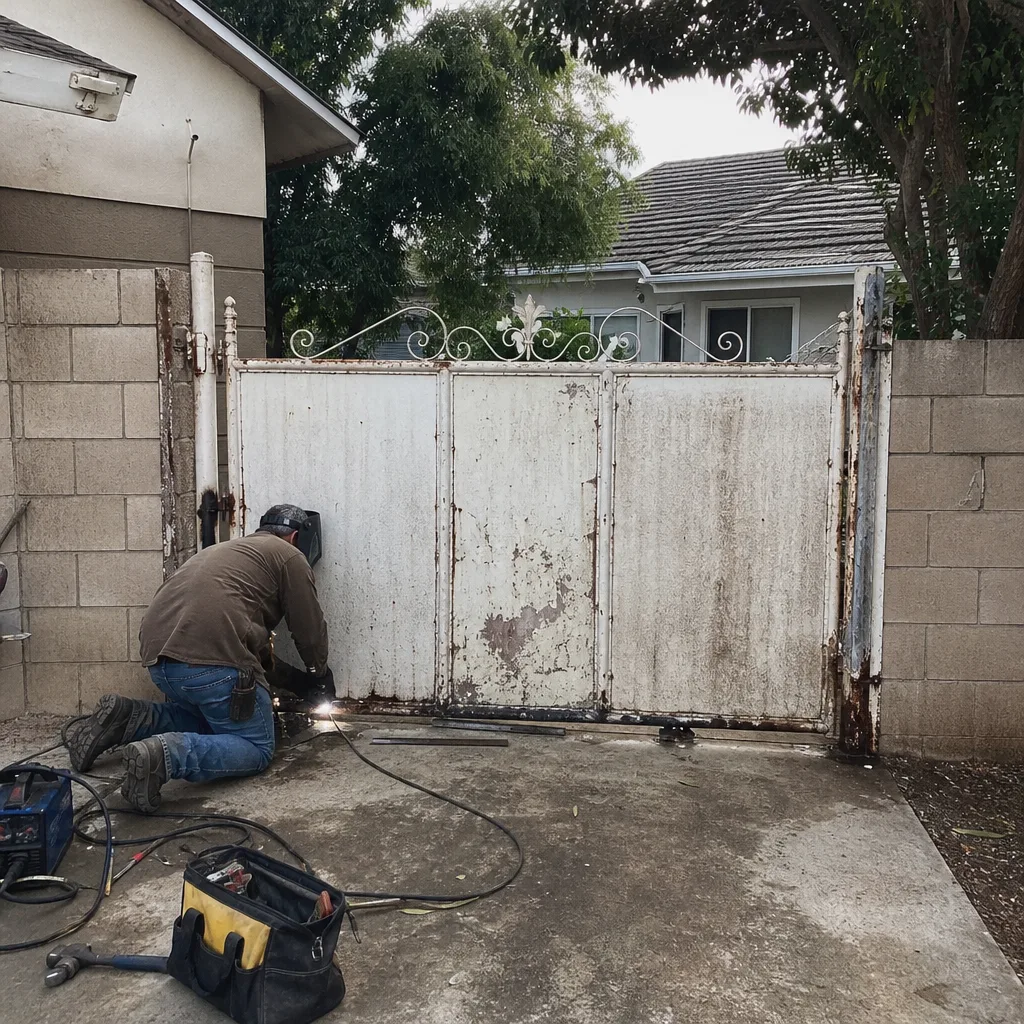 Before
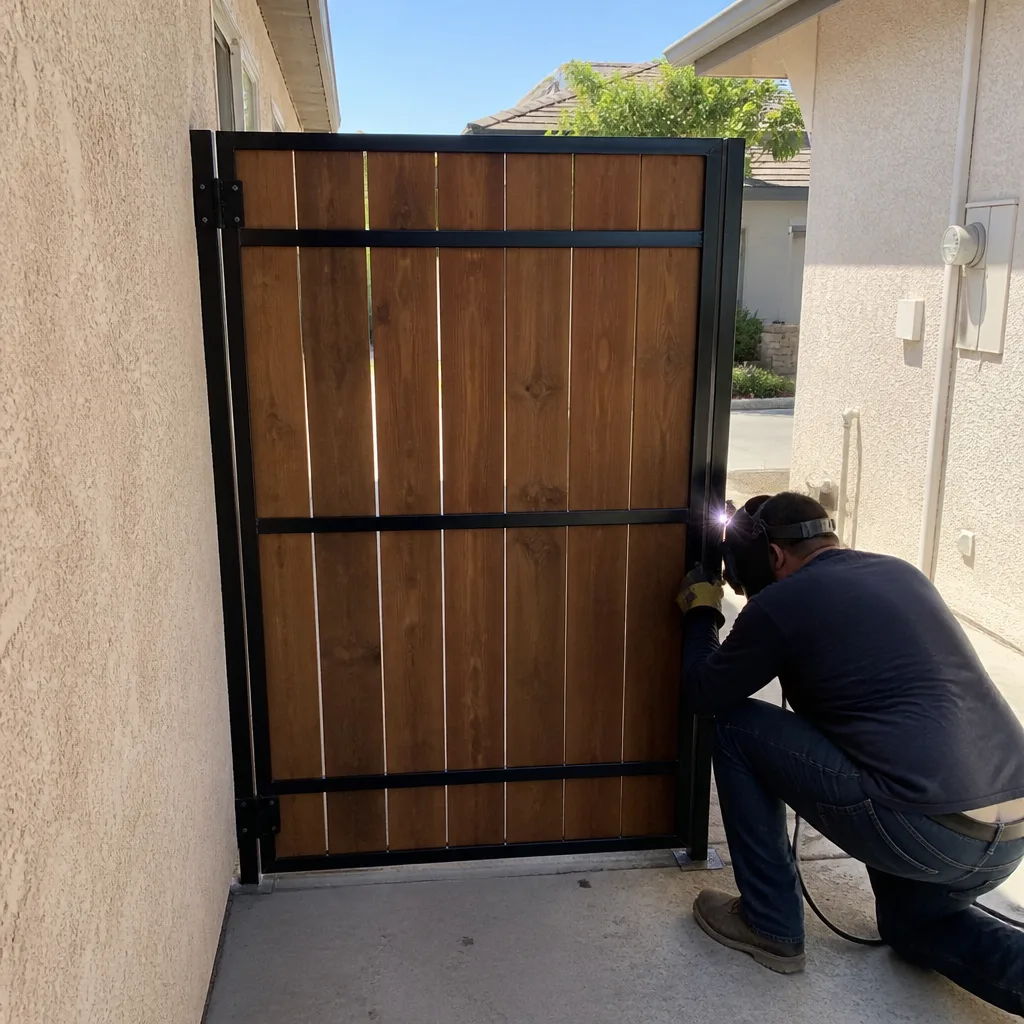 After
When to Call a Professional
Call a gate specialist when the problem involves the operator motor, control board, capacitor, safety loops, safety edges, photo eyes, spring tension, or structural hinge realignment. Also call if your gate has injured someone, nearly injured someone, or failed a safety test. If you’ve attempted a DIY repair and the gate is worse than before, stop and make the call; secondary damage compounds quickly. Our Gate Repair services include free estimates in Chula Vista. Call (833) 593-7101 and describe the symptoms. A dedicated gate technician can usually tell you over the phone whether you’re looking at a safe DIY fix or a professional repair.
Frequently Asked Questions
You can replace the remote battery, clean the photo eye lenses, and check the breaker; beyond that, opener repair belongs with a technician. Opening the operator housing exposes you to live voltage and voided warranties, and misadjusting the force settings creates an entrapment hazard.
Minor mechanical repairs like hinge tightening or lubrication run $75-$150. Operator diagnostics, control board replacement, and safety loop work typically run $250-$800 depending on the brand and the specific fault. Gate Repair Chula Vista provides written quotes before any work starts, so you’ll know the number before you approve anything.
In our experience, it’s gate sag due to hinge wear combined with coastal corrosion, followed closely by photo eye failures from dust and salt film. Both are fixable, but sagging gates need mechanical realignment, not just a limit switch adjustment.
No. Welding current can travel through the gate frame into the operator and destroy the control board. The operator should be disconnected and the board protected before any welding happens on or near the gate.
It depends on the size, location, and whether it’s automated. Chula Vista’s building department has specific setback and height requirements for driveway gates, and automated gates must meet UL 325 compliance. A gate specialist can walk you through the local requirements for your specific property.
You can, but the skill sets don’t fully transfer. Gate operators, especially commercial-grade systems from FAAC, BFT, and DoorKing, use different control logic, safety systems, and duty cycles than garage door openers. A gate specialist has the brand-specific training and parts access that a general garage door tech typically doesn’t.
The Bottom Line
You can handle the maintenance side of gate ownership: lubrication, battery changes, sensor cleaning, hardware tightening, and vegetation management. The line between safe DIY and dangerous territory sits at the operator housing. Once you’re dealing with force settings, control boards, safety loops, or spring tension, the risk shifts from “wasted time” to “injury and insurance denial.” Chula Vista’s coastal climate and mixed housing stock make gates fail in specific, predictable ways that a local specialist recognizes immediately. If you’re unsure where your repair falls, take a photo, note the brand, and call, or explore our more guides & resources. A two-minute conversation costs nothing and can prevent a $500 secondary repair.
Written by the team at Gate Repair Chula Vista, serving Chula Vista since 2016.