
Last updated November 2, 2026
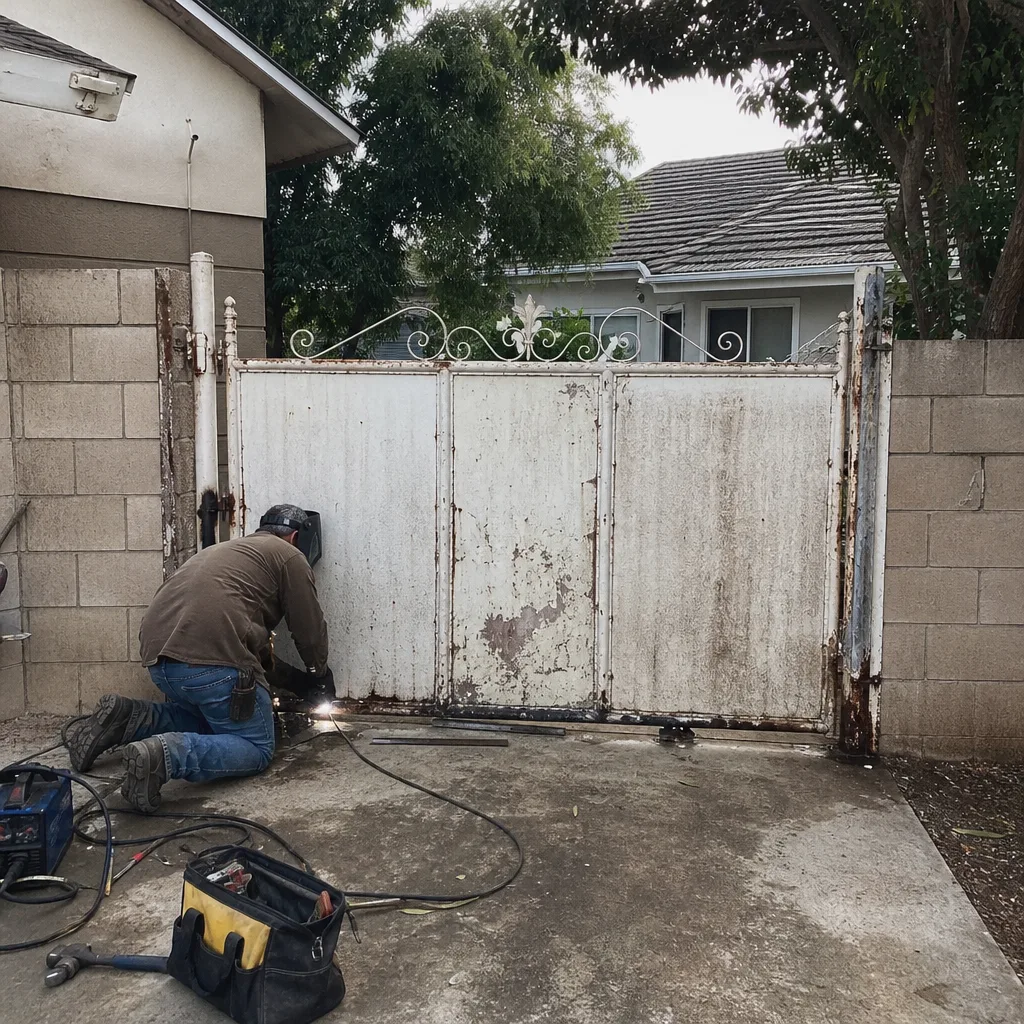
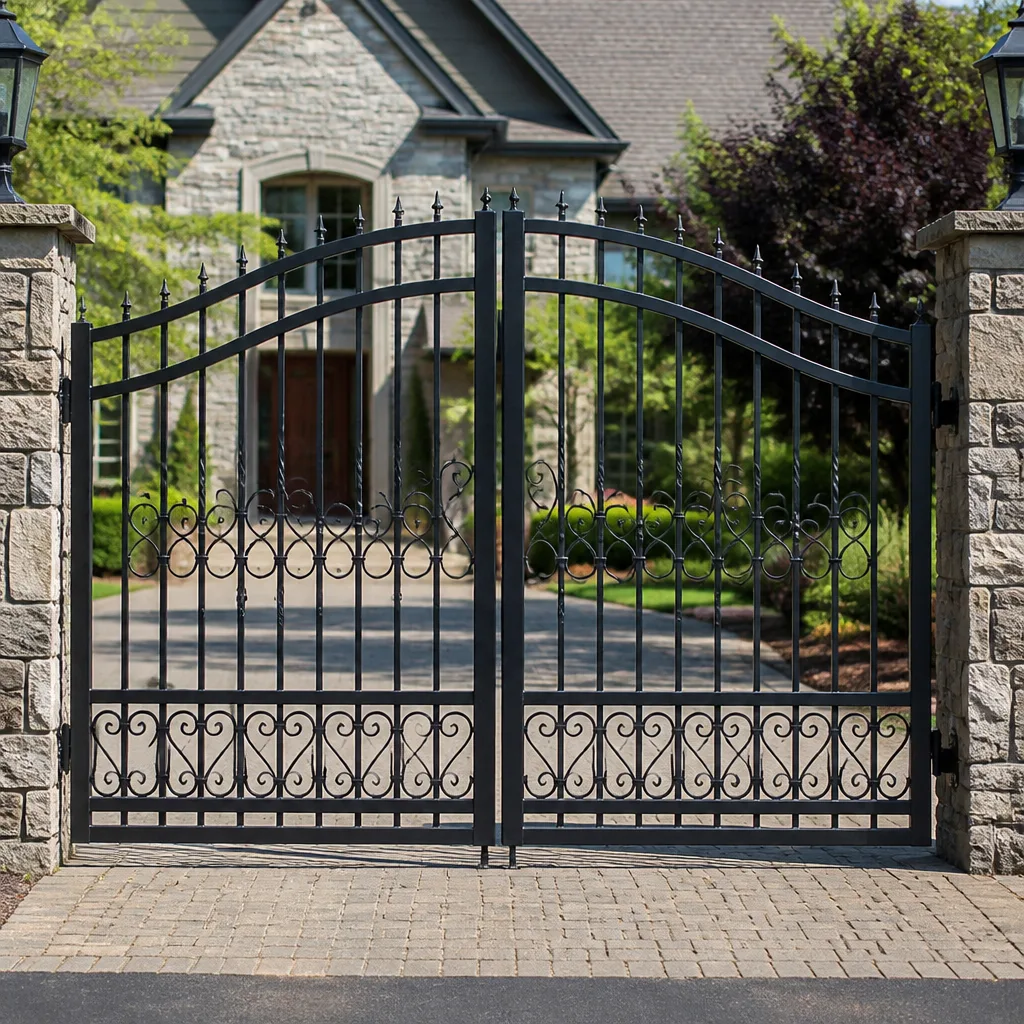 Wrought iron
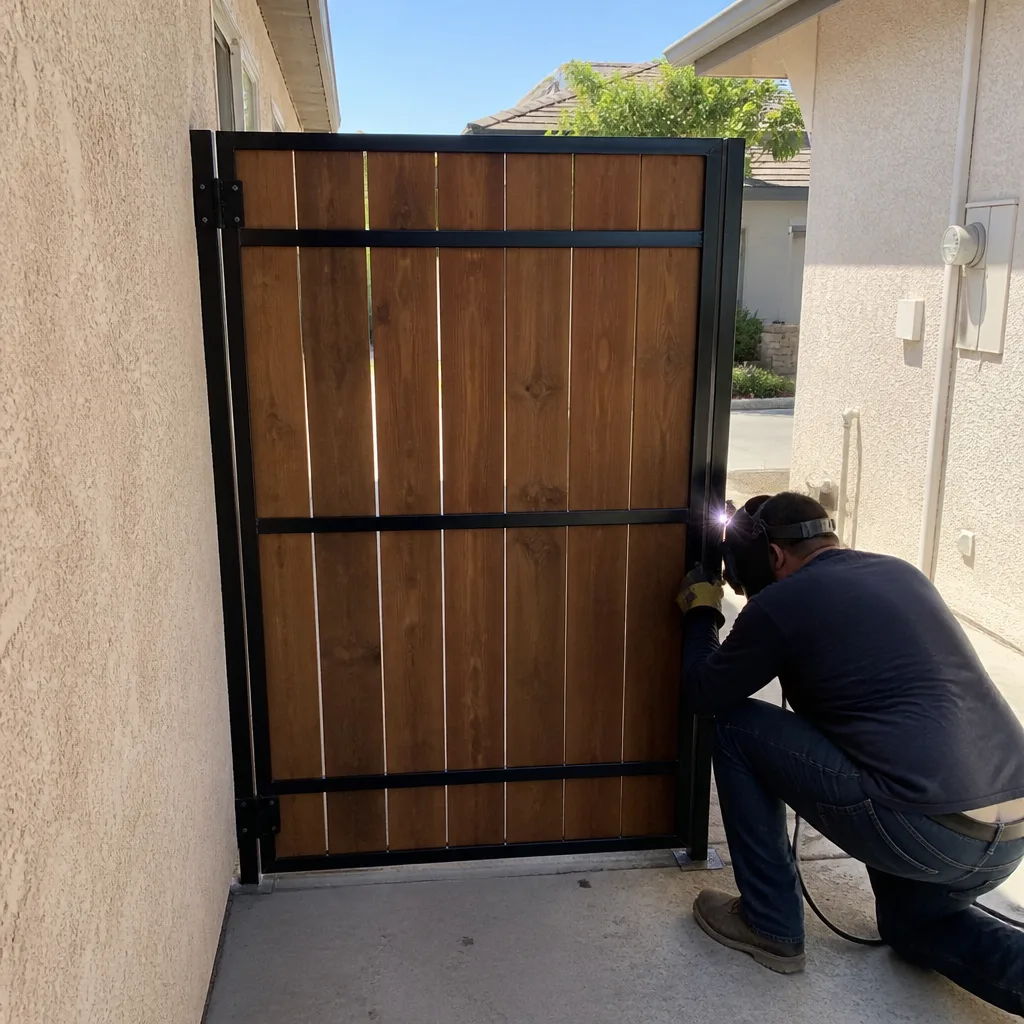
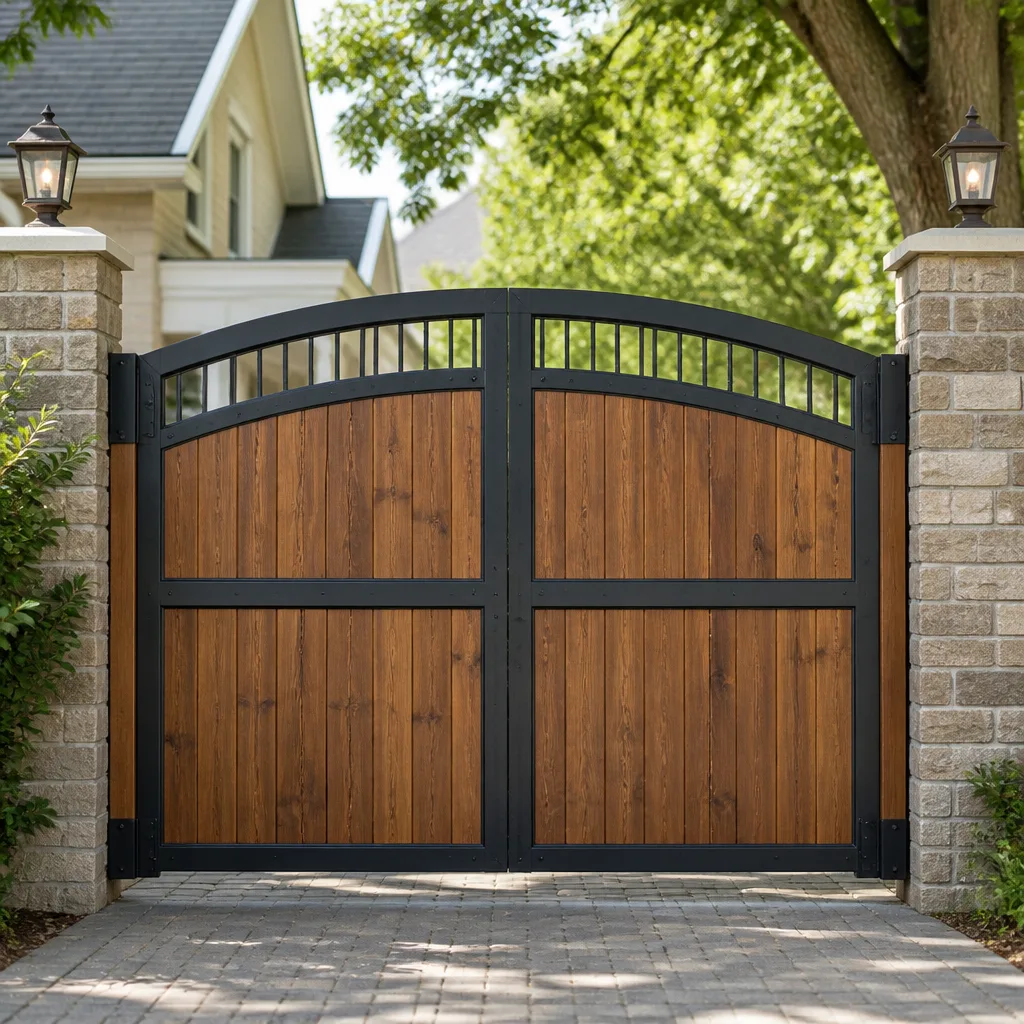 Wood & steel frame
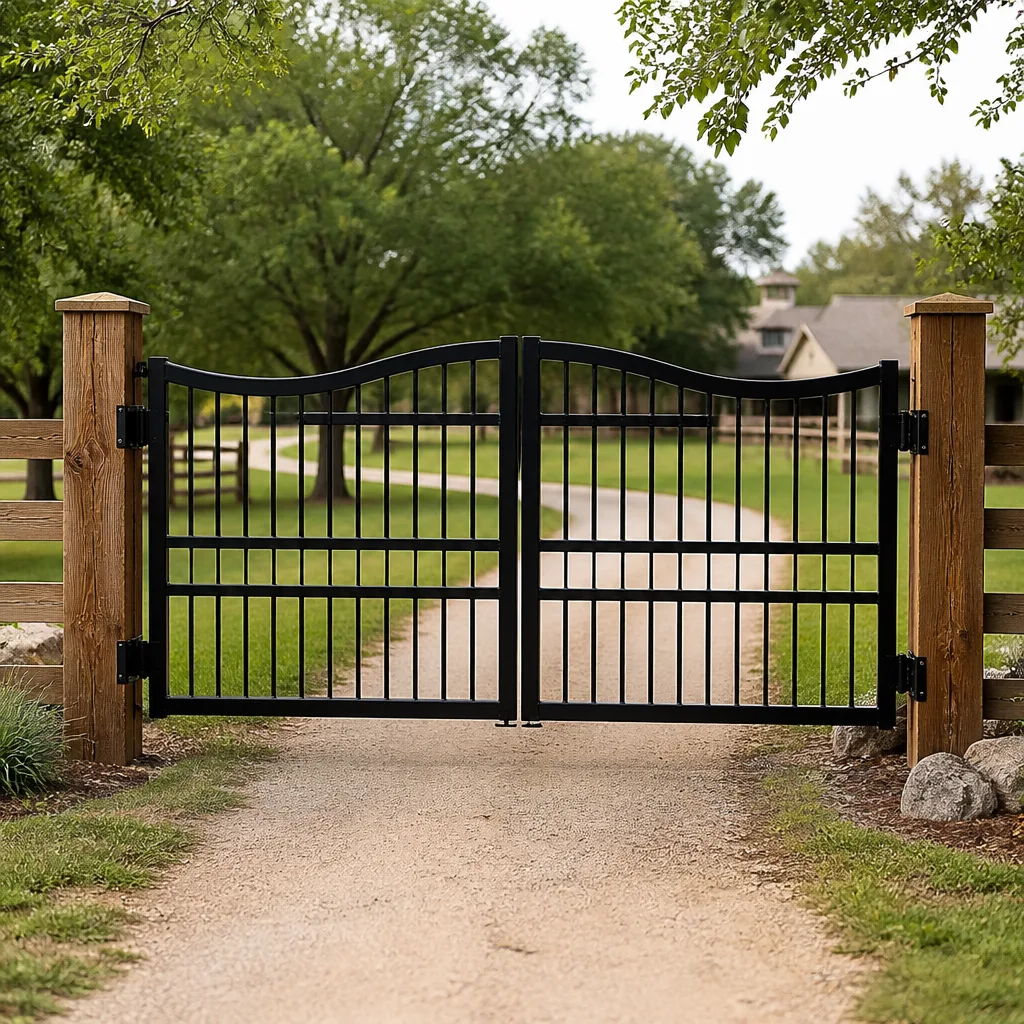 Farm & ranch
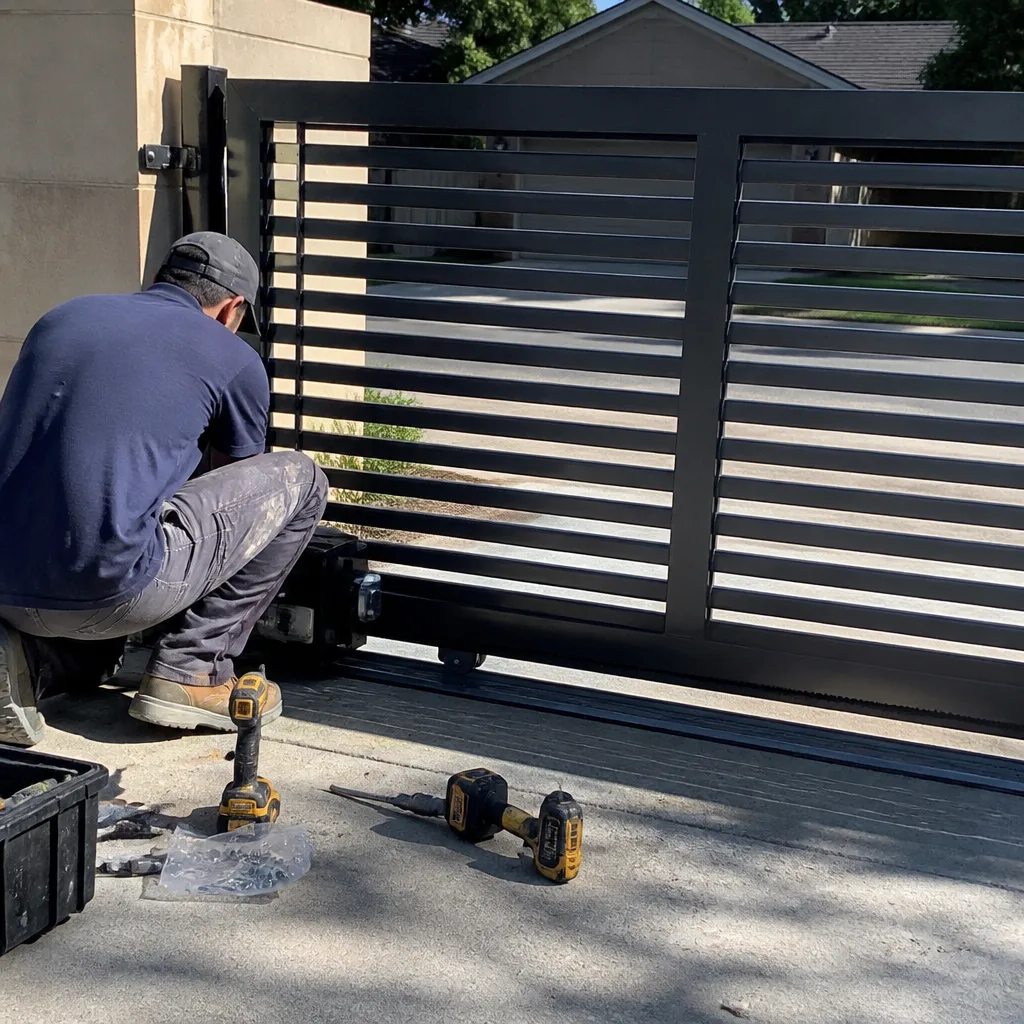
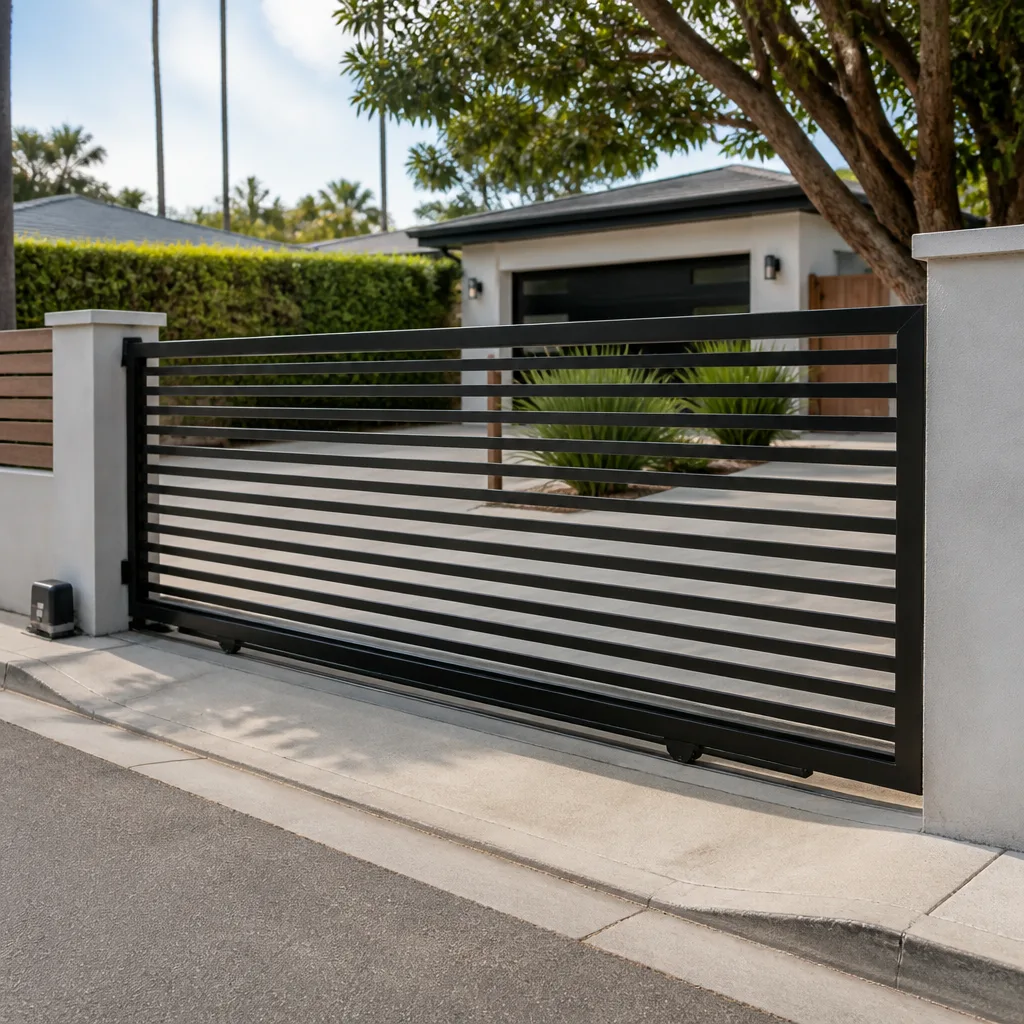 Sliding driveway gates
 LiftMaster operators
Free on-site gate assessment - hinges, posts, and your LiftMaster or Nice gate operator checked before anything is quoted
The assessment is free and the quote is the invoice.
Get your free estimateGate Repair Emergency Preparedness Guide for Chula Vista Homes
A gate stuck open is a security emergency. A gate stuck closed is a fire-evacuation emergency. Most Chula Vista homeowners don’t realize these are two completely different problems requiring two completely different responses until they’re standing in front of a dead operator at 6 a.m. with a commute ahead and no way out. This guide is built from what we’ve seen on gate repair service calls across Chula Vista, from the Otay Ranch hills to the older neighborhoods west of the 805. We’re going to walk you through the manual release procedure for the brands we service most, what to do before a wildfire evacuation order, how your gate behaves when SDG&E power drops, and the temporary security measures that actually hold meaning when your gate is stuck open overnight.
Quick Answer
A gate stuck open in Chula Vista is an urgent security problem that needs immediate temporary measures, like a chained closure or a vehicle positioned to block entry, followed by a same-day repair call. A gate stuck closed is a life-safety problem, especially in wildfire-adjacent neighborhoods like Otay Ranch, Rolling Hills, and Eastlake, because it can block your evacuation route. You need three things ready before either scenario happens: a working manual release key for your specific operator brand, a configured power-outage default setting you chose on purpose, and the phone number for a gate specialist who can reach you quickly, which is (833) 593-7101.
Styles & brands we work with
- Wrought iron
- Wood & steel frame
- Farm & ranch
- Sliding driveway gates
- LiftMaster operators
Table of Contents
- Manual Release Procedures by Operator Brand
- Wildfire Evacuation Protocol for Eastern Chula Vista
- How Your Gate Behaves When Power Drops
- The Emergency Contact Sequence: What to Have Ready
- Temporary Security When Your Gate Is Stuck Open
- When the Gate Is Stuck Closed: Getting Out Safely
- Preventive Steps That Prevent Emergencies
- Common Mistakes to Avoid
- When to Call a Professional
- Frequently Asked Questions
Manual Release Procedures by Operator Brand
Every electric gate operator has a manual release mechanism that lets you swing or slide the gate by hand when the motor won’t run. The problem is that the release looks different on a FAAC than it does on a Linear, and if you’ve never found it before the emergency, you’ll be hunting for it in the dark. We’re going to cover the release procedure for the five operator brands we see most often on Chula Vista residential gates. One critical thing to understand before we get into brand specifics: residential operators generally use a keyed release that disconnects the motor from the gate arm, while commercial operators often have a release lever inside a locked box that requires a padlock key. The difference matters, because a homeowner who has only ever used a residential Mighty Mule release will feel lost in front of a commercial BFT or DoorKing cabinet.
Here is the step-by-step for the brands you’re most likely to have on your property:
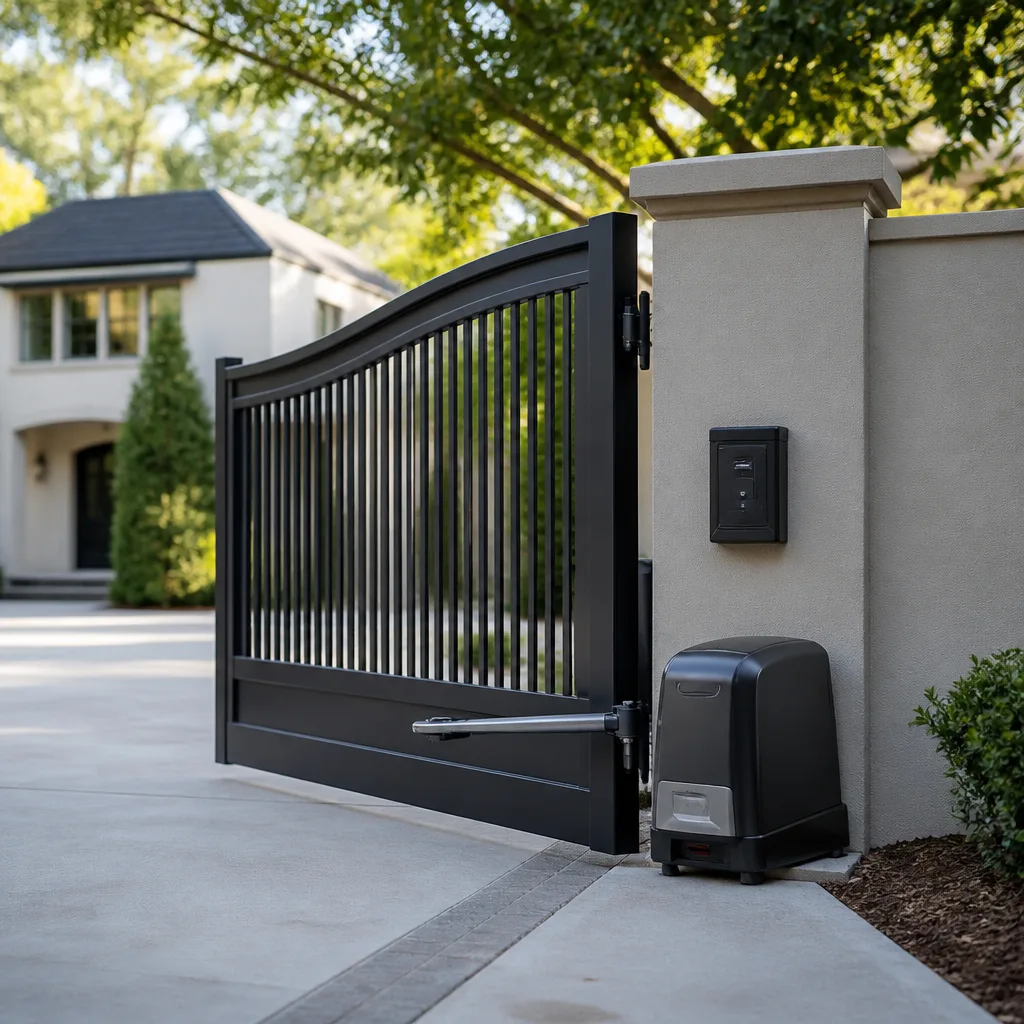
- LiftMaster: Look for the release handle on the side or front of the operator housing. Turn the key clockwise about a quarter turn and pull the handle outward. You should hear a click as the motor disengages. The gate will now move by hand. To re-engage, push the handle back in and turn the key counterclockwise until it locks.
- FAAC: FAAC operators typically use a manual release key with a triangular or square post that inserts into a small socket on the operator body. Insert the key, turn it, and the hydraulic lock releases. Some FAAC models require you to hold the key turned while you push the gate. If the gate won’t budge with the key turned, the hydraulic bypass may be stuck, and you need a technician.
- Linear: The Linear release is usually a red or yellow T-handle on top of the operator. Pull it straight up until it stops. The gate should now swing freely. Linear’s residential slide-gate operators often have a chain-release lever inside the cover. If the cover is padlocked, use the key that came with the operator, which most homeowners lose. We keep a set of common cover keys on our trucks.
- Viking: Viking operators have a manual release knob on the front of the unit, often under a small flip-up cover. On some Viking models, you turn the knob counterclockwise until the gate disengages, then manually push the gate to the fully open or closed position. Viking’s commercial lines use a different mechanism entirely, with an internal release that requires removing the cover.
- Ghost Controls: These are newer, battery-powered and solar-ready systems common on Chula Vista homes with newer gate installations. The release is a pull-pin located at the bottom of the operator arm. Pull the pin and lift the arm off the gate bracket. The gate will then move freely. Re-engagement is the reverse: align the arm, insert the pin, and press the operator’s sync button.
If you can’t find the release mechanism, don’t force anything. A stuck release on a FAAC or BFT can damage internal gears, and that turns a $200 emergency repair into a $900 operator replacement. Call us at (833) 593-7101 and we’ll talk you through locating it on your specific operator model.
Wildfire Evacuation Protocol for Eastern Chula Vista
The 2007 Harris Fire came within a few miles of Chula Vista’s eastern edge, and it changed how San Diego County thinks about residential access. Homes in Otay Ranch, Rolling Hills, and the unincorporated areas east of Eastlake sit in the wildland-urban interface, where evacuation orders come with little warning and every minute matters. If you have an electric gate on a home in these neighborhoods, your wildfire preparation needs to include the gate specifically, not just the defensible space around your house.
Set your gate to fail open during fire season. Most modern operators give you a choice for power-failure behavior: the gate stays locked in place, the gate opens, or the gate releases to manual mode. During peak fire season, which in Chula Vista means September through November when the Santa Ana winds are strongest, you want the gate set to release to manual or default open. A gate that fails open slows down an evacuation by zero seconds. A gate that fails closed can trap you on your own property while an evacuation order is active, and a fire engine at the curb has no way to force your gate without destroying it.
Here is the Gate Repair Maintenance Checklist for Chula Vista Homeowners we use for pre-season prep east of the 805:
- Locate your manual release key and attach it to a hook inside the garage, not in a kitchen drawer. You will not remember which drawer.
- Test the manual release once at the start of fire season. If the key turns but the gate doesn’t disengage, schedule a service call before the heat arrives.
- Set the power-failure mode to open or release during high wind warnings. Most operator keypads have this setting in the menu under “Power Failure” or “AC Loss.”
- Check the gate’s mechanical condition. A gate with a bent wheel or a failing hinge will jam when someone pushes it manually. If you can’t move the gate by hand with the operator disengaged, a technician needs to address the mechanical problem now.
- Program an emergency keypad code or install a Fire Department lockbox on the operator post so first responders can access the release if you’re not home.
We’ve helped Chula Vista homeowners configure their operators for fire-season readiness, and the homeowners who take this seriously are the ones who sleep better when the wind picks up at 3 a.m. If you’re not sure how to change the power-failure setting on your specific operator, call Gate Repair in Chula Vista and ask for a fire-season inspection. We’ll check the setting, test the release, and give you a written checklist.
How Your Gate Behaves When Power Drops
Chula Vista doesn’t lose power often, but when it does, it’s usually during heat waves or high winds, the same conditions that create fire evacuations. The question of whether your gate opens, closes, or locks when SDG&E kills the circuit depends entirely on the operator’s power-failure design and how you’ve configured it. Most homeowners have never thought about this, which means the gate is in whatever default setting the factory shipped, and the factory default is usually locked closed.
There are three general behaviors:
- Fail-secure (locked closed): This is the default on most automated gate systems. When power drops, the operator keeps the gate locked in position. If the gate was closed, it stays closed and usually can’t be released without the manual key unless you configured otherwise.
- Fail-open: Some operators, particularly high-security commercial systems, are set to open the gate when power fails. This is the safest choice for evacuation routes but the worst for security, since a power outage leaves your property open.
- Manual-release-on-power-failure: This is a middle-ground option on newer FAAC and LiftMaster operators: the motor releases and the gate becomes manually movable, but the gate doesn’t swing open on its own. The homeowner can push it open but no one is alerted to do so.
For most Chula Vista homes, the smart setting is manual-release-on-power-failure during the fire season and fail-secure during the rest of the year. The trade-off is simple: in a power outage, a gate that releases to manual mode can be pushed open by anyone who knows to try, which is a security gap. A gate that locks closed blocks your own escape route. We recommend manual release for any home east of the 805, because evacuation trumps security in that geography. If your operator has a battery backup, the behavior is different, because the battery keeps the operator running for a limited number of cycles. Viking and Ghost Controls battery-backed units often run the gate fine for a few days of normal use. The failure comes when the battery ages, and you won’t know it’s weak until the gate stops mid-cycle during the one outage that matters.
The Emergency Contact Sequence: What to Have Ready
When your gate is stuck open or won’t close, the phone call you make to a gate repair service sets the pace for the entire repair. We get two kinds of calls in Chula Vista: the homeowner who has the operator brand, the model number, and a description of the failure, and the homeowner who says, “My gate is broken, can you come today?” The first caller gets a faster diagnosis and a faster truck. The second caller gets a technician who arrives with a full truck and takes the first hour to identify what he’s looking at.
Here is the information sequence, in order, that will get you the fastest, most useful response:
- The operator brand and model number. This is on a sticker inside the operator cover. LiftMaster, FAAC, BFT, Linear, Viking, Ghost Controls, DoorKing, Elite, and Mighty Mule all have different failure patterns and different parts, and knowing the brand narrows the diagnosis immediately.
- What the gate is doing or not doing. Is it stuck mid-cycle? Won’t open? Won’t close? Opens a foot and stops? The specific behavior tells us which component to suspect, whether that’s a limit switch, a control board, a safety edge, or a loop detector.
- When the problem started and what was happening around that time. After a rain? During a power outage? After a delivery truck hit the gate? After a landscape crew ran over a loop wire?
- Whether the gate is currently open or closed, and whether it’s blocking a vehicle or a person. This changes the urgency of the response. A gate stuck open on a street-facing driveway is a security problem that can usually wait until morning. A gate stuck closed on the only exit from the property is an immediate life-safety problem.
- Your address and the access situation. If your gate is the only entrance, and it’s stuck closed, the tech needs to know if there’s a pedestrian gate or if he’ll need to unhitch the gate arm from outside.
Write this information on a card and tape it inside the operator cover or put it in a note on your phone. When the emergency happens, you’ll be reading from the card instead of trying to remember where you put the operator manual from a 2017 installation. Our Electric Gate Repair in Chula Vista page has more detail on the specific failures for each operator brand, which can help you narrow down the problem before you even pick up the phone.
Temporary Security When Your Gate Is Stuck Open
A gate stuck open turns your property from a controlled-access compound into a driveway with an expensive sculpture blocking half the entrance. The real risk isn’t the gate itself, it’s that the open gap signals unmonitored access, and in Chula Vista, a long driveway without a functional gate is an invitation. But not all temporary measures are equal, and some of what homeowners do creates what we call false confidence: it looks like a barrier but doesn’t actually slow anyone down.
Here is what works and what doesn’t while you wait for a technician:
- A padlock and chain across the driveway opening. This works if the chain is at least 3/8 inch thick and the padlock is a hardened-steel body. It does not work if you run a thin cable with a luggage lock between two flimsy brackets. A bolt cutter takes five seconds on a thin cable.
- A vehicle parked across the opening. A car or truck physically blocking the driveway is more effective than any chain, because moving a vehicle is slow and loud. Park it close enough that no one can squeeze around the rear bumper.
- Temporary fence panels or jersey barriers. These are the strongest option if you have them or can rent them, but they’re overkill for a gate that will be fixed within 48 hours.
- Motion-activated floodlights and a visible camera. Lights do more than any physical barrier to deter casual intrusion, especially when the gate is open at night. A camera that records is your evidence if something does happen.
- A handyman’s temporary wooden gate or plywood sheet. This is the false confidence trap. It looks like a barrier, but it can be lifted or pushed over in seconds, and it doesn’t deter anything except maybe a cautious dog.
If the gate is stuck open and you can still move it manually using the release, the simplest fix is to disengage the operator and push the gate closed, then secure it with a chain and padlock wrapped around the gate post and the gate frame. This restores the physical barrier while you wait. The operator stays broken, but the gate itself is doing its job. If the gate won’t move manually, the mechanical failure is more serious, and a technician needs to address the hinge or wheel problem before the gate will close on its own again.
When the Gate Is Stuck Closed: Getting Out Safely
A gate stuck closed is the scenario that creates the most panic, and rightly so, because it can block the only vehicle exit from a property. In Chula Vista, this matters most in the eastern neighborhoods where evacuation routes are limited and fire danger is real. The first priority is not to fix the gate. The first priority is to establish a way out.
Here is the progression we recommend:
- Find the release key and disengage the operator. This is why the key needs to be accessible from inside the property, not in a drawer in the house. Once the operator is disengaged, push the gate open by hand.
- If the gate won’t move manually with the operator disengaged, the problem is mechanical, not electrical. A bent wheel, a dropped hinge, or a rock jammed in the track. Do not force the gate, because forcing a bound gate can twist the frame and turn a $100 wheel replacement into a $1,500 gate replacement.
- If you cannot open the gate at all, look for a secondary exit. Many Chula Vista properties have a pedestrian gate or a back fence gate. If you don’t have one, this is the moment to know where the property line fencing is weakest, because in a true emergency, cutting a fence section is faster and safer than forcing a welded gate.
- Once you’re out, call a gate specialist. Describe the failure: is the gate physically jammed, or did the operator fail while the gate was closed? The answer determines whether the technician brings a mechanical toolkit or a diagnostic kit for the control board.
If the gate is stuck closed because of a power failure and you have no release key, you have the exact scenario the 2007 Harris Fire exposed. Some Chula Vista-area properties had electric gates with no outside-accessible manual release, and emergency crews couldn’t reach the homes without cutting the gate. If your gate has no outside release and no lockbox, that’s a red flag, and we recommend installing one before fire season. A Fire Department lockbox costs less than $100 and holds the release key securely.
Preventive Steps That Prevent Emergencies
Every gate failure we see in Chula Vista has a trail of neglect behind it, but the neglect is usually invisible until something breaks. Here is the preventive sequence we use on service calls, and it’s worth doing once a year:
- Lubricate the gate wheels, hinges, and chain if you have one. Chula Vista’s coastal air is salty within a few miles of the bay, and that accelerates rust on exposed gate hardware. A dry wheel creates the drag that eventually overheats the operator and burns out the motor.
- Check the safety edges and photo eyes. These are the sensors that stop the gate when a child or pet is in the path. A dirty or misaligned sensor is the most common reason an automatic gate won’t close, because the system interprets the dirty sensor as an obstruction.
- Test the manual release, not just the remote. The release mechanism seizes over time, especially on salt-air-exposed operators. If the key won’t turn, you have a future emergency waiting to happen.
- Listen to the gate. A gate that grinds, scrapes, or hesitates is telling you something. These sounds precede every mechanical failure we’ve ever seen, but homeowners tune them out until the gate stops entirely.
- Check the operator’s battery backup if you have one. Battery-backed Viking and Ghost Controls units have a lifespan of three to five years. Most homeowners never replace the battery until the gate fails during an outage.
The cost of an annual preventive service call is a fraction of an emergency repair. And the emergency repair always lands on the worst possible day. If you’re not confident inspecting the gate yourself, our Gate Installation in Chula Vista page covers what a full system replacement involves if your current gate has aged past the point of reliable preventive maintenance, but most existing gates can be brought back to reliable condition with the right parts and attention.
Common Mistakes to Avoid
- Testing the manual release only when the gate is already broken. The release mechanism needs to be exercised periodically. A key that hasn’t been turned in five years won’t turn when you need it in an evacuation.
- Ignoring a gate that’s slowing down. A gate that takes longer to open each month is telling you the operator is working harder than it should. By the time it fails, the motor has often overheated and seized.
- Using a padlock that’s too small on a temporary chain. A thin padlock on a thick chain is the weakest link. A determined intruder doesn’t cut the chain, they cut the padlock shackle.
- Forcing a gate that’s bound or jammed. We’ve replaced gates that were twisted because a homeowner used a vehicle to push a stuck gate. The damage from force always exceeds the original mechanical problem.
- Leaving the operator in factory default for power failure. Factory default on most operators is fail-secure, which means locked closed in an outage. For eastern Chula Vista homes, that’s the wrong setting for fire season.
- Waiting until the gate fails to find the operator brand. The brand and model are on the sticker inside the cover. Read it now and write it down. It’s the single most useful piece of information you can give a technician.
- Assuming a security camera is a security barrier. A camera records intrusions, it doesn’t prevent them. If the gate is stuck open, a physical barrier is the only thing that slows someone down.
When to Call a Professional
Some gate problems are worth handling yourself, but most involve an electric operator, a mechanical failure, or a fire-safety concern that needs a gate specialist. If your gate won’t move manually even with the operator disengaged, the problem is in the wheel, hinge, or track system, and attempting a DIY repair puts you under a heavy gate that can drop or swing unpredictably. If the operator runs but the gate doesn’t move, the problem is likely in the gearbox or clutch, which requires replacement parts and calibration. If the gate behaves erratically, opening when it shouldn’t or reversing for no reason, the control board or sensors need diagnostics. Gate Repair Chula Vista offers free estimates in Chula Vista, and our team works on FAAC, BFT, Linear, Viking, and the other major operator brands daily. Call (833) 593-7101 and tell us what your gate is doing, and we’ll tell you what it likely needs before we even roll a truck.
Frequently Asked Questions
Emergency gate repair in Chula Vista typically ranges from $150 to $450 for common failures like a bad limit switch, a misaligned safety sensor, or a stuck manual release, while more involved control-board or motor replacements run $500 to $1,200 depending on the operator brand and model. The final price always depends on what we find when we diagnose the system, and we quote the work and get your approval before any repair starts. Call (833) 593-7101 for an exact quote, and our estimates are free.
For stuck-open gate emergencies in Chula Vista, we can usually dispatch a gate specialist the same day, and for stuck-closed gates where the property has no other vehicle exit, we treat it as a priority call and work to get a technician to you as quickly as possible. The fastest way to secure a same-day appointment is to call (833) 593-7101 and describe the failure using the information sequence above, because the more we know heading into the call, the faster the resolution.
We service LiftMaster, FAAC, BFT, Linear, Viking, Ghost Controls, DoorKing, Elite, and Mighty Mule gate operators, covering both residential and commercial systems in Chula Vista and across San Diego County. We’re brand-agnostic, meaning our recommendation is based on what your gate needs and what your budget allows, not on which brand we’re incentivized to sell. That’s why our Gate Repair Chula Vista home page lists the brands upfront, so you know before you call whether we can help.
Yes, we handle residential driveway gates and commercial electric gate systems in Chula Vista, including multi-unit apartment entry gates, business park vehicular gates, and access-control gates with intercom and keypad entry. The manual release procedure differs between residential and commercial operators, which is one reason it’s worth having a specialist who works on both rather than a handyman who’s only seen one type. Our Gate Repair in Chula Vista page breaks down the service areas and operator coverage in more detail.
If your gate won’t close during a power outage and you need it closed for security, disengage the manual release on the operator and close the gate by hand, then secure it with a padlock and chain at the gate post. If the gate is already closed and you need it open to leave, use the release key and push the gate open manually. The key needs to be accessible from inside your property, and this is exactly why we recommend keeping the release key on a hook in the garage and testing it before fire season in Chula Vista’s eastern neighborhoods. If you run into trouble, call (833) 593-7101 and we’ll walk you through the release for your specific operator.
For homes in eastern Chula Vista, especially Otay Ranch, Rolling Hills, and Eastlake, we recommend setting the operator to manual-release-on-power-failure during fire season so the gate can always be pushed open by hand in an evacuation, and switching to fail-secure during the rest of the year for security. The setting is in the operator’s menu under power-failure or AC-loss options, and if you can’t find it, a gate specialist can configure it in minutes during a routine service call. If your property has no secondary pedestrian exit, the evacuation concern wins, and manual release should be the year-round setting.
The Bottom Line
A working electric gate in Chula Vista is a security asset and a daily convenience. A broken one is a liability, and the kind of liability depends on which position it fails in. The difference between a gate emergency and a gate inconvenience comes down to preparation: knowing your operator brand, testing the manual release, configuring your power-failure setting for fire season, and having the phone number for a gate specialist who knows your system. For more guides & resources on keeping your gate reliable year-round, visit our blog. For Chula Vista homeowners, especially east of the 805, the 2007 Harris Fire is the reminder that gates aren’t just about keeping things out. They’re also about getting you out. When your gate fails, and it will eventually, you’ll be glad you spent ten minutes preparing now instead of discovering the release key is missing during an evacuation order.
Written by the team at Gate Repair Chula Vista, serving Chula Vista since 2016.
See the difference
 Before
 After
 Before
 After
 Before
 After