
Last updated November 2, 2026
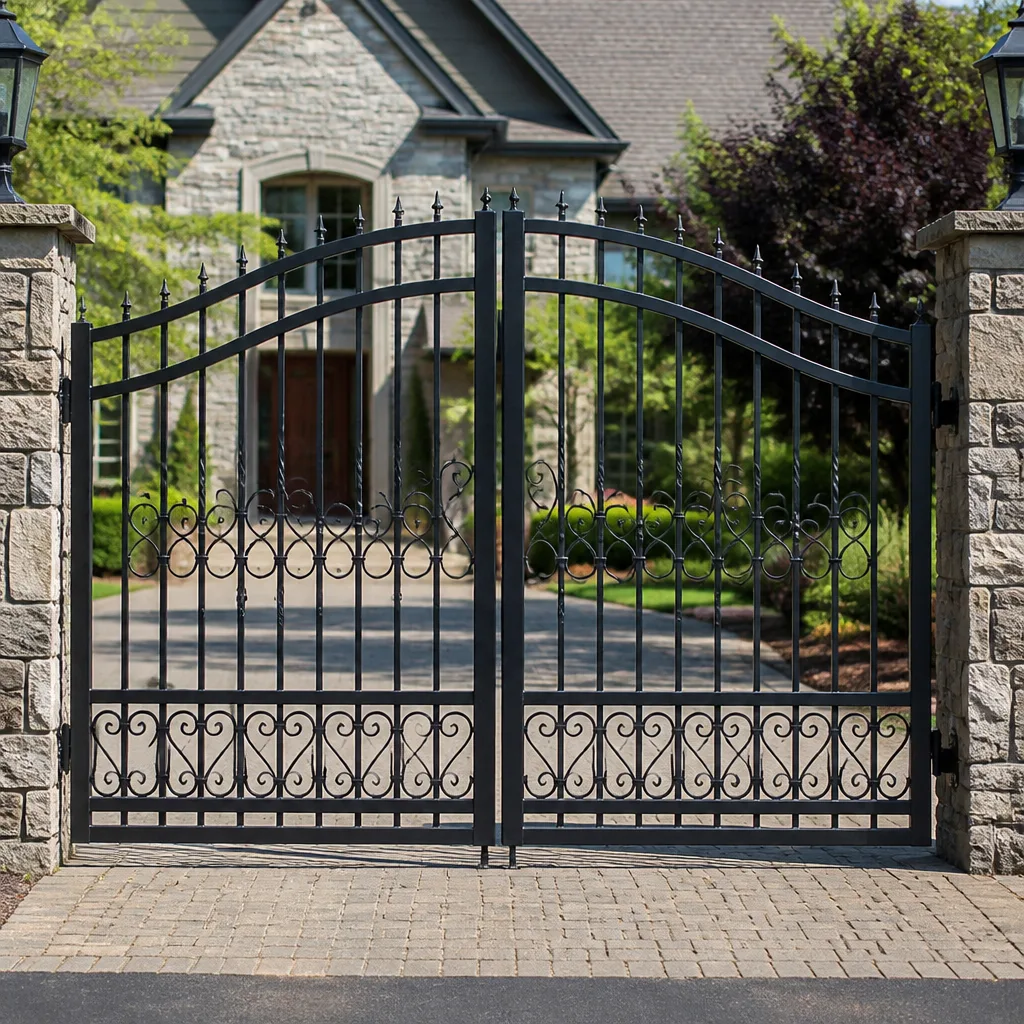 Wrought iron
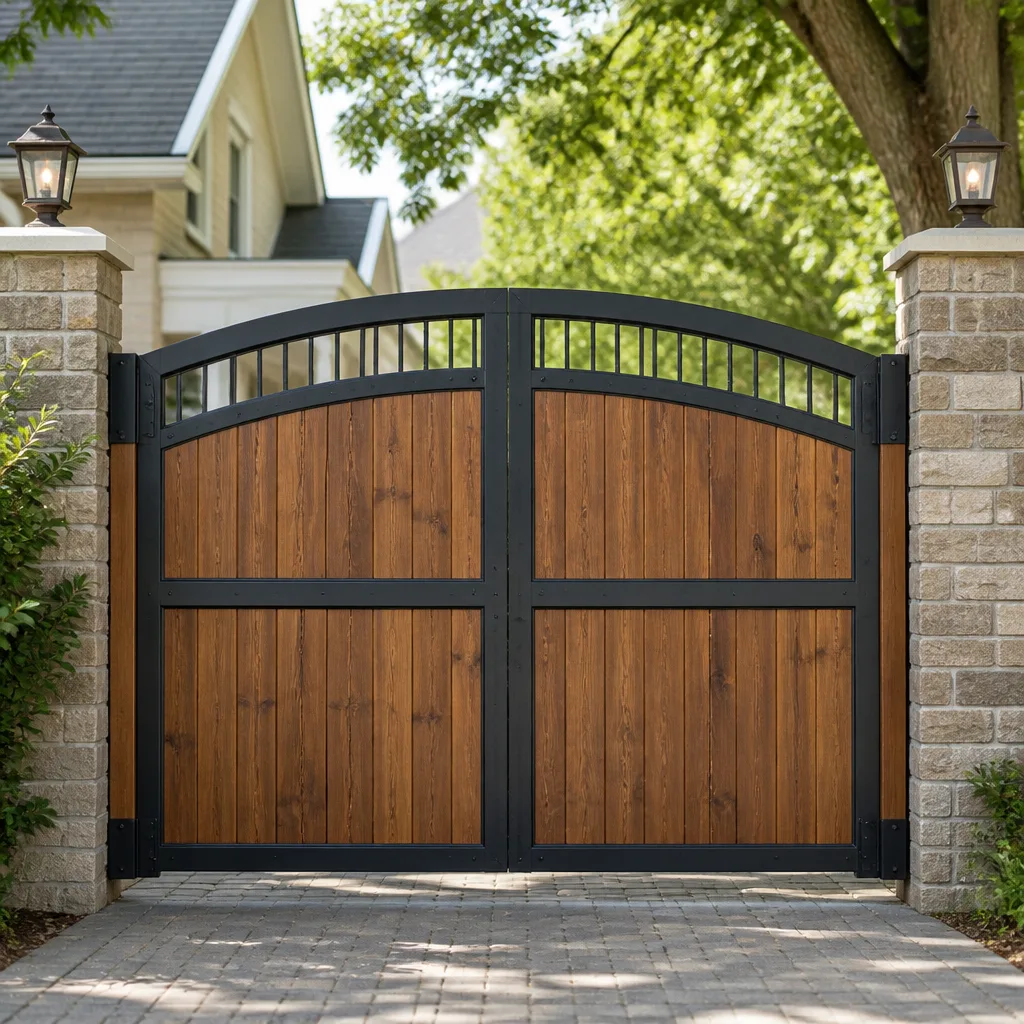 Wood & steel frame
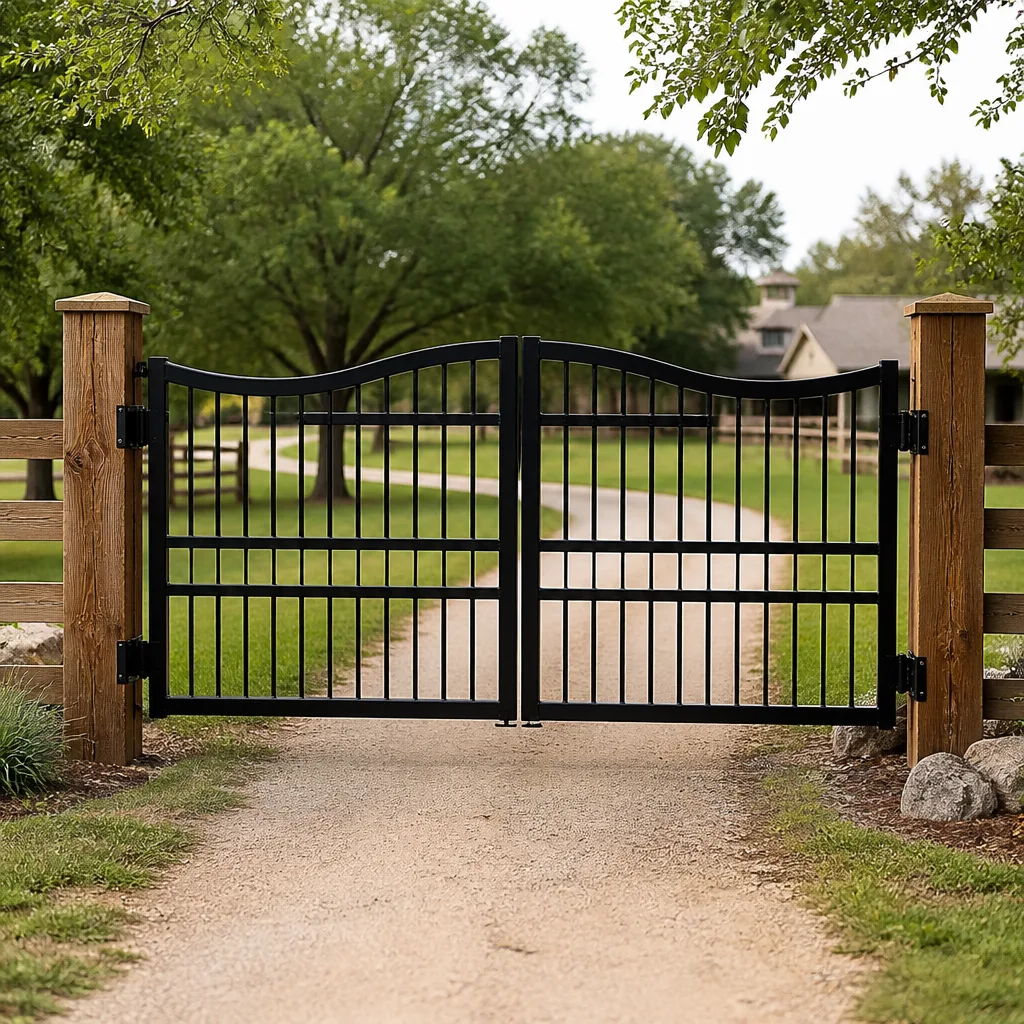 Farm & ranch
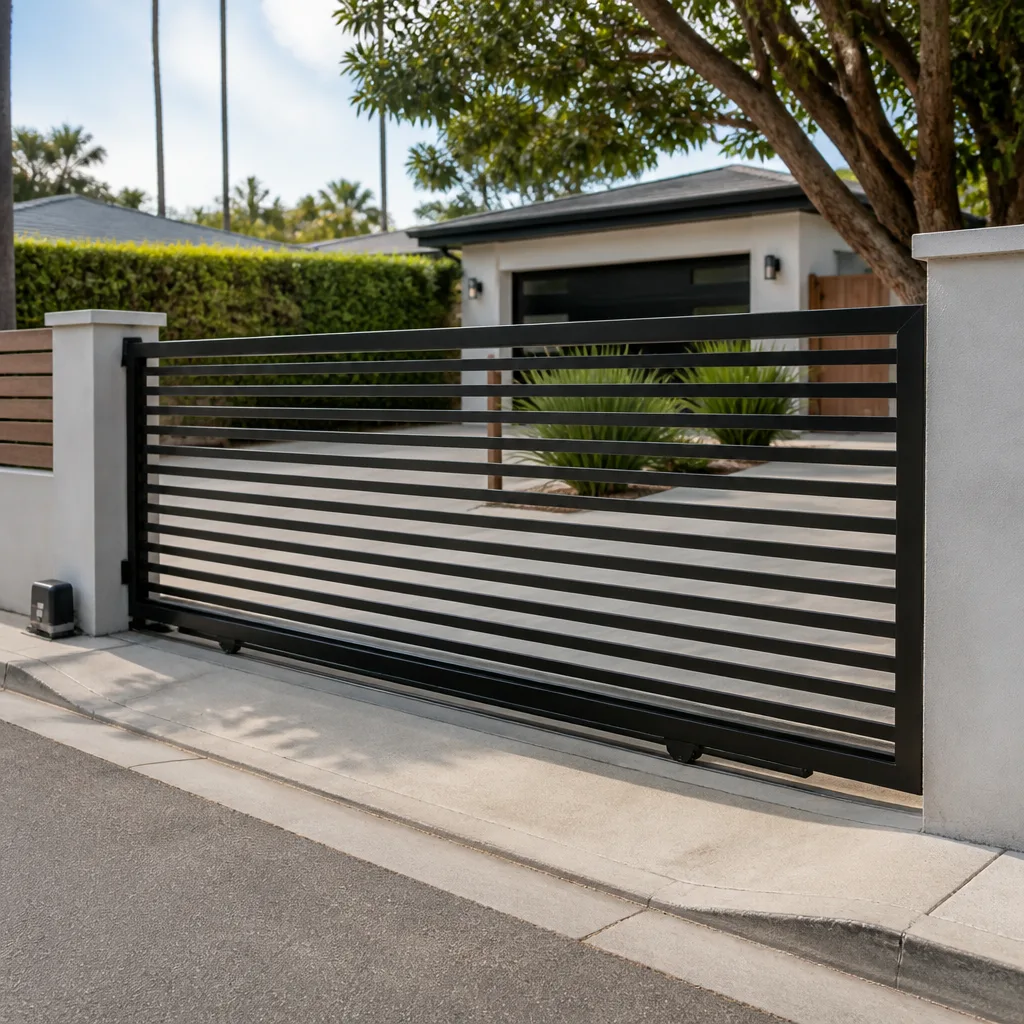 Sliding driveway gates
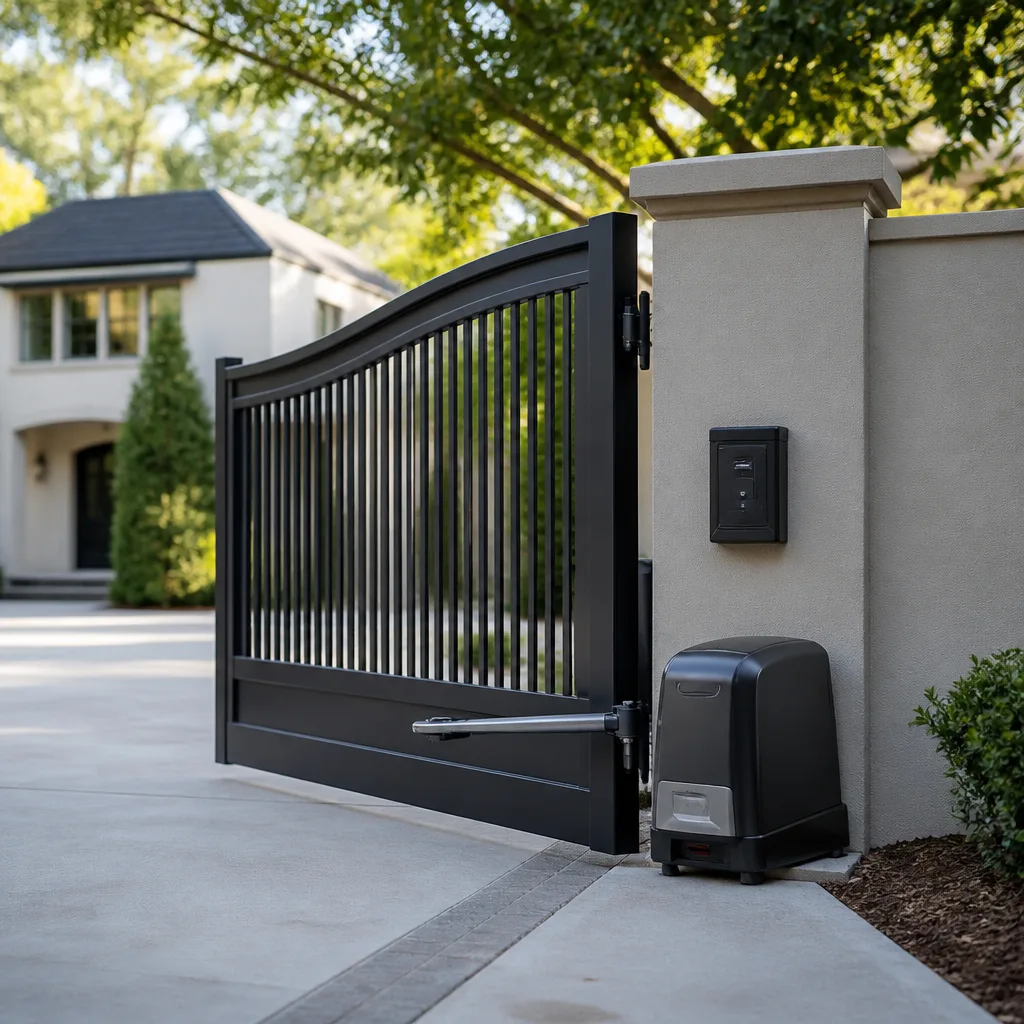 LiftMaster operators
Free on-site gate assessment - hinges, posts, and your LiftMaster or Nice gate operator checked before anything is quoted
The assessment is free and the quote is the invoice.
Get your free estimateGate Repair Troubleshooting: Common Problems and How to Fix Them
The most expensive gate repair call we take isn’t the dramatic failure. It’s the owner who ignored a two-inch sag for six months because the gate “still closes most of the time,” then sheared the gearbox on a Tuesday morning. In Chula Vista, where salt air works on hinges year-round and summer heat pushes operators past their duty cycle, small symptoms compound fast. This guide teaches you the actual diagnostic sequence a trained gate technician uses, not a generic list of complaints. You’ll learn which problems you can safely fix yourself, which ones need our Gate Repair services, and how to describe an issue accurately so the first service visit actually solves it.
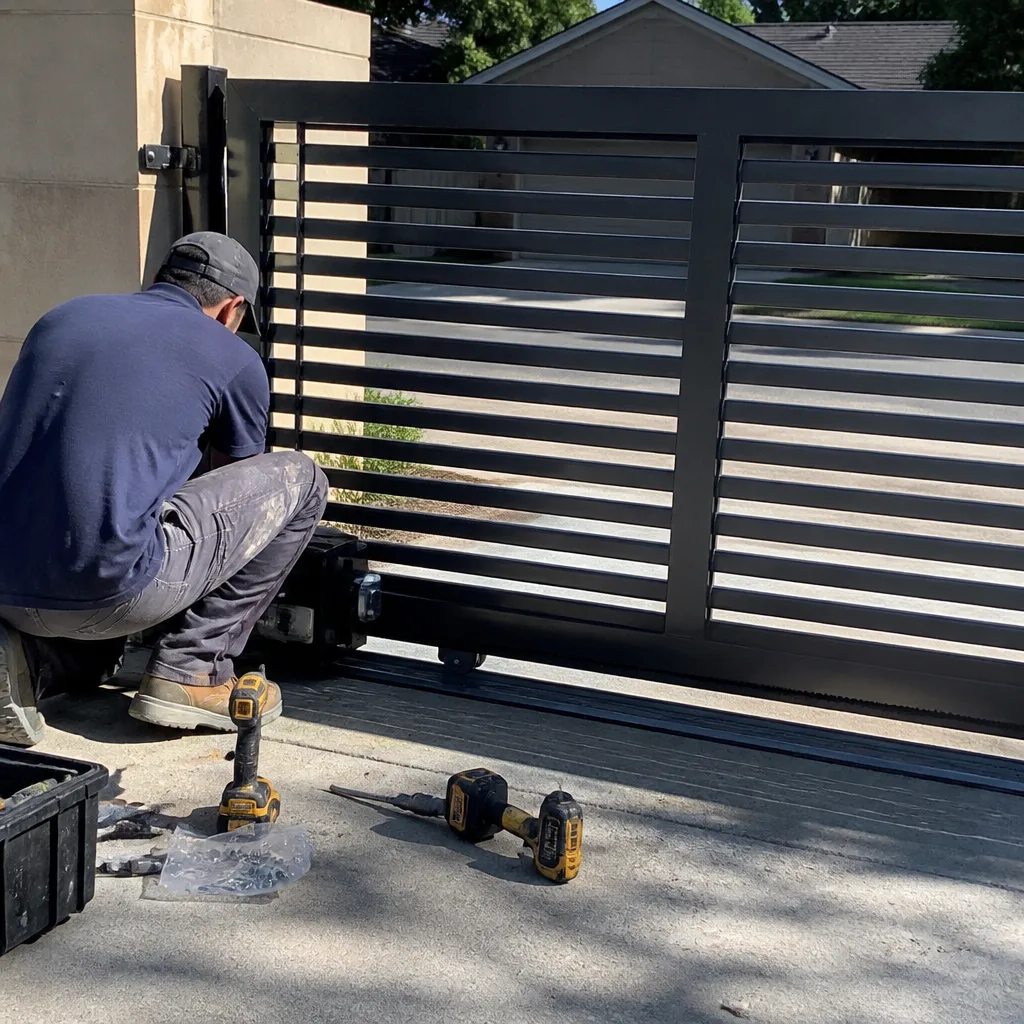
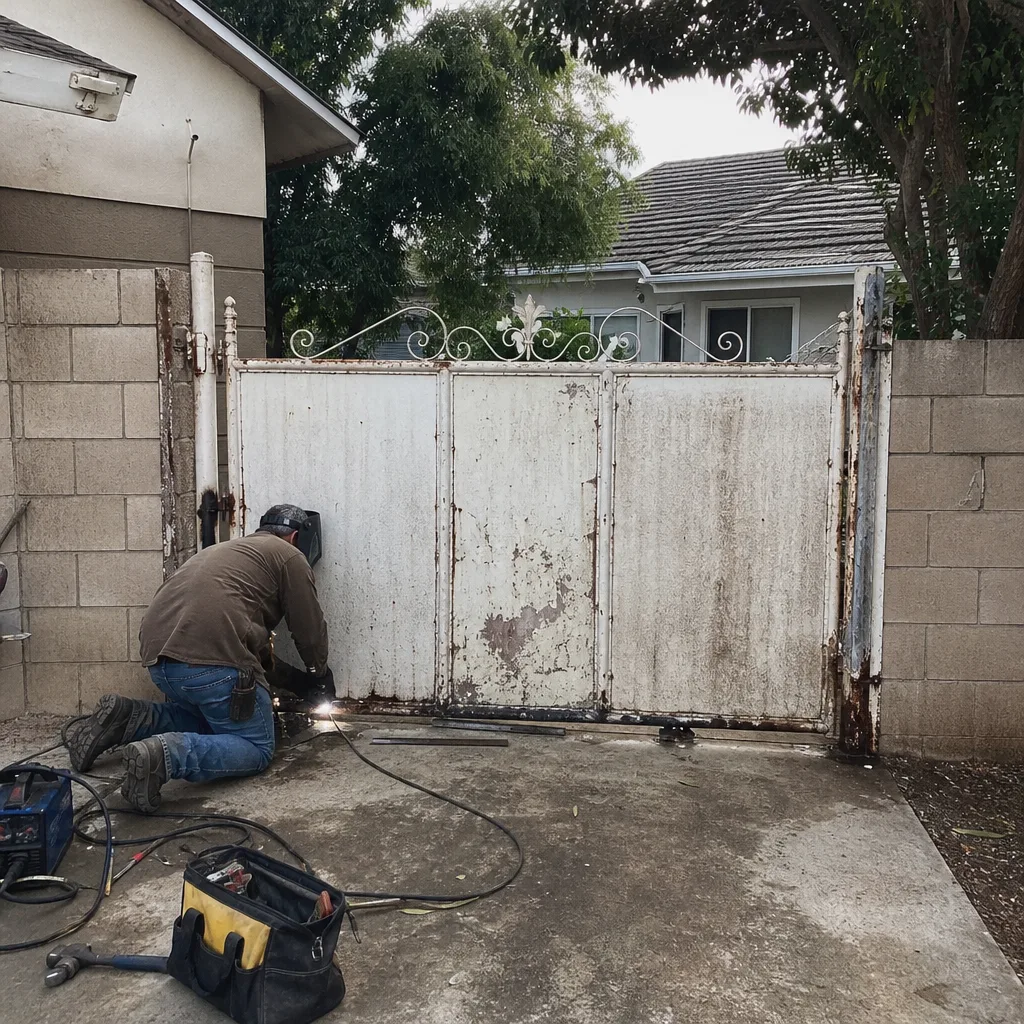
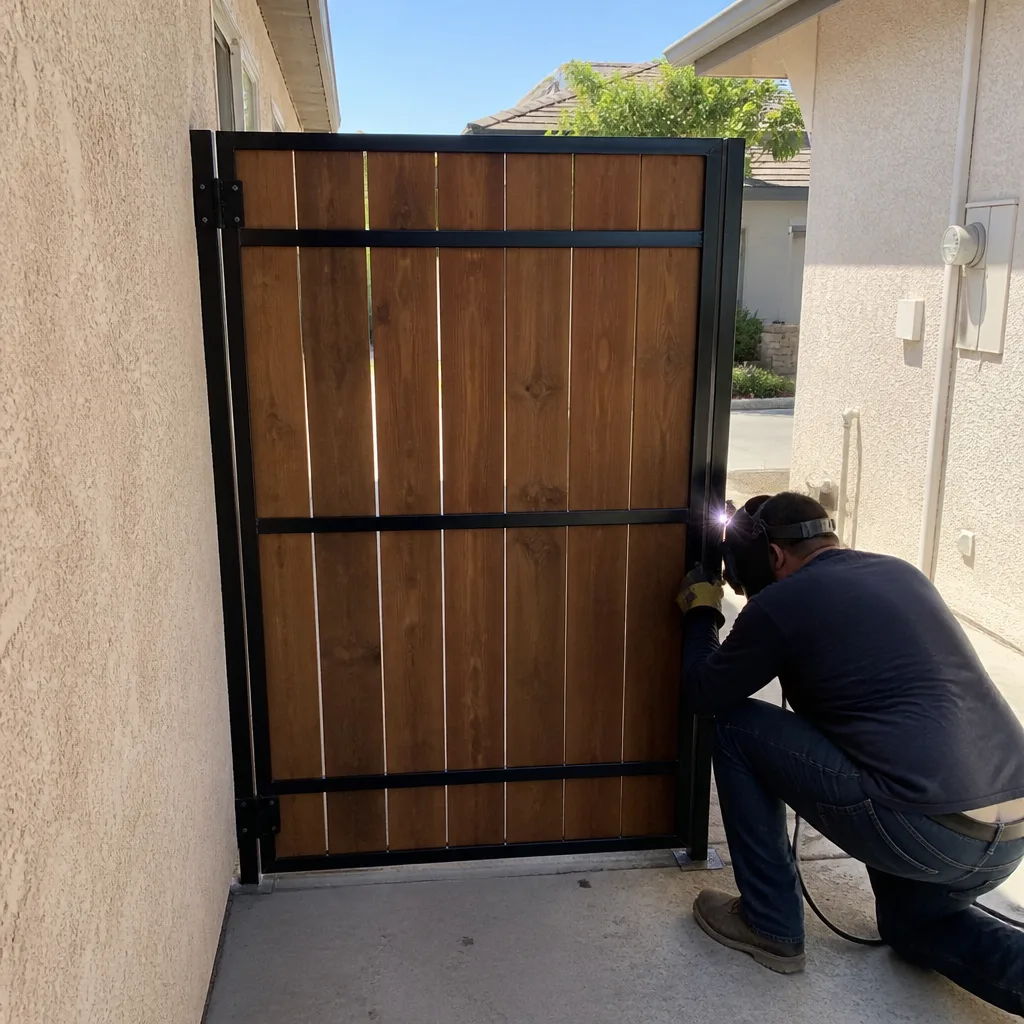
Styles & brands we work with
- Wrought iron
- Wood & steel frame
- Farm & ranch
- Sliding driveway gates
- LiftMaster operators
Quick Answer
Most gate failures trace to one of four zones: power supply, control board, mechanical drive, or the physical gate structure. Start with the simplest checks first: confirm the breaker and battery backup, clear any obstruction from the safety sensor path, and test the manual release. If the gate still misbehaves after those three checks, you’re almost certainly dealing with a limit switch, capacitor, or control board issue that needs a gate specialist with brand-specific diagnostic tools. For deeper reading, see our Gate Repair Warning Signs: A Chula Vista Homeowner’s Reference Guide.
Table of Contents
- The Four-Zone Diagnostic Method: How a Technician Thinks
- Dead Battery Backup vs. Failed Control Board vs. Tripped Safety Loop: Three Identical Symptoms
- What Your Gate Is Telling You: Grinding, Clicking, and Humming Decoded
- Gate Opens but Won’t Close (or Closes but Won’t Open): The Limit Switch Misdiagnosis
- What You Can Safely Fix Yourself (and What You Absolutely Should Not)
- Brand-Specific Failure Patterns: Linear, Viking, Ghost Controls, and DoorKing
- What Chula Vista’s Climate and Code Mean for Your Gate
- Common Mistakes to Avoid
- When to Call a Professional
- Frequently Asked Questions
- The Bottom Line
The Four-Zone Diagnostic Method: How a Technician Thinks
Every gate problem, no matter how strange it looks from the outside, lives in one of four zones. Skip a zone and you’ll misdiagnose. That’s how a $12 capacitor replacement turns into a $900 motor swap that doesn’t fix anything. Here’s the sequence we walk through on every service call in Chula Vista:
Zone 1: Power Supply
Before touching anything mechanical, confirm the system has power. Check the breaker. Check the GFCI outlet if the operator plugs in rather than hardwires. Check the battery backup if your system has one. In Chula Vista, we see a lot of solar-powered gate operators on larger properties in Eastlake and Rolling Hills Ranch. A solar array that’s partially shaded by a neighbor’s new palm tree can drop voltage just enough to make the operator act erratically without failing outright. That intermittent behavior gets blamed on the control board constantly.
Zone 2: Control Board
The control board is the brain. It reads inputs from remote receivers, keypads, safety loops, and limit switches, then tells the motor what to do. Board failures rarely look like total dead systems, which is why they’re so commonly misdiagnosed. A board with a failing relay might open the gate but not close it. A board with a blown capacitor might work fine in the morning and refuse to respond by afternoon when the Chula Vista sun heats the enclosure.
Zone 3: Mechanical Drive
This is the motor, gearbox, chain, belt, and drive arm. Mechanical failures are usually the easiest to hear and the most expensive to ignore. A grinding gearbox won’t heal itself. A stretched chain just gets looser until it jumps a sprocket and takes out the operator housing with it.
Zone 4: Physical Gate Structure
Most overlooked zone, period. The hinges, the post, the gate leaf itself. A gate that sags puts lateral load on the operator that it was never designed to handle. We’ve seen steel swing gates in the Otay Ranch area bend their own drive arms because the hinge weld failed six months earlier and nobody noticed the gate sitting low. The operator was fine. The structure was the problem.
Here’s the rule: if you don’t know which zone your problem lives in, you’re guessing. And guessing costs money.
Dead Battery Backup vs. Failed Control Board vs. Tripped Safety Loop: Three Identical Symptoms
Here’s a scenario we see at least twice a week across Chula Vista. The gate won’t respond to the remote. The keypad is dead too. The owner assumes the worst: control board fried, big bill. Sometimes that’s right. Often it’s not.
Three completely different failures produce the exact same external symptom: no response from any input device. Let’s separate them.
Dead Battery Backup
Many operators, especially LiftMaster and FAAC residential models, have a battery backup for power outages. When that battery dies, some systems enter a low-power failsafe mode that disables remotes but leaves the hardwired keypad functional. Others just shut down entirely until AC power is restored and the battery is replaced. A dead battery backup is a $40 to $120 fix depending on the battery type and the operator brand.
Failed Control Board
A truly dead control board is the expensive outcome, but it’s also the rarest of the three. Before condemning a board, a technician checks incoming voltage at the board terminals, verifies the transformer is outputting correctly, and looks for visible burn marks or swollen capacitors. On DoorKing and Linear commercial boards, we also check the fuse. A blown control fuse costs about $3. A new board costs $300 to $800 depending on the model.
Tripped Safety Loop
Here’s the one that surprises people. Many gate operators won’t run at all if the safety loop detector is stuck in a fault state. The safety loop is a wire embedded in the driveway that detects vehicle presence. When a loop fails, the detector can send a constant “vehicle present” signal, which tells the board “don’t move, something’s there.” The gate appears completely dead. The fix is a new loop or a loop detector replacement, not a board swap.
The takeaway: before assuming the worst, check power at the outlet, test the battery voltage, and look at the loop detector lights. You might save yourself a $700 misdiagnosis.
What Your Gate Is Telling You: Grinding, Clicking, and Humming Decoded
A trained ear can diagnose about 60% of gate failures before opening the operator cover. Sound is a diagnostic tool. Here are the three most common failure signatures and what they mean.
Grinding
A grinding noise during gate travel means metal-on-metal contact somewhere in the drive train. On a swing gate, it’s usually the gearbox. On a slide gate, it’s often the drive chain running on a dry or misaligned sprocket. Grinding never resolves itself. Every cycle with grinding is removing material from the gears. By the time a customer in Chula Vista calls us about a grinding sound, the gearbox usually needs replacement rather than re-lubrication. The $150 lubrication job was available three months ago. The $600 gearbox replacement is the bill now.
Clicking
A rapid clicking sound when you press the remote but no gate movement points to either a starter capacitor failure or a control board relay failing to engage. Think of the click as the board saying “I heard you, I’m trying” but the motor can’t start. On Ghost Controls and Mighty Mule openers, which use a linear actuator, a clicking sound often means the actuator’s internal screw is stripped. On Viking and Linear swing operators, clicking more often points to the start capacitor. The capacitor is cheap. The actuator is not.
Humming on Startup
A low hum when the gate tries to start but doesn’t move is a classic seized motor or bound-up drive. The motor is getting power and trying to turn, but something is physically preventing movement. Check the manual release first. If the gate moves freely by hand, the problem is in the operator, not the gate. If the gate is hard to move manually, the problem is structural: a failed bearing, a bent track, or a seized hinge. Humming is the sound of a motor working against something it can’t beat. Don’t let it keep trying for long. That’s how windings burn.
Gate Opens but Won’t Close (or Closes but Won’t Open): The Limit Switch Misdiagnosis
If your gate will move in one direction but refuses to move in the other, the motor is almost certainly fine. Here’s the misdiagnosis we see constantly: the owner assumes the motor is “going bad” because the gate is “half working.” The actual culprit is almost always one of two components.
The Limit Switch
The limit switch tells the operator where the gate is in its travel. It’s what makes the gate stop at fully open and fully closed. When a limit switch fails, the board doesn’t know the gate has reached the end of its travel in one direction, so it refuses to move the other way. The board thinks the gate is already at the limit. This is a $80 to $200 repair on most brands, including DoorKing and Linear models. It is not a motor replacement.
The Safety Sensor
If the gate opens fine but won’t close, and you have photoelectric safety sensors mounted near the gate, check the sensor lenses. A dirty lens, a misaligned beam, or a sun-faded sensor can send a constant obstruction signal. The board reads “something’s in the way” and refuses to close. In Chula Vista, we see this constantly with gates that face west. The afternoon sun blinds the sensor receiver and the gate stops closing between 3 PM and sunset. Cleaning the lens or adding a sun shield often fixes it permanently.
What to Check
- Put the gate in manual release and move it by hand. If it moves smoothly in both directions, the mechanical gate structure and hardware are fine.
- Find the limit switch. It’s usually a small assembly near the operator with adjustable cams or magnetic picks. Look for obvious damage or misalignment.
- Check the safety sensor lights. Most sensors have a small LED that shows alignment status. If the LED is blinking or red, the beam is broken.
- If both the limit switch and sensors check out, test the control board by reverting to a manual open/close command from the keypad. If the keypad moves the gate both directions but the remote won’t, the issue is in the receiver, not the board.
The point: don’t replace a motor because a switch failed. The motor is the last thing to suspect when movement works in one direction.
What You Can Safely Fix Yourself (and What You Absolutely Should Not)
Gates are heavy. A steel swing gate can weigh 400 to 800 pounds. A slide gate can weigh over 1,000. Anything involving the physical movement of the gate or the removal of covers on high-voltage components deserves respect. Here’s the honest split.
DIY-Safe Interventions
- Clearing obstructions from the gate path: Check the track on slide gates for rocks, dirt, or debris. In Chula Vista, we see a lot of decomposed granite from landscaping wash into slide tracks after rain. Sweep it clean.
- Cleaning sensor lenses: A soft cloth and a little glass cleaner. That’s it. Cleaning a sensor lens fixes more “ghost” gate behavior than any other single action.
- Testing the manual release: Every operator has a manual release mechanism, usually a keyed handle or a pull cord. Testing it tells you whether the gate moves freely or binds. Knowing this before you call helps the technician diagnose faster.
- Checking the breaker and GFCI: If the operator plugs in, test the outlet with a lamp or a voltage tester. GFCI outlets near gates in Chula Vista trip more often than people realize, especially after rain or when salt air corrodes the outlet contacts.
- Visual inspection of hinges and posts: If you see a visible gap forming between the hinge plate and the post, or rust streaking from the hinge pin, document it and call. Early hinge replacement is a $300 job. A broken post with a fallen gate is a $2,500 emergency.
Do Not Attempt These Yourself
- High-tension spring or cable work: Slide gates use counterbalance springs and drive chains under tension. A spring that releases unexpectedly can cause serious injury. This is not a DIY fix.
- Control board repairs: The board is connected to line voltage on most operators. Testing components live without proper training risks shock and can damage the board further. A meter probe in the wrong place is a $700 mistake.
- Gearbox or motor replacement: These are heavy components that require precise alignment. Misalignment after a DIY install will destroy the new motor within months.
- Any repair on a commercial gate system: Commercial operators like FAAC, BFT, and high-end DoorKing systems have safety edge sensors, loop detectors, and fail-safe logic that must be configured correctly. A homeowner replacing a safety edge incorrectly creates a liability situation. If a gate closes on a vehicle or a person because a safety device was installed wrong, the installer is responsible.
- Weld-crack repairs on gate frames: A hairline crack at a hinge point is a structural failure in progress. Grinding and re-welding requires dismounting the gate leaf. This is crane or lift territory on heavier gates.
The line is simple: if the fix involves tools beyond a screwdriver, a multimeter, or a cleaning cloth, call a gate specialist. The cost of a service call is less than the cost of a mistake.
Brand-Specific Failure Patterns: Linear, Viking, Ghost Controls, and DoorKing
Nine operator brands dominate the Chula Vista market. Each has its own weaknesses, its own failure signatures, and its own service quirks. Knowing these patterns saves diagnostic time and prevents wrong-part replacements.
Linear
Linear residential swing operators are common on mid-size properties in the Terra Nova and Rancho del Rey areas. The most frequent Linear failure we see is the start capacitor. Symptoms: the gate hums or clicks but doesn’t move on the first or second try, then eventually starts. The capacitor is a $15 part. The labor to replace it is about $100. Left unreplaced, the motor starts drawing more current and eventually burns out. The other Linear issue is the limit switch mechanism on older models. The plastic cam wears down and the gate slams at the end of travel instead of easing to a stop.
Viking
Viking makes both swing and slide operators, and their slide operators are workhorses on commercial properties around the Chula Vista industrial parks. Viking’s known weak point is the motor brushes on older models. When brushes wear down, the gate moves slower and slower until it stops entirely mid-cycle. The board is fine. The motor is fine. The brushes are a $40 part. But if you keep running the opener after the brushes are gone, the commutator scores and now the motor is a $500 replacement. Pay attention to a gate that’s lost speed.
Ghost Controls
Ghost Controls is a popular DIY-friendly brand for residential swing gates, especially in newer developments like Cota Vera and southern Chula Vista. The main failure mode we see with Ghost Controls is the limit switch design. These actuators use internal magnetic limit stops that can drift out of calibration after power surges or hard stops. When that happens, the gate opens too far or closes too hard. Recalibration is usually a 15-minute job using the app or the on-board controls. We also see battery issues on Ghost Controls systems with battery backup. The batteries need replacement every 2 to 3 years in Chula Vista’s heat, which shortens their service life.
DoorKing
DoorKing dominates the commercial access world, and their slide operators are everywhere in Chula Vista’s commercial corridors along Broadway and Main Street. The DoorKing failure pattern we see most often is the loop detector. DoorKing loop detectors are sensitive and can drift out of tune, causing the gate to refuse to close or to close on a vehicle that’s already cleared the loop. The fix is a loop detector retune or replacement, not a board swap. DoorKing boards are expensive, and they’re often incorrectly blamed for loop detector failures. We always test the loop detector before touching the board.
What Chula Vista’s Climate and Code Mean for Your Gate
Chula Vista is not San Francisco. It’s not Phoenix. It’s a marine-influenced climate with dry summers, occasional coastal overcast, and salt air from the bay. Here’s what that means for your gate:
Salt Air Corrosion
Properties west of the 805, especially in the older neighborhoods near the bay, deal with salt air corrosion on hinges, control boards, and electrical connections. We see corroded terminal blocks on control boards in coastal Chula Vista homes that are perfectly clean on inland properties. The fix is dielectric grease on all electrical connections and stainless or powder-coated hardware at the hinge points. If you’re specifying a new gate in coastal Chula Vista, aluminum or powder-coated steel is worth the upcharge.
Heat and Capacitor Life
Summer days in Eastlake and Otay Ranch routinely hit 90+. Capacitors don’t like heat. A capacitor that would last 6 years in a marine climate might last 3 in an east Chula Vista summer. The symptom is a gate that gets sluggish on hot afternoons but works fine in the morning. If you see that pattern, budget for a capacitor replacement before it fails completely.
Municipal and HOA Requirements
Chula Vista has specific permitting requirements for gate installation, especially for automatic gates that impact the public right-of-way. Many HOAs in master-planned communities like Eastlake and Rancho del Rey have strict design review processes for any visible gate modification. Before replacing a gate on an HOA property, review the CC&Rs. A gate specialist who knows the local approval process can save you weeks of back-and-forth. Gate Installation in Chula Vista covers the full scope from permit to final inspection.
Click here for Gate Repair in Chula Vista service details.
Common Mistakes to Avoid
- Lubricating without cleaning first: Spraying WD-40 or silicone lube on top of accumulated dust and salt residue creates a paste that accelerates wear. Clean the component, then lubricate. Better yet, use a dry lubricant that doesn’t attract dirt on the Chula Vista dust.
- Replacing the battery without checking the charging circuit: If the charging circuit on the control board has failed, a new battery dies within weeks. The battery was a symptom, not the cause. Test the charging voltage before swapping the battery.
- Continuing to run a grinding gate: Every cycle with a grinding gearbox removes metal. By the time the gate stops, the gearbox is destroyed and the motor may have been damaged by the debris. A grinding noise is a stop-now signal, not a “keep an eye on it” signal.
- Adjusting limit switches without marking the original position: Limit switch adjustments are fine when done carefully. But if you don’t mark the original position before moving anything, you’ve now got two problems: the original issue plus a gate that slams open or closed because you lost the calibration.
- Assuming the motor is bad when the gate moves one direction only: This is the most expensive mistake on this list. A gate that opens but won’t close is almost always a limit switch or safety sensor issue, not a motor failure. Don’t replace a $500 motor for a $100 switch problem.
- Ignoring sag because the gate “still works”: A two-inch sag on a swing gate puts constant lateral load on the operator and the hinge welds. The gate “still works” until the day the weld cracks and the gate drops. The repair bill at that point is five to ten times what the hinge repair would have cost.
- Calling a general handyman for electric gate diagnostics: Control boards, loop detectors, and safety edge circuits require brand-specific knowledge. A handyman who fixes fences and garage doors on the side will guess. Guessing on an electric gate is expensive. Electric gate repair in Chula Vista is a specialized trade, not a general handyman job.
When to Call a Professional
Here’s the list, short and honest. Call when you hear grinding or clicking that doesn’t resolve after lubricating the obvious points. Call when the gate won’t move in one direction and cleaning the sensors doesn’t fix it. Call when you see visible sag, rust streaking at the hinges, or a crack anywhere on the gate frame or post. Call when the operator trips the breaker repeatedly or smells like burning electronics. And call before doing any work on a commercial system, because the liability exposure on a multi-unit gate is real and the safety systems need to be configured correctly by someone who works on them every day. Gate Repair Chula Vista offers free estimates in Chula Vista. Call (833) 593-7101 for a diagnosis and a written quote before any work begins.
Frequently Asked Questions
Gate repair costs in Chula Vista run from about $150 for a capacitor or limit switch replacement up to $2,500 for a full gearbox and motor rebuild on a commercial slide operator. Most residential repairs fall between $200 and $700. The price is always quoted and agreed before work starts. Call (833) 593-7101 for an exact quote, estimates are free.
Intermittent operation almost always points to three issues: a failing capacitor that works when cool but not when hot, a safety sensor that’s borderline misaligned and only sends an obstruction signal at certain sun angles, or a battery backup that’s holding just enough charge to work sometimes. All three are fixable, but each requires a different repair. A gate specialist will test the components in sequence rather than guessing.
Emergency gate repairs are available same-day for safety-critical failures: a gate stuck open, a gate that won’t close at night, or a commercial vehicle gate blocking traffic. Non-urgent repairs are typically scheduled within one to two business days. Call (833) 593-7101 and describe the symptom. If it’s a safety issue, we’ll prioritize it.
Yes. Gate Repair Chula Vista is brand-agnostic and works on gates installed by any contractor or manufacturer. We service LiftMaster, FAAC, BFT, Linear, Viking, Ghost Controls, DoorKing, Elite, and Mighty Mule operators regardless of who did the original install. Our diagnostic process doesn’t depend on having installed the system.
A full gate installation includes the gate leaf or leaves, the operator, the control board, safety loops or safety edges, remote controls, keypad or intercom integration, and final programming and testing. In Chula Vista, it also includes the permit process when required and HOA coordination when applicable. Gate Repair Chula Vista home covers the full service scope.
A properly maintained residential gate operator in Chula Vista lasts 10 to 15 years. Coastal properties near the bay may see shorter lifespans because salt air accelerates electrical corrosion. Commercial operators on high-traffic gates last 7 to 10 years with scheduled maintenance. The single biggest factor in operator lifespan is whether maintenance happens before failure, not after.
The Bottom Line
Most gate problems are not mysteries. They’re the result of one of four zones failing: power, board, drive, or structure. Start with the simple checks: power, obstruction, manual release, sensor alignment. Those four checks resolve a surprising number of “dead gate” calls. When they don’t, the problem is almost always in a specific component (limit switch, capacitor, gearbox, loop detector) that a trained technician can diagnose quickly and fix correctly. The difference between a $150 capacitor replacement and a $700 motor swap is knowing which zone to look in first. Explore more guides & resources to keep your gate running smoothly. That’s the job. And it’s why we focus exclusively on gates in Chula Vista: because the diagnostic sequence is a skill, and it comes from seeing every brand fail in every way.
Written by the team at Gate Repair Chula Vista, serving Chula Vista since 2016.
See the difference
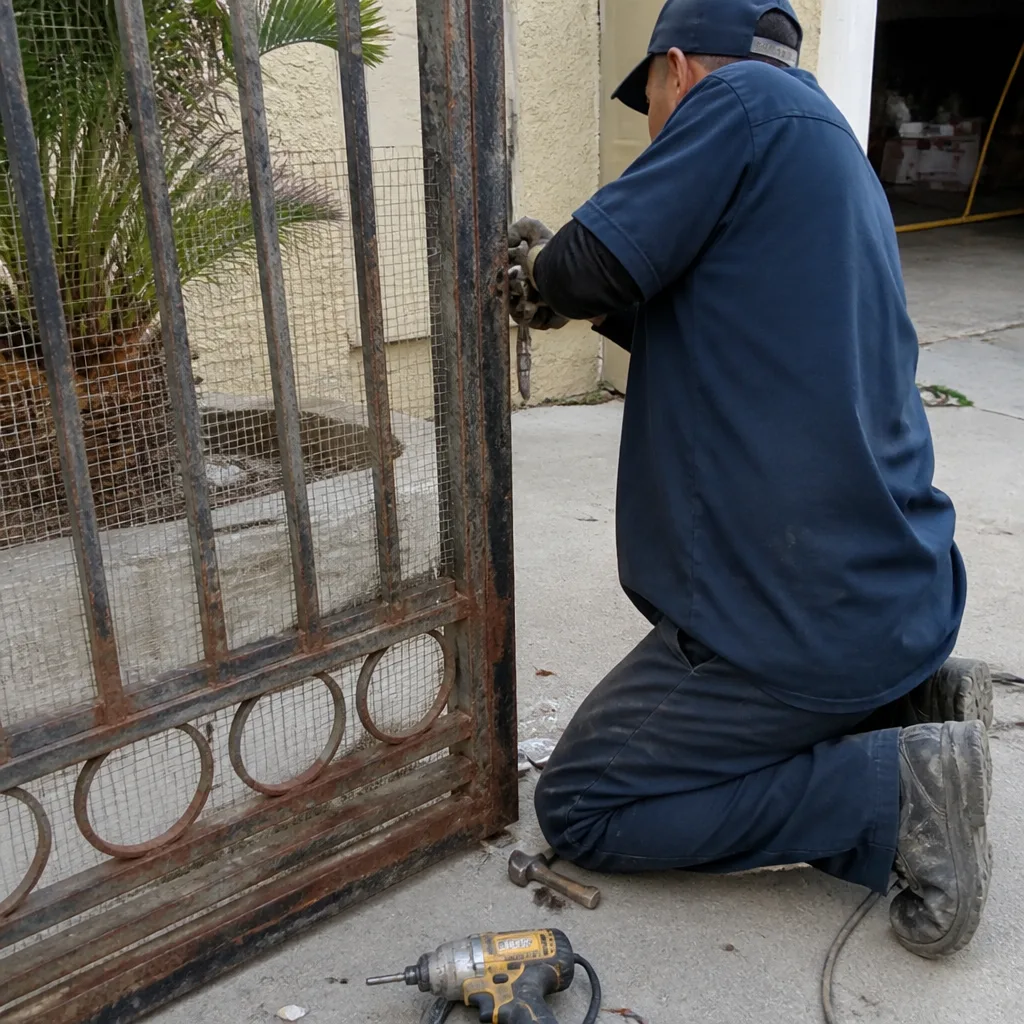 Before
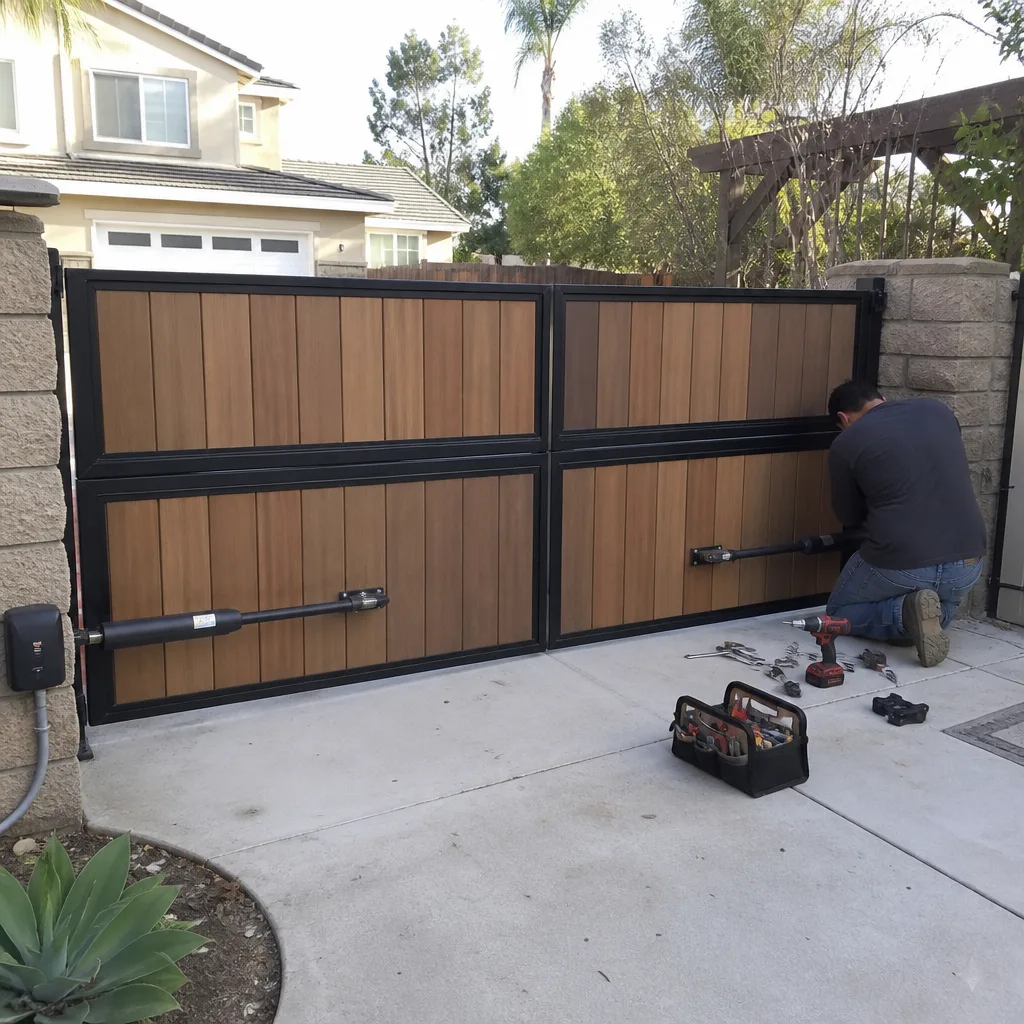 After
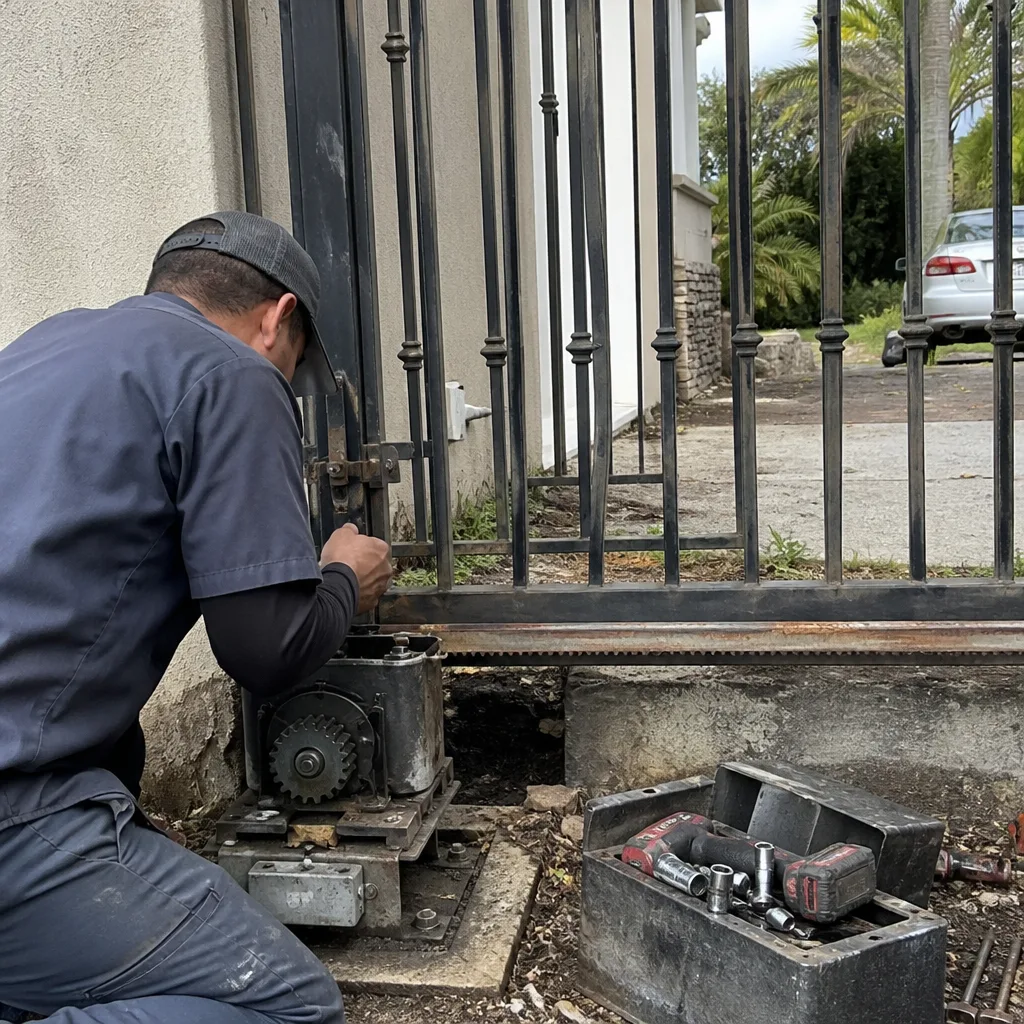 Before
 After
 Before
 After