
Last updated November 2, 2026
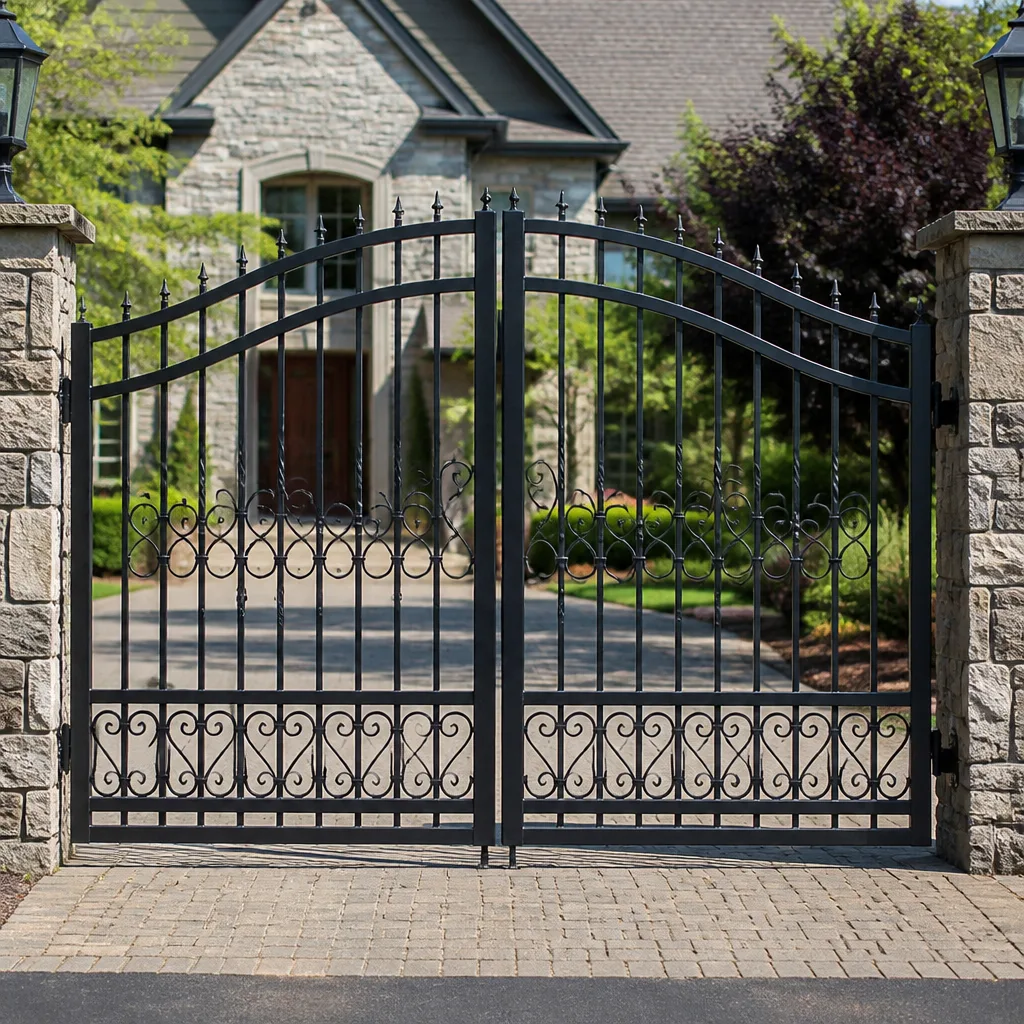 Wrought iron
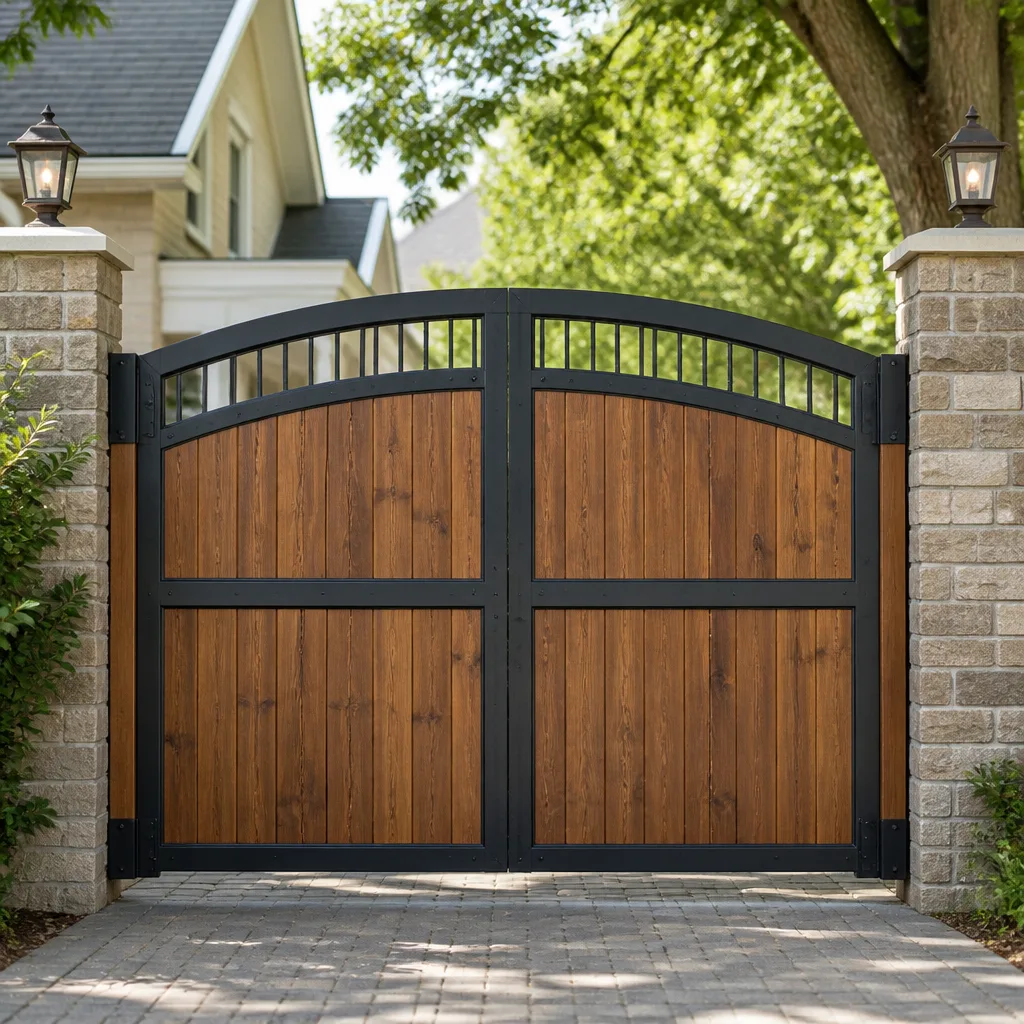 Wood & steel frame
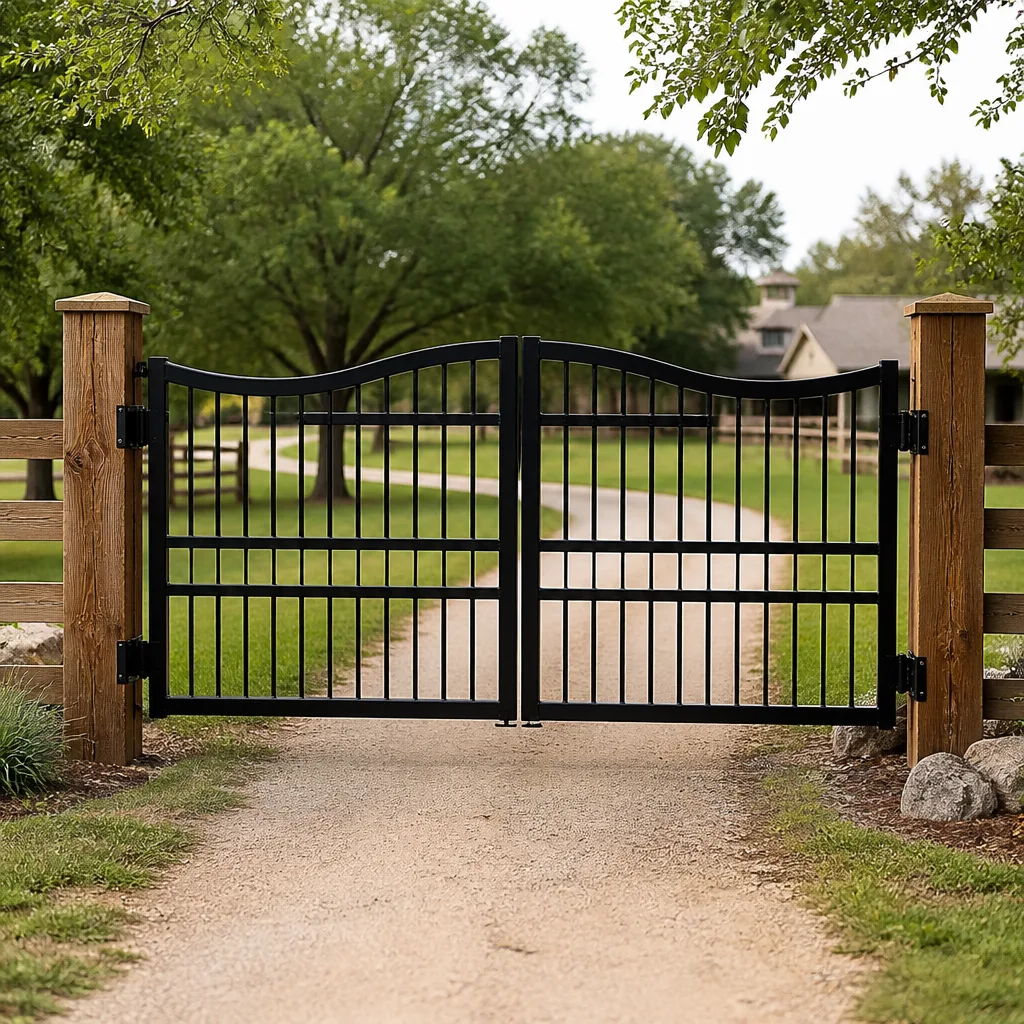 Farm & ranch
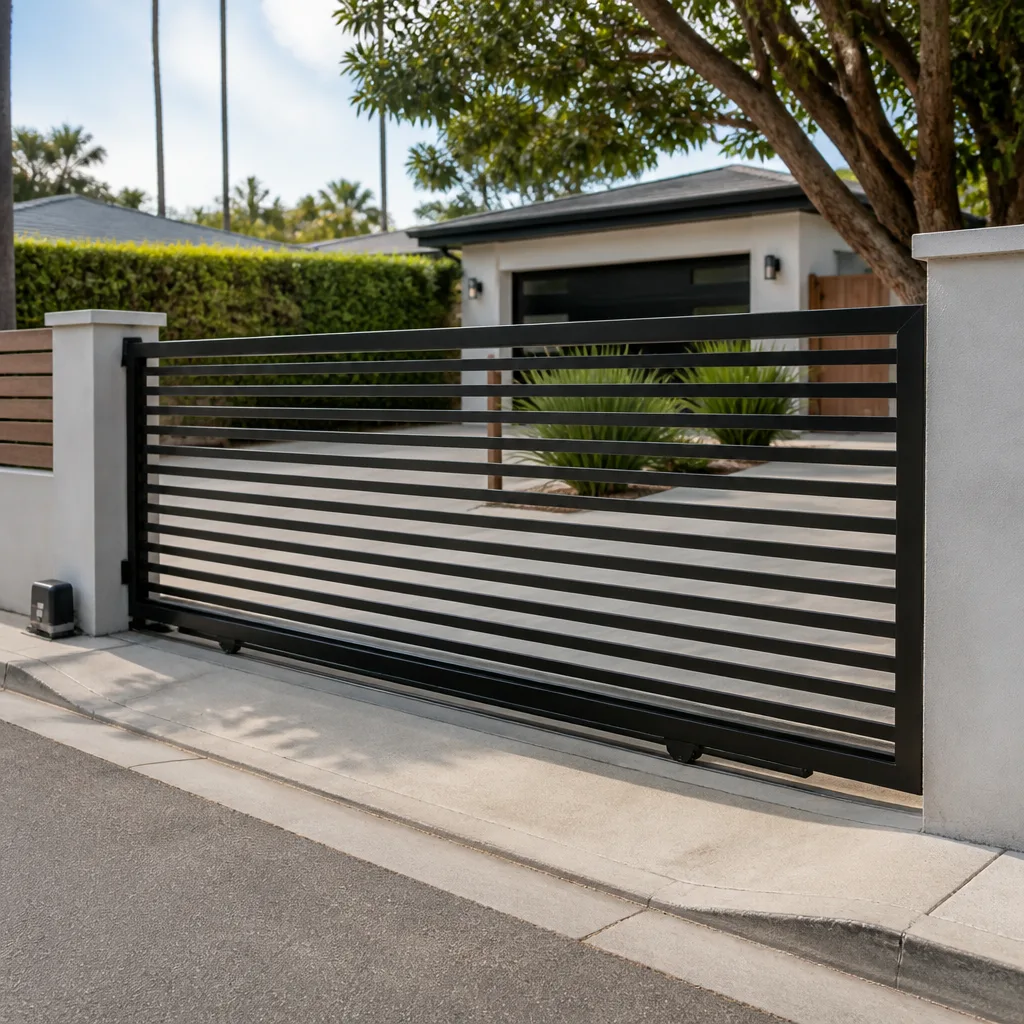 Sliding driveway gates
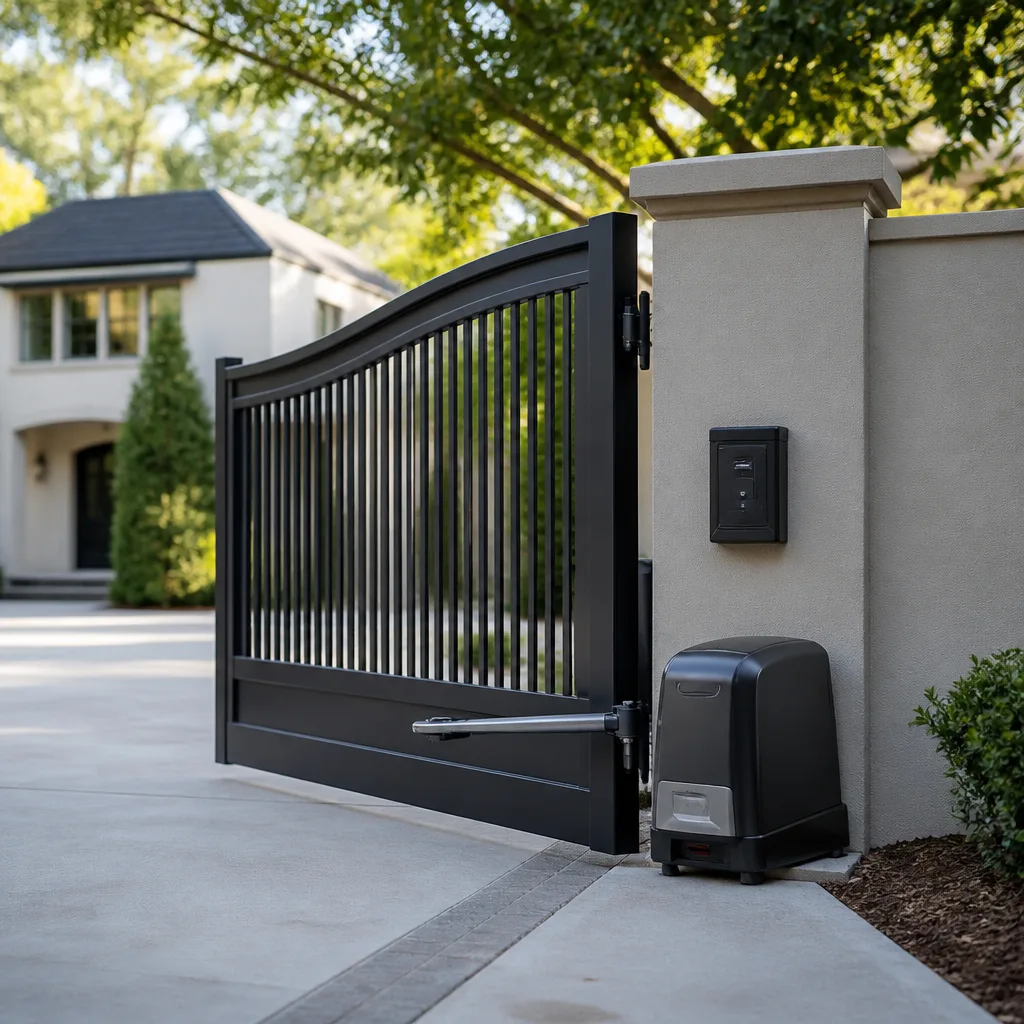 LiftMaster operators
Free on-site gate assessment - hinges, posts, and your LiftMaster or Nice gate operator checked before anything is quoted
The assessment is free and the quote is the invoice.
Get your free estimateHow to Hire a Gate Repair Contractor in Chula Vista: A Step-by-Step Guide
Ask any gate contractor in Chula Vista to name the torque rating of the operator they’re recommending. Most can’t answer. They’ll deflect to warranty terms, brand names, or “we’ve installed hundreds of these.” That’s because they’re reselling a single brand at markup, not matching a drive system to your gate’s actual leaf weight. This guide – along with our Choosing the Right Gate Repair Brand: A Buyer’s Guide for Chula Vista – gives you a gate-specific vetting framework that filters out generalists before they’re ever on your property. You’ll learn the five technical questions that separate a dedicated gate specialist from a fence company doing gates on the side, how California contractor licensing actually protects you, how to read a quote line by line, and which red flags are common in Chula Vista’s contractor market.
Styles & brands we work with
- Wrought iron
- Wood & steel frame
- Farm & ranch
- Sliding driveway gates
- LiftMaster operators
Quick Answer
To hire a gate repair contractor in Chula Vista, verify their California contractor license class (C-13 fencing or C-61/D-28 for gate operators), ask five technical questions about your specific operator brand and gate weight, get a written quote that separates parts from labor, and confirm the warranty covers parts, labor, and re-programming separately. A genuine gate specialist can name your operator’s torque requirements from memory.
Table of Contents
- The Five Technical Questions to Ask Before Scheduling a Quote
- Why California Contractor License Class Matters
- How to Read a Gate Repair Quote Line by Line
- Red Flags Specific to Chula Vista’s Contractor Market
- What a Written Warranty Should Actually Cover
- What Chula Vista’s Climate and Terrain Mean for Your Gate
- Common Mistakes to Avoid
- When to Call a Professional
- Frequently Asked Questions
- The Bottom Line
The Five Technical Questions to Ask Before Scheduling a Quote
Most Chula Vista homeowners evaluate gate contractors the same way they’d evaluate a fence company or a garage-door shop. That’s the mistake. Gate automation is a distinct trade with its own failure modes, and the questions that reveal competence are specific to drive systems, not general construction. Here are the five questions that separate a dedicated gate technician from a generalist.
Question 1: What’s the torque rating of the operator you’d recommend for this gate?
A confident specialist answers with a number, often without pausing. They’ll say something like, “Your leaf weighs roughly 400 pounds, so you need at least 400 Newton-meters of torque. I’d spec a swing operator rated for 600 to leave headroom for wind load.” A generalist deflects. They’ll talk about horsepower, or “this is the one we always install,” or they’ll promise to look it up. Torque rating is the fundamental spec for matching an operator to a gate’s leaf weight. If a contractor can’t discuss it, they’re not doing drive-system math. They’re guessing.
Question 2: What brand is my current operator, and what’s the most common failure you see on that specific model?
Gate operators fail in brand-specific ways. A LiftMaster swing arm wears out its limit switches differently than a DoorKing slide operator wears its drive chain. A Mighty Mule residential opener has a completely different control-board failure pattern than a commercial Elite system. When you ask this question, listen for specificity. A specialist says, “On DoorKing 9150s, the most common issue we see in Chula Vista is the limit switch drifting after a few years of coastal salt exposure.” A generalist says, “They all break the same way” or “It’s probably the motor.” That’s not diagnosis. That’s avoidance.
Question 3: Can you explain what a safety loop is and whether mine needs replacement?
Safety loops are coiled wire embedded in the driveway that detect a vehicle’s metal mass and signal the gate to stop or reverse. They’re invisible, they fail silently, and they’re one of the most misdiagnosed components in gate automation. A specialist explains that failing loops cause the gate to reverse mid-cycle, refuse to close, or stay open at random. A generalist blames the control board and quotes you $600 for a replacement that won’t fix the problem. If a contractor doesn’t mention loop detectors when describing their diagnostic process, that’s a flag.
Question 4: Will you match the duty cycle of the new operator to how my gate is actually used?
Duty cycle is how many open-close cycles per hour an operator is rated for. A residential swing gate that opens four times a day has different requirements than a commercial gate at an Eastlake apartment complex that cycles 150 times daily. A specialist asks about your usage patterns before recommending anything. A generalist installs the same operator on every gate they touch. This matters in Chula Vista specifically because many single-family homes in Otay Ranch and Eastlake have gates that cycle more frequently than average due to multiple drivers per household and frequent visitor traffic.
Question 5: What happens if my gate is heavy enough that the recommended operator is borderline?
This is the question that exposes guesswork fastest. A specialist explains that you size the operator for 1.5 to 2 times the gate’s actual leaf weight to account for wind, debris accumulation, and bearing wear over time. They’ll mention that Chula Vista’s seasonal Santa Ana winds add lateral load that a marginal operator can’t handle – something we cover in detail in our Seasonal Gate Repair Care for Chula Vista: Year-Round Homeowner’s Guide. A generalist says, “It’ll be fine.” Borderline sizing is how you get an operator that burns out its motor in eighteen months. Good contractors don’t gamble with your gate’s duty requirements.
If you’re in the early stages of researching repair options, our Gate Repair in Chula Vista page walks through the most common failure modes we see across San Diego County’s coastal climate.
Why California Contractor License Class Matters
California regulates contractor licensing through the Contractors State License Board, and gate work falls into specific classifications that determine whether the person working on your property is legally authorized to do the job. This isn’t paperwork theater. It affects liability, insurance coverage, and your ability to recover damages if something goes wrong.
C-13: The Fencing Contractor License
A C-13 license authorizes a contractor to install, repair, and modify fences and gates. This includes the physical structure: the posts, the hinges, the gate leaf itself, the track for slide gates, the brackets, the wheels. If your gate is sagging, if a weld is cracked, if the post is pulling out of the concrete, a C-13 contractor is legally qualified to handle that work. Most gate structural repair in Chula Vista should be performed by a C-13 holder.
C-61/D-28: The Gate Operator Installer License
Here’s where it gets specific. The D-28 sub-classification covers “gate operator installation and repair.” This is a distinct certification for the electrical and mechanical drive systems that move automated gates. It covers wiring, control boards, safety devices, loop detectors, and operator mounting. When a contractor installs or repairs the motor, the control board, the safety edges, or the remote receiver on your electric gate, the D-28 classification is the relevant credential.
Why the Distinction Matters for Liability
If an unlicensed or improperly licensed contractor installs a gate operator and that gate fails and damages a vehicle or injures someone, the property owner can face significant liability exposure. Your homeowner’s insurance may deny a claim if the work was performed by an unlicensed contractor. A proper license also means the contractor carries the workers’ compensation and general liability coverage that California requires. When you hire someone operating through Craigslist without a license, you’re accepting that risk personally.
For electric gate work specifically, the distinction between structural and automated systems is the whole ballgame. Our Electric Gate Repair in Chula Vista page explains how electrical diagnostics differ from mechanical repair on automated systems.
How to Read a Gate Repair Quote Line by Line
A repair quote is a diagnostic document disguised as a price list. If you know how to read it, you can spot padding, detect cheap parts being disguised as premium ones, and identify contractors who are charging you to learn on the job. Here’s what to look for.
Line 1: The Diagnostic Fee
Some contractors charge a service call fee just to show up, then credit it toward the repair if you approve the work. Others offer free estimates. Neither approach is inherently wrong, but the quote should state the policy explicitly. A $49 to $89 service call fee is common in Chula Vista’s market. If you see a diagnostic charge above $100 and no credit toward the repair, that’s a contractor who wants to profit from the visit whether or not they get the job.
Line 2: Parts: Brand Names vs. “Replacement Part”
This is the single biggest markup pattern in gate repair. A legitimate quote names specific parts: “DoorKing 8053-010 control board, $385” or “LiftMaster K94-37250 limit switch assembly, $72.” A padded quote says “control board, $600” with no brand or model number. Generic part descriptions allow a contractor to install the cheapest compatible component while charging you premium-brand pricing. Insist on specific part numbers for any repair over $200.
Line 3: Labor Hours and Rates
Labor rates for licensed gate technicians in Chula Vista typically run $85 to $150 per hour depending on whether you’re working with a residential specialist or a commercial contractor. A straightforward operator swap should quote 2 to 4 hours. A full gate installation might be a day or more. If you see 6 hours of labor for a control board replacement, that’s padding. A control board swap takes 1 to 2 hours for a technician who knows the system. Ask for the labor breakdown by task.
Line 4: The “Miscellaneous” Line
Every quote should be specific enough that there’s no miscellaneous. Wire, connectors, mounting hardware, and sealant should be itemized. If a quote says “miscellaneous materials, $150,” ask what that includes. The answer should be immediate and specific. If it’s vague, so is the rest of the quote.
Line 5: The Fine Print About Additional Work
Some quotes include language like “additional repairs discovered during service will be billed at standard rates.” That’s reasonable for a gate that’s been repeatedly jury-rigged. But the quote should also specify that you’ll be notified and asked for approval before any additional work begins. The phrase to look for is “all additional work requires customer approval.” If that’s absent, you’re signing a blank check.
What a Fair Quote Looks Like
A fair gate repair quote in Chula Vista states the diagnostic finding, names the specific parts with brand and model numbers, breaks out labor by task with hourly rates, itemizes materials, and includes a written warranty on both parts and labor. If a quote is one line that says “fix gate, $850,” that’s not a quote. That’s a guess wearing a quote’s clothes.
If you’re considering whether to repair or replace your gate entirely, our Gate Installation in Chula Vista page covers what a full replacement actually involves, including site prep and operator matching.
Red Flags Specific to Chula Vista’s Contractor Market
Chula Vista’s housing market has grown fast. Eastlake, Otay Ranch, Rancho del Rey, and the master-planned communities along the 125 corridor have created steady demand for gate repair. That demand attracts contractors, but it also attracts unlicensed operators who work through platforms that don’t verify credentials. Here’s what to watch for in this specific market.
Red Flag 1: The Nextdoor and Craigslist Operators
Unlicensed gate “technicians” consistently advertise on Craigslist and in Nextdoor community groups. They offer low prices and same-day service. They have no license number, no business address, and often no insurance. When the repair fails two months later, they’ve changed their phone number. In master-planned communities like Otay Ranch, these operators can be persistent because the demand is constant and the HOA restrictions often make homeowners feel pressure to fix gates quickly. A license check takes ninety seconds on the CSLB website. It’s worth ninety seconds.
Red Flag 2: The Franchise Gate Company With a Rotating Crew
Several national franchise brands operate in Chula Vista’s gate repair market. They’re licensed and insured, which is good. But the technician who shows up may have been repairing garage doors last week and gates this week. Franchise business models often cross-train technicians across multiple service lines to maximize dispatch efficiency. That’s fine for a garage door. It’s a liability for a Viking slide operator with a failing loop detector. Ask who specifically will be doing the work and what their gate-specific experience is.
Red Flag 3: The “Free Gate Inspection” That Becomes a $2,000 Quote
Some contractors in Chula Vista use a free inspection as a sales call. The technician shows up, looks at the gate for ten minutes, and then produces a quote for a full operator replacement when the actual issue is a $40 limit switch. They’re not diagnosing. They’re selling. A legitimate diagnostic tells you what’s broken, what caused it, and what your options are at different price points. If the quote doesn’t mention the root cause, you’re talking to a salesperson, not a technician.
Red Flag 4: No Familiarity With Coastal Salt Corrosion
Chula Vista sits close enough to San Diego Bay and the Pacific that salt air affects gate hardware differently than it does in El Cajon or La Mesa. Hinges corrode faster. Limit switches drift sooner. Control boards develop connection corrosion that mimics programming failures. A contractor who’s been working in Chula Vista for years knows this and checks for it. A contractor who isn’t familiar with coastal wear patterns will misdiagnose salt corrosion as a bad board and sell you the wrong repair. Ask specifically: “What do you typically see with salt corrosion on gates in this area?”
Red Flag 5: Cash-Only Pricing and No Written Contract
Any contractor who wants cash payment without a receipt or written contract is avoiding a paper trail. That’s a red flag in any trade, but it’s particularly common in gate repair because the work is sometimes small enough that homeowners don’t think to insist on documentation. Insist on documentation. A written quote, a written contract, and a written warranty are your protection if something fails after the repair.
What a Written Warranty Should Actually Cover
Satisfaction guaranteed is a marketing phrase. It has almost no legal meaning in California contractor law. What matters is the written warranty language that spells out exactly what’s covered, for how long, and under what conditions. Here’s what to ask for.
Parts Warranty
Operator manufacturers offer their own parts warranties. A DoorKing or Elite operator typically carries a 2-year manufacturer’s warranty on the motor and control board. A Mighty Mule residential opener usually carries 1 to 2 years depending on the model. Your contractor should state which manufacturer warranties apply and transfer them to you in writing. If the contractor offers no parts warranty beyond the standard “sorry, here’s the manufacturer’s number,” be cautious. A good contractor stands behind the parts they install.
Labor Warranty
Labor warranties are separate from parts warranties. A typical labor warranty on gate repair in Chula Vista runs 30 to 90 days. It should state that if the same component fails during the warranty period, the contractor will return and replace it at no charge for labor. Some contractors offer longer labor warranties on new installations, up to 1 to 2 years. Get the labor warranty term in writing before you approve the work.
Operator Re-Programming Warranty
This is the one most homeowners miss. When a control board is replaced, the new board must be programmed with your specific gate’s travel limits, force settings, and safety parameters. If the programming is wrong, the gate may slam, stop mid-travel, or fail to reverse on obstruction. A good warranty explicitly covers re-programming as part of the repair. It should say something like “installation includes full programming and configuration of operator settings.” If the warranty covers the part but not the programming, you’re paying twice if the initial setup is wrong.
What “Satisfaction Guaranteed” Actually Means
In California, “satisfaction guaranteed” is not a defined legal term. It imposes no specific obligation on the contractor. It may create an implied warranty under the Song-Beverly Consumer Warranty Act if the statement is considered an express warranty, but enforcing that requires litigation. Practically, it means nothing unless the contractor chooses to honor it. Written warranty language is the only thing that matters. If a contractor won’t put warranty terms in writing, that’s your answer about whether they’ll honor them.
What Chula Vista’s Climate and Terrain Mean for Your Gate
Chula Vista’s gate repair needs aren’t the same as inland San Diego County. The climate and geography create specific failure patterns that a local specialist recognizes immediately. Here’s what we see specifically in this market.
Coastal salt air accelerates corrosion on hinges, brackets, and exposed wiring terminals. Gates within a few miles of San Diego Bay show corrosion patterns that inland gates don’t. We regularly service gates in the communities along Telegraph Canyon Road and near the bay where hinge pins seize from salt buildup within three to five years of installation. The fix is usually a hinge replacement with marine-grade hardware, not a gate replacement. But only if the contractor recognizes the corrosion pattern.
Chula Vista’s newer developments, particularly in Otay Ranch and the eastern sections of Eastlake, sit on terrain with steeper slopes and more wind exposure than older neighborhoods near the 805. Gates on sloped driveways face different load dynamics than flat driveways. The operator has to work against gravity on every cycle when the gate closes uphill. That accelerates motor wear and demands a higher torque-rating buffer. A contractor who doesn’t account for slope is sizing operators to fail.
Chula Vista is also home to a significant number of gated communities and HOA-governed properties. When a common-area gate fails in a community like Rolling Hills Ranch or San Miguel Ranch, the repair often involves multiple stakeholders, access control integration, and specific HOA requirements. That work requires a contractor comfortable with commercial-grade systems, not just residential openers.
If you need a broader overview of what Gate Repair Chula Vista home services cover, including the full range of brands we work on, that page has the summary.
Common Mistakes to Avoid
- Hiring a garage-door company for a gate repair. Garage doors and gates share some concepts, but the operators, safety systems, and failure modes are different enough that a garage-door technician working on a swing gate is often learning on your dime. The control logic for a LiftMaster gate operator is not the same as a LiftMaster garage opener.
- Approving a quote without specific part numbers. Generic part descriptions are an invitation for markup. If the quote says “control board” without a brand and model, ask for the specific part number before you approve anything.
- Skipping the license check. The CSLB website lets you verify a contractor’s license in under two minutes. Every year we hear from Chula Vista homeowners who paid an unlicensed operator for a repair that failed and then found out they had no recourse.
- Choosing the cheapest quote without comparing scope. A $400 quote and a $900 quote for the same “gate repair” are rarely describing the same work. One replaces the failed part. The other replaces the failed part, the worn adjacent components, and includes programming and testing. Compare scope, not just price.
- Accepting “satisfaction guaranteed” as a warranty. That phrase carries no legal weight. Get the parts warranty, labor warranty, and re-programming warranty in writing with specific terms and durations.
- Ignoring salt corrosion as a factor. Chula Vista’s coastal climate accelerates hardware decay. If a contractor doesn’t mention it during their diagnostic, they may be treating the symptom and not the cause. Ask specifically about corrosion on the hinges, brackets, and wiring.
When to Call a Professional
Any gate that moves under electrical power involves components that can cause serious injury if mishandled. Operators under tension, heavy gate leaves, and control systems that engage unexpectedly all carry risk. You should call a professional when: your gate stops mid-cycle and won’t respond to the remote; you hear grinding or popping from the operator; the gate reverses before fully closing; the safety loops stop detecting vehicles; or the control board shows error codes. Attempting to repair a gate operator without training is genuinely dangerous. The tension in a swing arm or slide chain can release suddenly and cause serious harm. Chula Vista homeowners who value their gate as a security feature and not just a convenience should treat operator failure as a professional repair job, not a DIY project. Gate Repair Chula Vista offers free estimates in Chula Vista. Call (833) 593-7101 to schedule one.
Frequently Asked Questions
Gate repair in Chula Vista typically costs between $180 and $850 depending on the component that failed. A limit switch replacement might run $180 to $300 including labor. A control board replacement typically runs $450 to $800. A full operator replacement with installation typically starts around $1,200 for a residential swing gate and can exceed $3,000 for commercial slide systems. These are local market ranges based on licensed contractor pricing. Call (833) 593-7101 for a specific quote on your gate.
Visit the Contractors State License Board website at cslb.ca.gov and search by company name, owner name, or license number. Confirm the license is active and check the classification. For gate structural work, look for C-13. For automated gate operator work, look for C-61/D-28. If a contractor can’t produce a license number, don’t hire them.
A dedicated gate specialist should be able to repair DoorKing, Elite, Mighty Mule, LiftMaster, FAAC, BFT, Linear, Viking, and Ghost Controls operators. Brand familiarity matters because each manufacturer uses different control logic and failure patterns. A contractor who only works on one brand is a reseller, not a diagnostician.
Most licensed gate repair contractors in Chula Vista offer same-day or next-day service for emergency repairs, particularly for gates that won’t close or are stuck open. For more guides & resources on gate maintenance, explore our blog. Emergency calls for security-critical failures are typically prioritized. Non-emergency maintenance visits may schedule several days out. Call (833) 593-7101 to check current availability.
Gate repair addresses a specific failure on an existing gate: a component is worn, broken, or misconfigured. Gate installation means building or installing a new gate and operator from the ground up, including site prep, post setting, operator mounting, electrical work, and programming. Many Chula Vista homeowners repair a gate that’s structurally sound but has a failed operator, while replacing gates that are rusted, sagging, or too small for their current vehicles.
Repair when the gate structure is sound and the failure is a replaceable component: a limit switch, control board, loop detector, or remote receiver. Replace when the gate leaf itself is rusted, sagging, or cracked, when the hinges are seized, or when your usage patterns have outgrown the current operator’s duty cycle. A Chula Vista gate specialist can assess the structure and give you a repair-or-replace recommendation based on the gate’s actual condition, not a sales target.
The Bottom Line
Hiring a gate repair contractor in Chula Vista comes down to filtering for gate-specific expertise before a contractor ever sets foot on your property. Verify the license class, ask the five technical questions, read the quote line by line, and insist on a written warranty that covers parts, labor, and re-programming separately. The contractors who pass that vetting process are the ones worth hiring. The ones who deflect, generalize, or lean on vague promises are the ones who’ll be gone when the repair fails. Chula Vista deserves better than a fence company doing gates on the side. Your gate protects what’s behind it. Hire a specialist who treats it that way.
Written by the team at Gate Repair Chula Vista, serving Chula Vista since 2016.
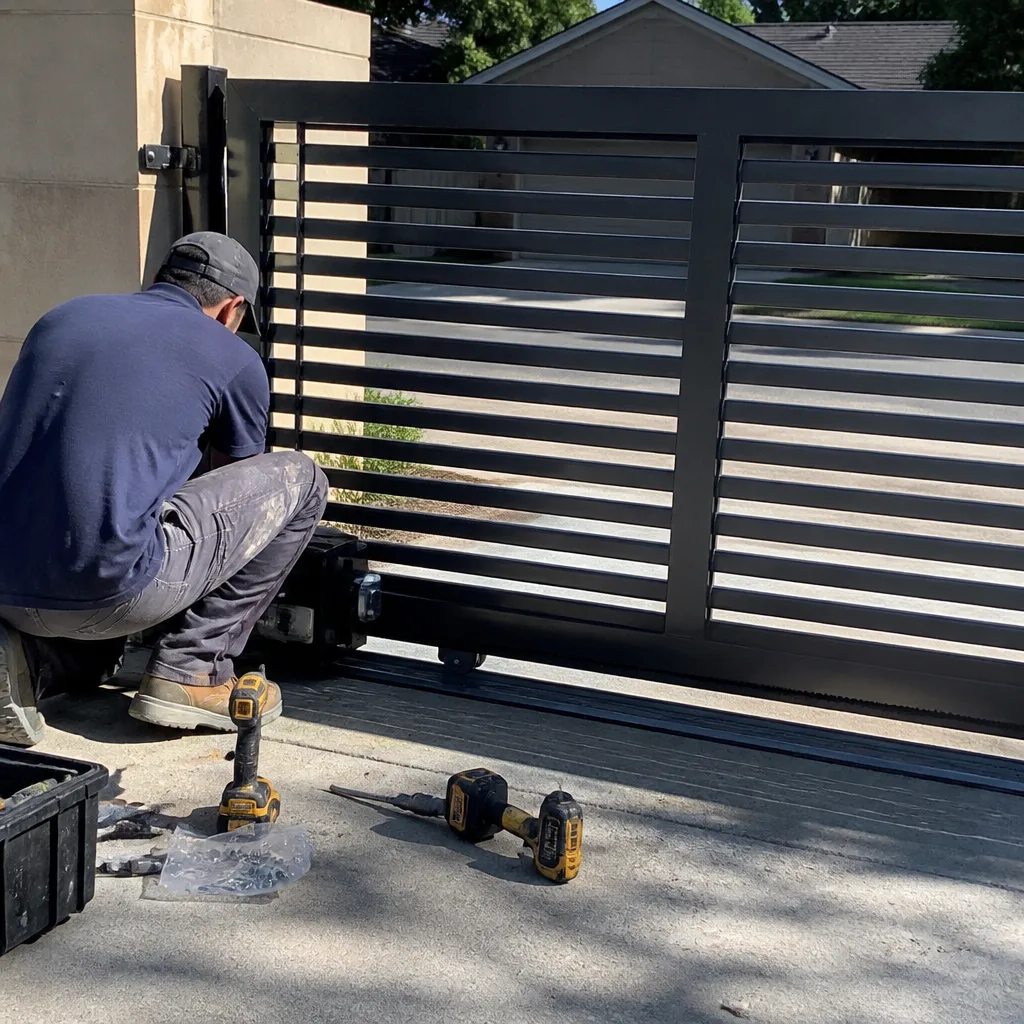
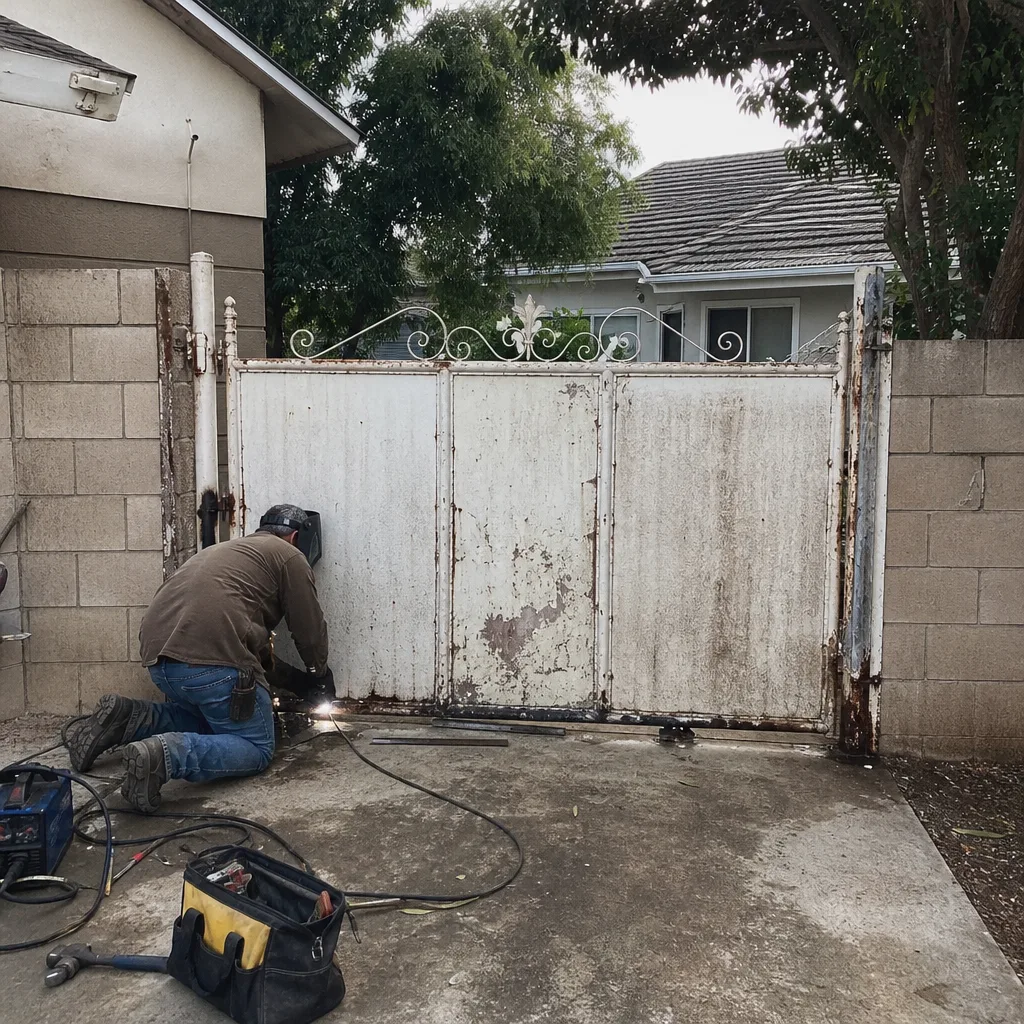
See the difference
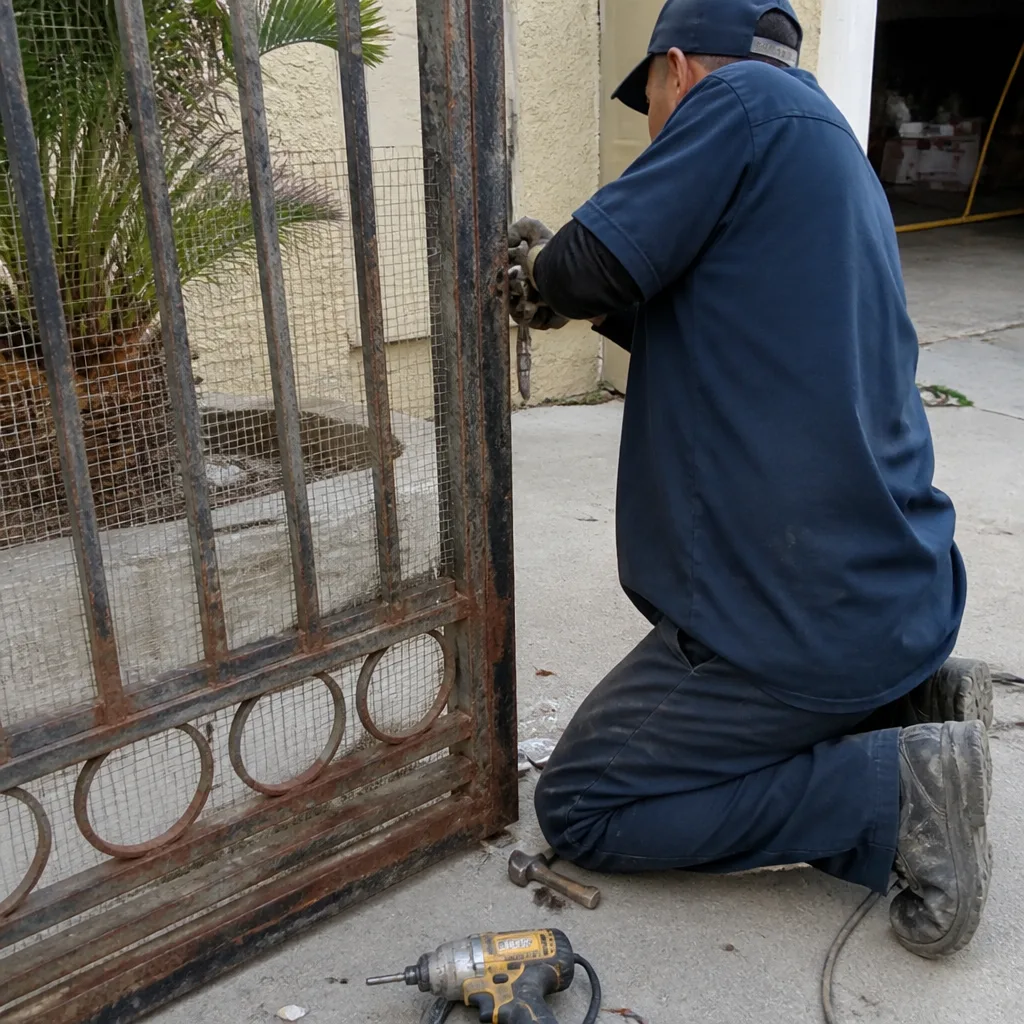 Before
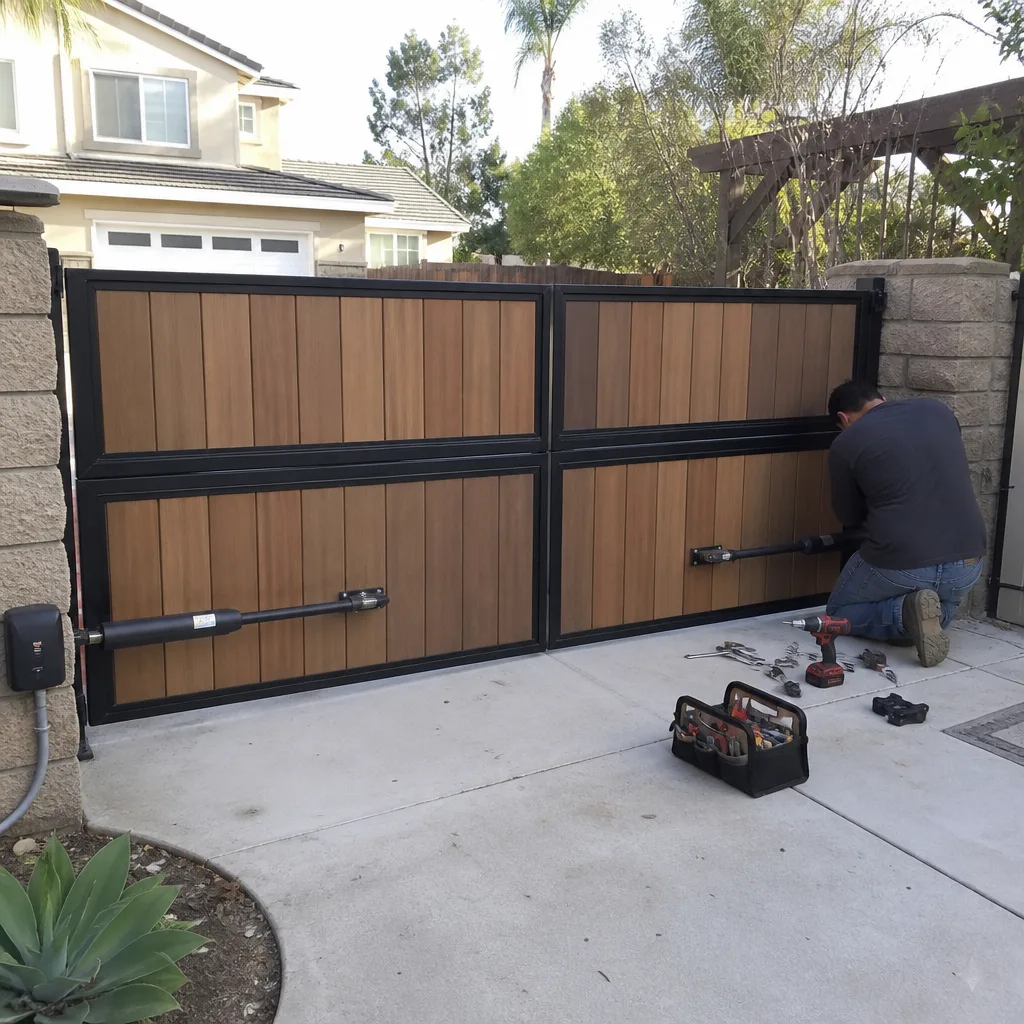 After
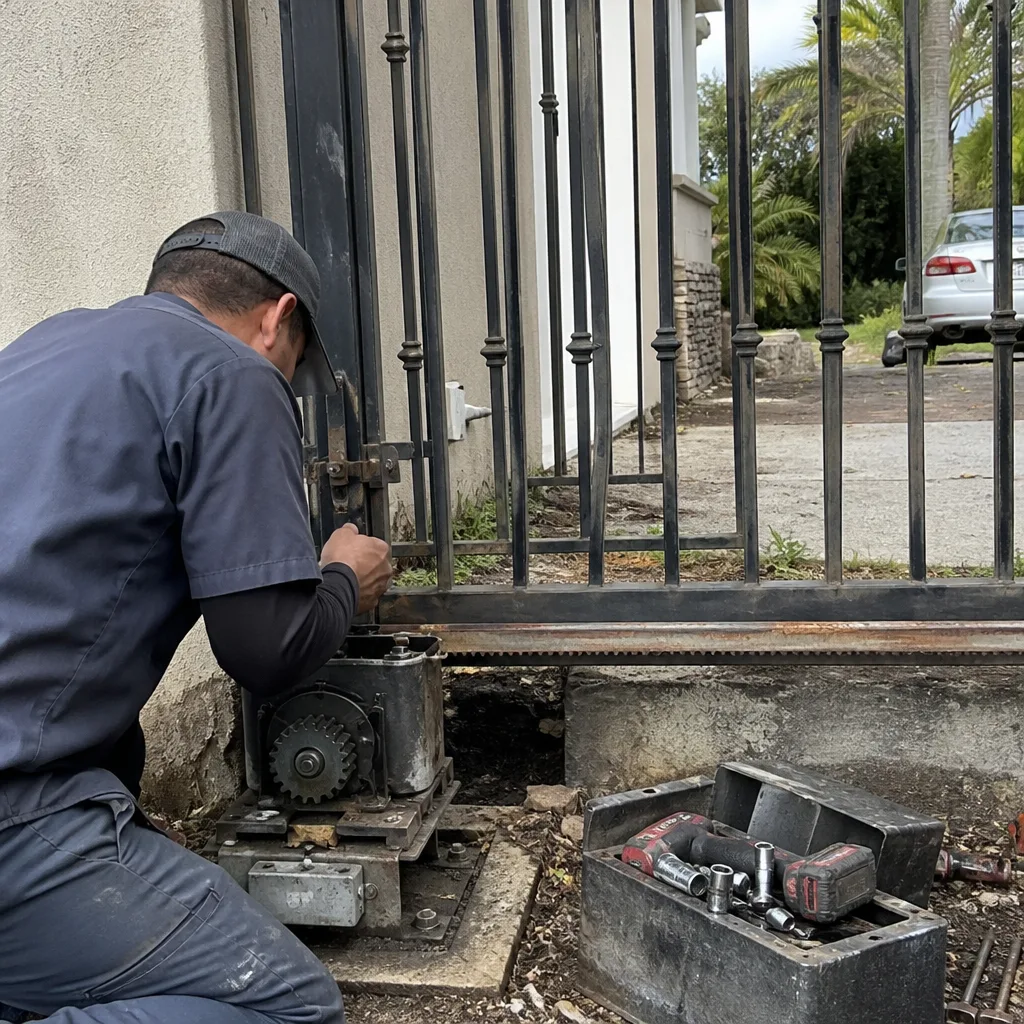 Before
 After
 Before
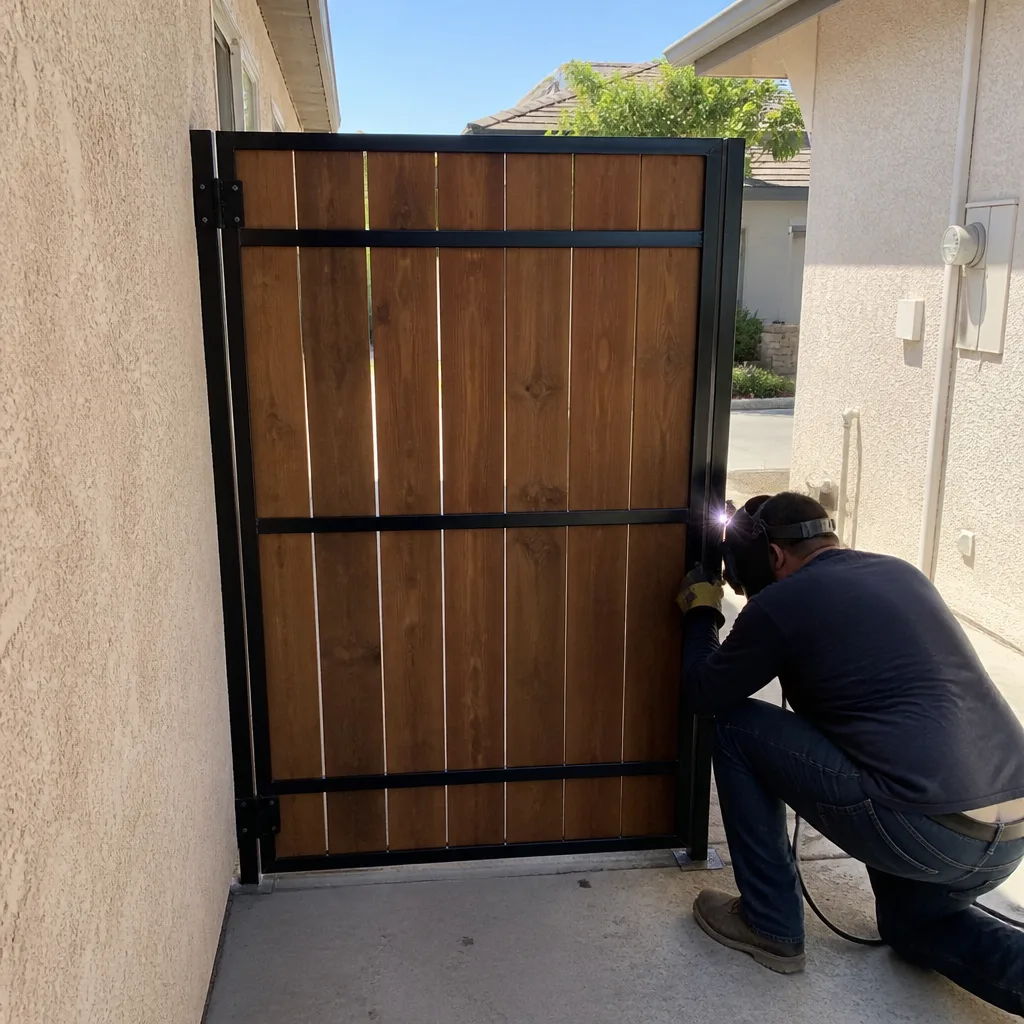 After