
Last updated November 2, 2026
 Wrought iron
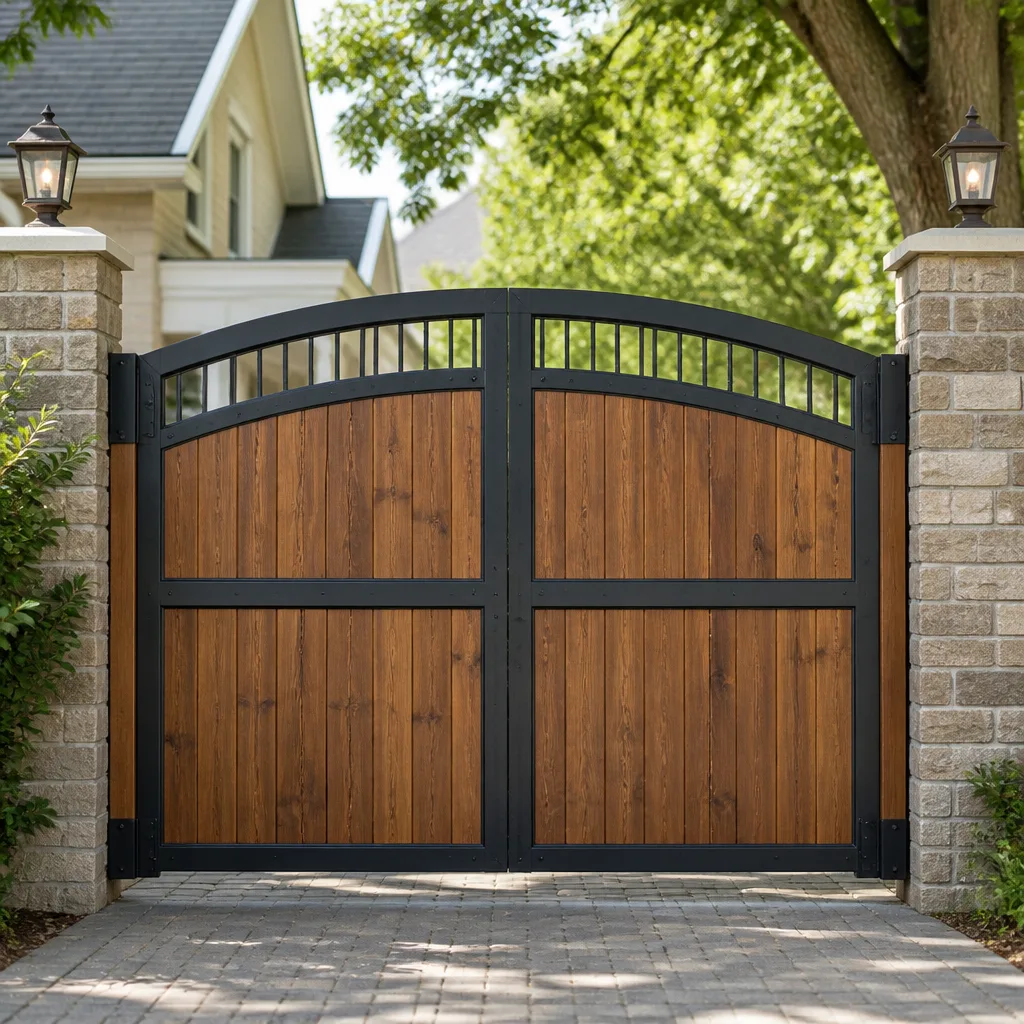 Wood & steel frame
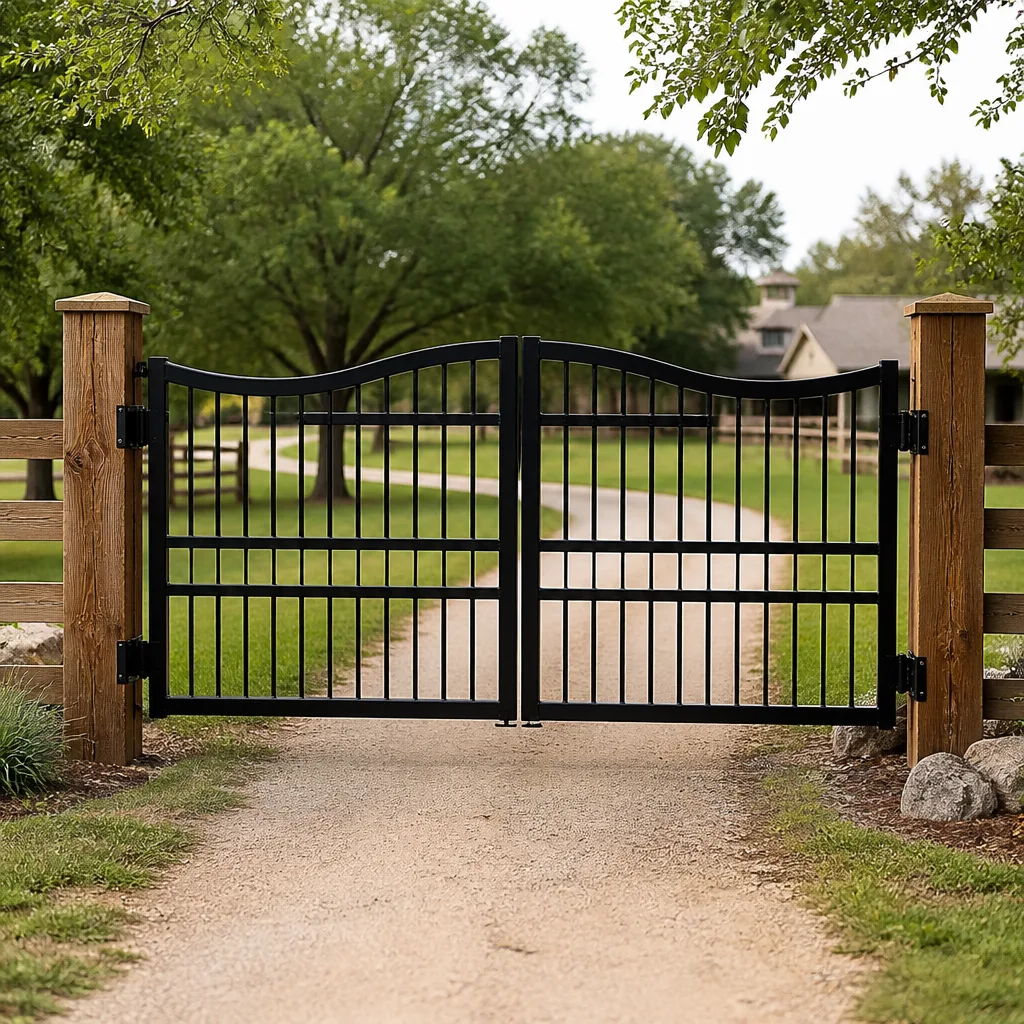 Farm & ranch
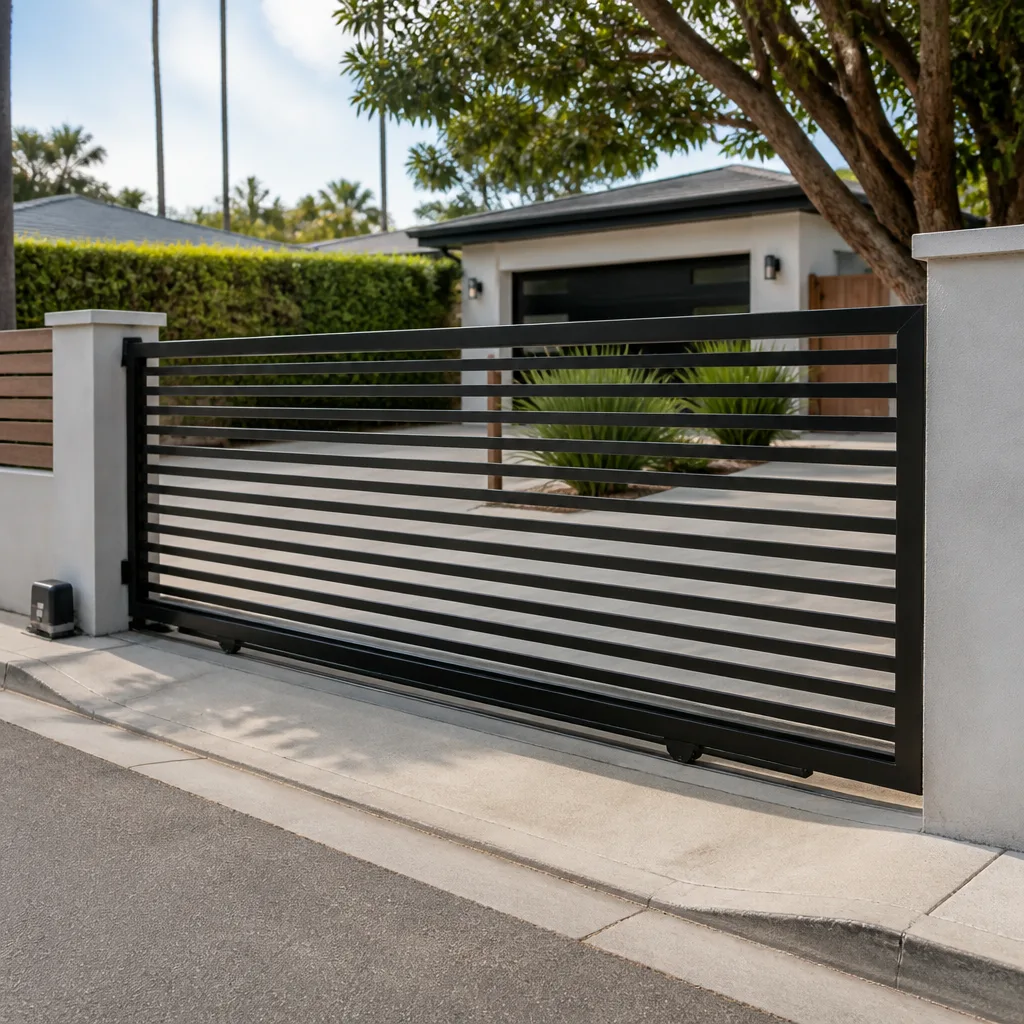 Sliding driveway gates
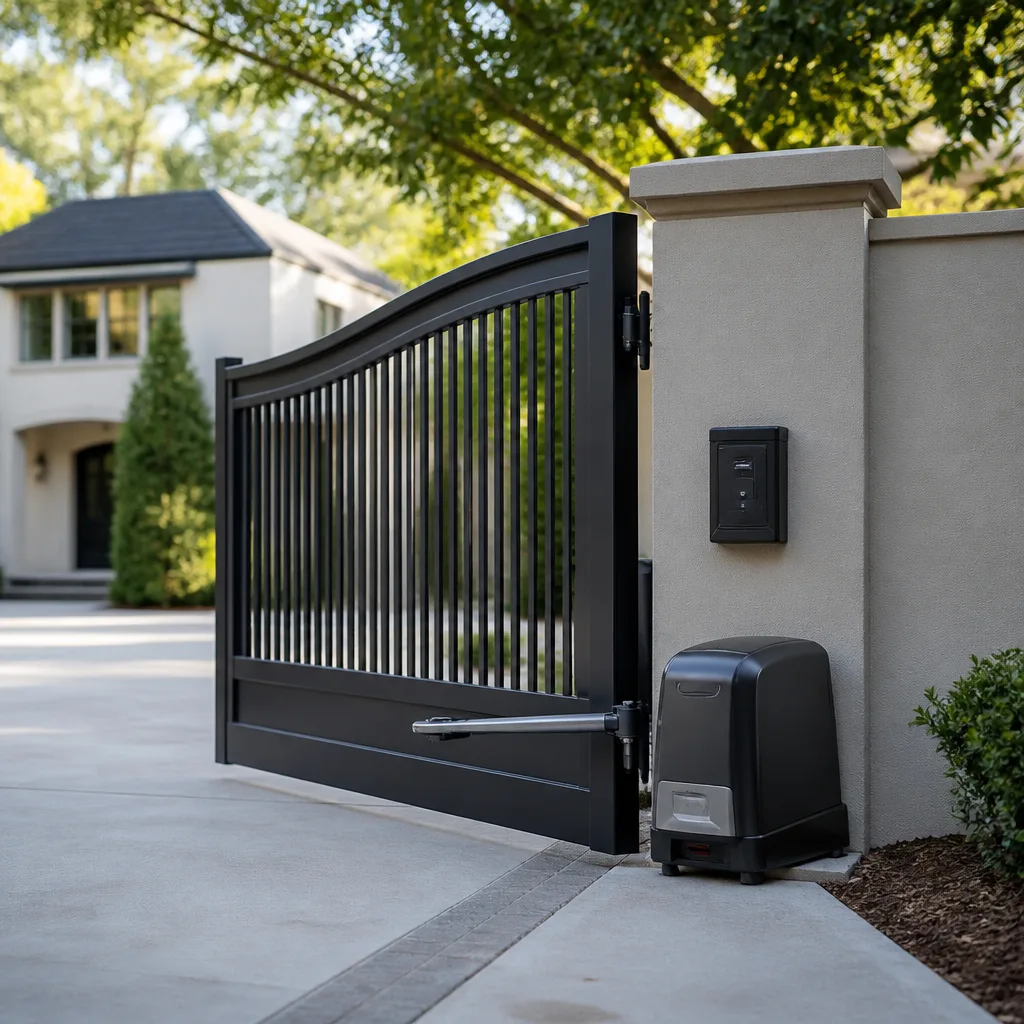 LiftMaster operators
Free on-site gate assessment - hinges, posts, and your LiftMaster or Nice gate operator checked before anything is quoted
The assessment is free and the quote is the invoice.
Get your free estimateGate Repair Warning Signs: A Chula Vista Homeowner’s Reference Guide
Here’s a statistic that surprises most Chula Vista homeowners: the majority of gate failures we respond to were already broadcasting warning signs for two to six weeks before the gate actually stopped working. Not subtle, impossible-to-detect signs, either. The gate hesitated. It made a soft chirp. The remote needed to be ten feet closer than it did last month. Each of these was dismissed as “just the gate being finicky,” and each time, the dismissed signal meant the final repair bill was three to five times higher than it would have been if caught early. This guide walks you through the early-stage indicators that most published lists miss entirely, so you can catch a developing gate problem in Chula Vista while it’s still a thirty-minute fix instead of a full operator replacement. For hands-on help, explore our Gate Repair services.
Styles & brands we work with
- Wrought iron
- Wood & steel frame
- Farm & ranch
- Sliding driveway gates
- LiftMaster operators
Quick Answer
The earliest gate repair warning signs in Chula Vista are a half-second hesitation before movement starts, a shrinking remote control range, a soft chirp or intermittent click from the operator box, and uneven gaps between the gate and its posts. None of these require immediate panic, but each one indicates that resistance, electrical load, or control board wear is already underway, and addressing the cause now typically costs under $200, while waiting until the gate stops moving typically costs $800 to $2,500.
Table of Contents
- The Half-Second Hesitation: Your Gate’s Earliest Distress Signal
- Reading Your Operator’s Error Code LED Patterns: A Plain-Language Decoder
- Ground Settling in Chula Vista: Reading Gate Gap Measurements Before Visible Lean
- Auditory Warning Signs Decoded: Chirp, Clunk, and Grind
- Remote Range Degradation: What a Shrinking Signal Radius Actually Tells You
- Brand-Specific Early Warnings: What We See on Viking, Ghost Controls, DoorKing, and Elite Systems in Chula Vista
- Common Mistakes to Avoid
- When to Call a Professional
- Frequently Asked Questions
- The Bottom Line
The Half-Second Hesitation: Your Gate’s Earliest Distress Signal
A gate that pauses for half a second before it begins to move is not “a little slow.” It is an operator drawing excess current to overcome mechanical resistance, and that resistance is eating your motor windings every single time the gate cycles. In Chula Vista, we see this pattern most often on older manual swing gates that have been retrofitted with electric operators, and on steel gates where salt air from the bay has begun to stiffen the hinge bearings.
Here is what that hesitation actually means in electrical terms. Your operator’s motor is designed to draw a specific amperage range when the gate moves freely. When a hinge binds, a wheel drags, or the gate’s weight shifts slightly off level, the motor must pull more current to break inertia and start the movement. That extra current is heat. Heat degrades the insulation on the motor windings. You will not see or smell anything during this phase, but the lifespan of the motor is being shortened with every cycle.
Mechanical Load vs. Electrical Fault: Two Very Different Repair Paths
This is where the distinction matters for your wallet. A hesitation caused by mechanical resistance, a stiff hinge, a dragging wheel, a slightly misaligned track, is usually a repair measured in the low hundreds. Often it’s a matter of lubricating and adjusting the affected component, or replacing a bearing or wheel that costs $40 to $120 in parts.
A hesitation caused by an electrical fault inside the operator is a different animal. When the motor itself is degrading, or the control board is delivering inconsistent voltage during startup, the repair path usually means replacing the operator or the board, which runs $600 to $2,000 depending on the brand. The frustrating part: both problems present with the same observable symptom.
- Watch the gate closely for ten full cycles. Does the hesitation happen every time, or only after the gate has sat unused for several hours? If it’s worse after sitting, mechanical resistance is the more likely culprit, because lubricant settles and corrosion bonds form.
- Listen during the hesitation. If you hear a low hum during that half-second pause, the motor is fighting to start. That points to mechanical load. If there is silence followed by an abrupt start, the operator’s start capacitor or control board is more likely the issue.
- Check the gate’s manual movement. With the operator disengaged (most operators have a manual release lever or key), push the gate by hand. A properly functioning gate should move smoothly with one hand. If you feel resistance, a drag point, or a spot where the gate wants to stick, you’ve found a mechanical culprit before the electrical system takes the blame.
This is exactly the kind of early-stage distinction that determines whether you spend $150 on a hinge adjustment or $1,500 on a new operator. In our experience as a gate repair company in Chula Vista, the homeowners who call at the hesitation stage are the ones we get to deliver good news to. The homeowners who wait until the gate stops are the ones we have to deliver a quote to.
Reading Your Operator’s Error Code LED Patterns: A Plain-Language Decoder
Every modern electric gate operator, from entry-level residential models to commercial-grade units from Viking, Ghost Controls, DoorKing, and Elite, has a diagnostic LED on the control board that flashes in specific patterns when something is wrong. Most Chula Vista homeowners never know this, because the installer never mentioned it, and the manual went into a drawer five years ago. But you do not need a technician on site to read the first layer of the code.
Here is a plain-language approach that works across most brands commonly installed in Chula Vista.
The Universal Sequence: How to Trigger and Read Diagnostic Codes
- Locate the operator box. For swing gates, it’s usually mounted on the gate post or a pedestal near the hinge. For slide gates, it’s often a rectangular metal box near the motor. Open the cover. There is typically a small clear or colored LED visible on the circuit board.
- Count the flashes. Trigger the gate once with the remote or pushbutton, and watch the LED. Count the number of rapid flashes before a pause. Most brands use flash-count patterns: two flashes, three flashes, five flashes, each corresponding to a different fault category.
- Match the pattern to common categories. While exact codes vary by manufacturer, the general pattern across LiftMaster, FAAC, BFT, DoorKing, and Elite systems is remarkably consistent: a repeating two-flash pattern typically indicates a safety device interruption, a photoelectric sensor blocked or misaligned, or a non-contact safety edge triggered. A three-flash pattern usually points to an obstruction detected during travel, meaning the gate met resistance it shouldn’t have. A five-flash pattern frequently means a motor or limit switch fault, the operator cannot confirm where the gate is in its travel arc.
This information is valuable because it tells you how urgent the problem is before you even pick up the phone. A two-flash safety interruption on a Viking operator in a Bonita Long Canyon home is often a sensor that got bumped by garden equipment or a leaf that’s been sitting in front of the photo eye for a week. That is a ten-minute fix. A five-flash motor fault on a DoorKing slide operator serving a multi-unit access point in eastern Chula Vista is a different situation entirely, and waiting on that one only makes the repair more expensive.
Brand Notes That Matter in Chula Vista
We service nine operator brands specifically because each one has its own diagnostic personality. Ghost Controls operators, for example, tend to flash a distinct “learn mode” sequence when the remote receiver loses its programming, and that pattern is frequently misread as a logic board failure. Elite operators, especially the commercial swing models, use a more sophisticated diagnostic bus where the LED sequence changes before and after the gate attempts a cycle, which is why we tell property managers to watch the LED during the entire attempted cycle, not just at startup. If your operator is a brand we did not name here, the same general flash-count logic still applies, but if it is one of the nine we service, the diagnosis is usually faster because our technicians know the expected patterns cold.
One more note specific to Chula Vista: coastal moisture accelerates corrosion on control board terminals, especially in homes west of Interstate 5. A board that flashes erratically, not in a consistent count but like a flicker, often has a corroded connection rather than a failed component. That distinction changes the repair from a board replacement to a terminal cleaning, a difference of several hundred dollars.
Ground Settling in Chula Vista: Reading Gate Gap Measurements Before Visible Lean
Chula Vista’s soil has a personality. The eastern parts of the city sit on expansive clay that swells with winter rain and contracts through the dry summer. The western neighborhoods, closer to the bay, deal with a different issue: decades of infill and older post footings that were never sized for a heavy steel gate in the first place. Both conditions create the same early warning sign: a gate gap that is no longer even.
Here is the measurement that costs nothing and tells you a lot. Stand at the latch side of your closed gate and look at the gap between the gate edge and the post. It should be consistent from top to bottom. Now measure it. A tape measure works, but your fingers work too. If the gap at the top is noticeably wider than the gap at the bottom, or vice versa, your post is moving. It may not look like it yet. The post may appear perfectly plumb to the eye. But gates do not change their shape, so a changing gap means the post footing is shifting in the soil.
In Chula Vista, we see this pattern most in three specific scenarios. The first is homes built before 2000 where gate posts were set in concrete footings that are now undersized for the gate weight they carry. The second is newer landscaping where irrigation lines run close to the gate post, creating a cycle of soil expansion and contraction that works the footing loose over two or three seasons. The third is east Chula Vista properties on the clay-heavy soils where summer drought shrinks the soil away from the footing walls, allowing micro-movement that accumulates over years.
What to Do Before the Post Leans
- Measure the gap monthly for two months. If the measurement is stable across both months, the misalignment likely pre-dates your ownership or settled long ago and is no longer moving. If the measurement changes even an eighth of an inch, the footing is active.
- Check the ground around the post base. After rain, does a gap appear between the soil and the concrete footing collar? After a dry spell, does the soil pull away in cracks radiating from the post? Both are the exact soil behavior that precedes visible post lean by one to three years in Chula Vista’s clay zones.
- Look for hairline cracks in any masonry column or wall connected to the gate post. A crack thinner than a credit card at the junction between the gate post and an adjacent block wall is often the first visible confirmation of post movement, and it shows up long before the post itself tilts.
Catching post movement at this stage is the difference between re-securing a footing and resetting an entire post. The former involves stabilizing the existing footing and is usually a half-day job. The latter means removing the gate, excavating the old footing, pouring a new one, and re-hanging the gate, which turns a $400 repair into a $2,500 structural project. If you’re in a Chula Vista neighborhood with known soil movement, and many of the neighborhoods east of the 805 certainly qualify, this monthly gap check is the single most valuable habit in this guide. For seasonal maintenance tips, see our Seasonal Gate Repair Care for Chula Vista: Year-Round Homeowner’s Guide.
Auditory Warning Signs Decoded: Chirp, Clunk, and Grind
Gates talk. Most Chula Vista homeowners just don’t have a translation. Here is the decoder, from least to most urgent.
The Chirp. A short, high-pitched chirp or beep when the gate starts or stops is, in most cases, a system feedback tone, not a fault. Many operators, especially residential models from Ghost Controls and Mighty Mule, chirp to confirm a cycle completion or a remote signal. However, if the chirp changes character, gets quieter, becomes intermittent, or happens when no one is operating the gate, that is the small piezo buzzer on the control board signaling that the board is receiving a signal it should not be receiving. On a Ghost Controls system, an uncommanded chirp often means a neighboring remote or a failing wall pushbutton is sending false triggers. On a Viking system, an irregular chirp sometimes indicates a voltage fluctuation on the low-voltage side. Neither is urgent by itself, but both are early-warning indicators that should not be ignored for months.
The Clunk. A single, solid, metallic clunk as the gate starts moving is very often a hinge or wheel moving under load for the first time in that cycle. It is most common on heavy steel gates, and in Chula Vista’s coastal air, it frequently traces to a hinge bearing that has developed slight surface rust overnight. A clunk that happens once per cycle and is not accompanied by visible gate shudder or jerking is usually a lubrication and adjustment issue. A clunk that happens repeatedly as the gate moves, especially on a slide gate, means a wheel or roller has developed a flat spot or a bearing is failing, and that demands same-week attention, because the flat spot is not going to round itself back out.
The Grind. A grinding noise is the one that demands same-day attention. A grind means metal is contacting metal where it should not be. On a swing gate, that is usually a hinge that has lost its bearing surface entirely or a post that has shifted enough to cause the gate leaf to drag on its latch post. On a slide gate, a grind means a wheel bearing has seized, a wheel has disintegrated, or the gate is dragging along the track because a support roller failed. Every cycle that continues under grinding conditions is actively machining away material from your gate or its hardware. In Chula Vista, where we see a lot of slide gates on properties with a little more land, the grinding wheel bearing is one of the most common avoidable repairs called in too late. By the time the homeowner calls, the gate has typically been grinding for a week or more, and the repair has expanded from a $40 wheel replacement to a full wheel assembly and possibly track section replacement.
The chirp, the clunk, and the grind are not interchangeable. They are three different systems talking to you at three different stages. Learn which one is which, and you’ll know when to ignore, when to schedule, and when to call immediately.
Remote Range Degradation: What a Shrinking Signal Radius Actually Tells You
When a gate remote stops working from the same distance it worked from last month, the default assumption is a dying battery. Often, that is correct. Batteries in gate remotes last one to three years depending on use, and a weak battery produces exactly this symptom: reduced range, then intermittent operation, then failure. But if you replace the battery and the range is still degraded compared to what it used to be, you have just gathered a valuable diagnostic signal, and ignoring it is how small problems become board replacements.
A shrinking remote range that persists after a fresh battery points to one of three things. The first is a failing receiver module in the operator itself. The receiver is the component that listens for your remote’s signal, and as its internal components degrade, especially in Chula Vista’s salt-adjacent air where subtle corrosion is ongoing, its effective listening range shrinks. The second is a control board that is no longer supplying stable voltage to the receiver. The board can degrade gradually, and one of its earliest symptoms is a receiver that becomes progressively less sensitive. The third, less common but still seen, is radio frequency interference from something new in the environment, a newly installed LED floodlight on a timer, a new wireless security camera, or a neighbor’s new gate operator on a close frequency.
Here is the practical sequence we recommend to Chula Vista homeowners:
- Replace the remote battery first. It is the cheapest variable and the most common cause. Use a name-brand battery, and if the remote has been sitting in a hot car or direct sun, understand that Chula Vista summer heat shortens remote battery life noticeably.
- Test range systematically. Stand at a fixed point where the remote reliably worked before, and note whether the gate responds consistently. If range is still reduced, move on to the next step.
- Test a second remote if you have one. If both remotes show the same reduced range, the problem is in the operator’s receiver or board, not the remotes. If one remote is weak and the other is fine, the weak remote itself is the problem.
- Have the receiver sensitivity checked. On many operators, especially DoorKing and Elite commercial models, receiver sensitivity is adjustable at the board. A technician can also test the receiver’s actual performance with a meter, which is faster and more conclusive than trial and error.
The reason this matters early is economic. A receiver module replacement on most residential operators is a $100 to $300 repair. A control board replacement is $300 to $900. But a degraded receiver, left unchecked for months, can stress the board’s voltage regulation circuit and turn a receiver-only repair into a receiver-plus-board replacement. The remote that “doesn’t work quite as far as it used to” is a diagnostic message, and it’s one of the cheapest to act on early. For homeowners in Chula Vista who want a more complete picture of how their entire automated system works together, our electric gate repair service covers this full diagnostic sequence from remote to receiver to board.
Brand-Specific Early Warnings: What We See on Viking, Ghost Controls, DoorKing, and Elite Systems in Chula Vista
Different brands fail in different ways, and knowing what your specific operator is prone to is half the battle. Here is what we see in Chula Vista, brand by brand.
Ghost Controls
Ghost Controls builds operators that are popular on residential swing gates throughout Chula Vista, particularly in the single-family neighborhoods east of the 805 and on properties with medium-weight steel gates. The early warning sign we see most often on Ghost Controls systems is a slow, progressive drift in the gate’s fully open and fully closed positions. The gate stops a few degrees short of where it used to, or it slightly overshoots and then corrects. This points to limit switch wear or programming drift, and it is repairable with a limit adjustment or a limit switch replacement, both modest jobs. If ignored, the drift worsens until the gate no longer closes fully, which becomes a security issue and eventually a stripped gear or burnt motor.
Viking
Viking operators are common on commercial and multi-unit sites in Chula Vista, including several gated communities and business properties. The early sign on a Viking system is often a change in the soft-start behavior. Viking operators are designed to ramp up motor speed gradually, and when either the motor capacitor or the soft-start circuit is beginning to fail, that ramp gets abrupt or the gate jerks at the moment of initial acceleration. We also see Viking gates that begin to pause mid-cycle for no apparent reason, which frequently traces to a loop detector issue or a failing safety edge. In a commercial context, a Viking gate that pauses mid-cycle is not something to live with for a week, because the longer it runs misbehaving, the higher the chance of a vehicle-gate contact incident.
DoorKing
DoorKing is the most common slide-gate operator brand we see in eastern Chula Vista and on larger residential properties. DoorKing operators are extremely durable, but they communicate early trouble through the gate’s chain or belt tension. A DoorKing slide gate that has begun to chatter, where the gate moves in perceptible micro-jerks rather than one smooth continuous motion, is telling you that the chain has stretched or the drive sprocket is wearing. Both are normal wear items, and both are cheap to address when caught early. Left unaddressed, a loose chain on a DoorKing slide gate eventually jumps the sprocket, and at that point the gate is not going anywhere until someone disassembles the drive train.
Elite
Elite builds both residential swing operators and commercial slide operators, and in Chula Vista we see them most on custom gates and on properties where the gate is a significant architectural element. Elite’s early warning signature is often electrical rather than mechanical. We see intermittent failure to respond to the remote, not a weak range but a total non-response that resolves on the second or third press. That intermittent non-response is frequently a failing relay on the receiver circuit or a solder joint degrading on the board, and it tends to worsen over months until the remote stops working entirely. Because Elite control boards are more expensive to replace than the entry-level boards on other brands, catching the relay issue early, before it takes the board with it, is especially valuable.
None of this is meant to suggest these brands are unreliable. They are not. The point is that each brand has a specific vocabulary of early failure, and a gate specialist who works on all of them learns that vocabulary. That is why we service all nine major operator brands rather than pushing one. If you’re in Chula Vista and your gate is misbehaving in any of these patterns, the brand-specific knowledge is already in the truck when the technician arrives. For homeowners considering a new system rather than repairing an existing one, our gate installation service in Chula Vista covers everything from operator selection to full gate fabrication, and brand choice is driven by the gate’s actual mechanical needs, not by what we have in stock.
Common Mistakes to Avoid
- Lubricating a grinding hinge and calling it fixed. Lubricant makes the noise stop temporarily, which creates the impression that the problem is solved. But by the time a hinge grinds, the bearing surface is already damaged, and the lubrication is masking, not repairing. In Chula Vista’s coastal environment, that temporary relief often means the bearing now grinds quietly while it finishes destroying itself.
- Ignoring a gate that only misbehaves after rain. A gate that is slow or hesitant after a rainstorm in Chula Vista is telling you that moisture is getting into a connection, a motor housing, or a bearing. It will dry out and temporarily behave, but each moisture cycle corrodes a little more. The next stage is usually the one where it stops working entirely and stays that way.
- Replacing the operator when the post is moving. A shifted post causes the gate to bind, which overworks the operator, which eventually burns out the motor. Replacing the operator without addressing the post fixates the same problem onto a brand-new motor. This sequence is how we meet homeowners who are on their third operator on the same gate.
- Assuming a tripped breaker is a one-time fluke. An operator that trips its breaker once may be a fluke. Twice in a month is a pattern, and it usually means the motor is drawing more current than it was designed to, or there is a short developing somewhere in the low-voltage system. Resetting the breaker repeatedly is not a repair strategy; it is how motor failures are incubated.
- Waiting until the gate stops moving to look up a repair service. The gate’s final silence is the end of a process, not the beginning of one. By the time it stops, the damage has already been done, and the repair is at its most expensive. Calling at the hesitation stage, the chirping stage, or the shrinking-remote stage gives a technician the opportunity to fix the problem before it becomes an emergency.
- Using a general handyman for an electric gate diagnosis. Electric gate systems include control boards, safety loops, and receiver logic that require brand-specific training to diagnose correctly. We have replaced boards that were replaced unnecessarily, and rewired systems that were rewired incorrectly, because a well-meaning generalist guessed instead of diagnosed.
When to Call a Professional
Some gate issues are safely within a homeowner’s wheelhouse: checking a remote battery, clearing leaves from a photo eye, observing and measuring the gate gap. Others are not. If your gate is grinding, if the operator is tripping its breaker repeatedly, if the post is measurably moving, or if the system is showing an electrical fault you cannot confidently identify, call before the problem compounds. Electric gate systems combine high voltage, heavy moving steel, and control logic that is easy to misdiagnose, and a wrong guess on any of these can be dangerous. Gate Repair Chula Vista offers free estimates in Chula Vista, and our technicians are trained on nine major operator brands, so the diagnostic starts from brand knowledge rather than trial and error. Call (833) 593-7101 and we will tell you what the gate is saying before we ever touch it.
Frequently Asked Questions
Gate repair in Chula Vista typically costs $150 to $400 for common mechanical fixes like hinge adjustment, wheel replacement, and photo eye realignment, while operator board replacements and motor repairs run $500 to $2,500 depending on the brand and system. Not sure how to choose a pro? Read our How to Hire a Gate Repair Contractor in Chula Vista: A Step-by-Step Guide. The wide range reflects the difference between catching a problem at the warning-sign stage and addressing it after a full component failure. The price is always quoted and agreed before any work begins. Call (833) 593-7101 for an exact quote on your specific gate.
Yes, we provide same-day service for most emergency gate repairs in Chula Vista, with technicians dispatched throughout the city. Mechanical issues like a broken hinge, a seized wheel, or a gate that has come off its track are usually repairable on the first visit. Call early in the day for the best chance of same-day scheduling at (833) 593-7101.
Intermittent operation usually points to one of three things: a failing receiver relay or solder joint on the control board, a safety device like a photo eye or loop detector that is intermittently triggering, or a power supply that is no longer delivering stable voltage. Intermittent problems are progressive, which means the gaps between failures will get shorter until the failure becomes permanent. Call (833) 593-7101 and describe the pattern; the specific timing of the failures tells a technician a lot before anyone even arrives.
A well-maintained gate operator in Chula Vista typically lasts 10 to 15 years, but coastal exposure west of the I-5 can shorten that toward 8 to 12 years unless the board connections are periodically cleaned and protected. The operators we service that reach the upper end of that range are almost always ones that received annual maintenance, including hinge lubrication, chain tension checks, and board inspection. An operator that never receives maintenance usually starts showing early warning signs around year 5 or 6.
We service nine major gate operator brands in Chula Vista, including LiftMaster, FAAC, BFT, Linear, Viking, Ghost Controls, DoorKing, Elite, and Mighty Mule, covering both residential and commercial systems. If your operator is from a brand we have not named, we can still often diagnose and repair it, especially if the issue is mechanical rather than brand-specific control logic. The brand-agnostic approach means we recommend the repair based on what your gate needs, not what we are trying to sell.
A full gate installation in Chula Vista includes site evaluation, gate fabrication or assembly, post setting with properly sized footings, operator installation with brand-specific programming, safety sensor and loop detector installation, and final adjustment and testing. We also handle the electrical run from your panel to the operator, and in many cases this involves pulling permits and coordinating with an electrician when the work falls outside low-voltage scope. Every installation is quoted as a written estimate before any work begins, so call (833) 593-7101 to schedule a free measure.
The Bottom Line
Gates fail slowly before they fail completely. The hesitation, the changing gap, the shrinking remote range, the intermittent chirp, all of these are the gate talking to you in a language that is learnable. The Chula Vista homeowners who get the cheapest gate repairs are not the ones who know the most about gate mechanics; they are the ones who pay attention early and act on small signals. You do not need to become a gate technician to catch a developing problem. You need to notice when something changes, and you need to call someone who speaks the language. When you are ready, our Chula Vista gate repair team is one call away at (833) 593-7101.
Written by the team at Gate Repair Chula Vista, serving Chula Vista since 2016. Explore more guides & resources on our blog.
See the difference
 Before
 After
 Before
 After
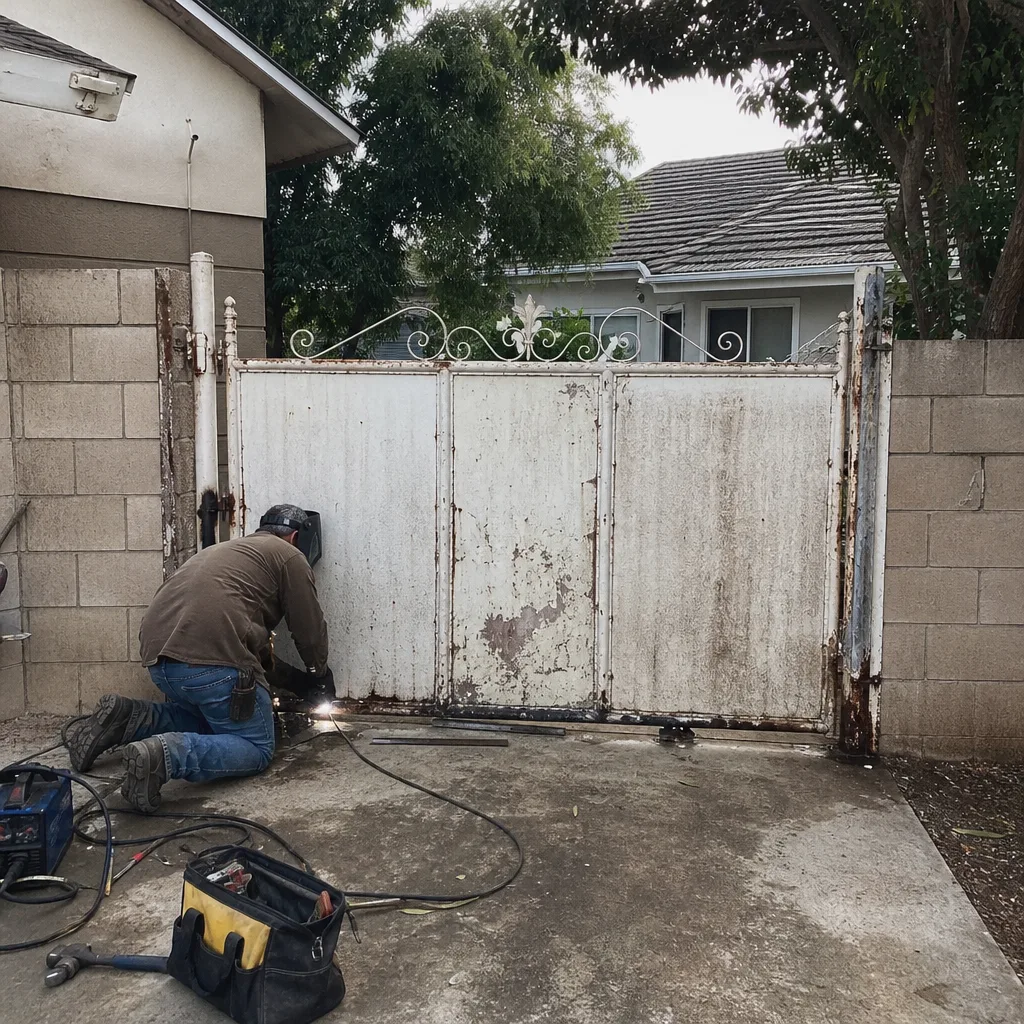 Before
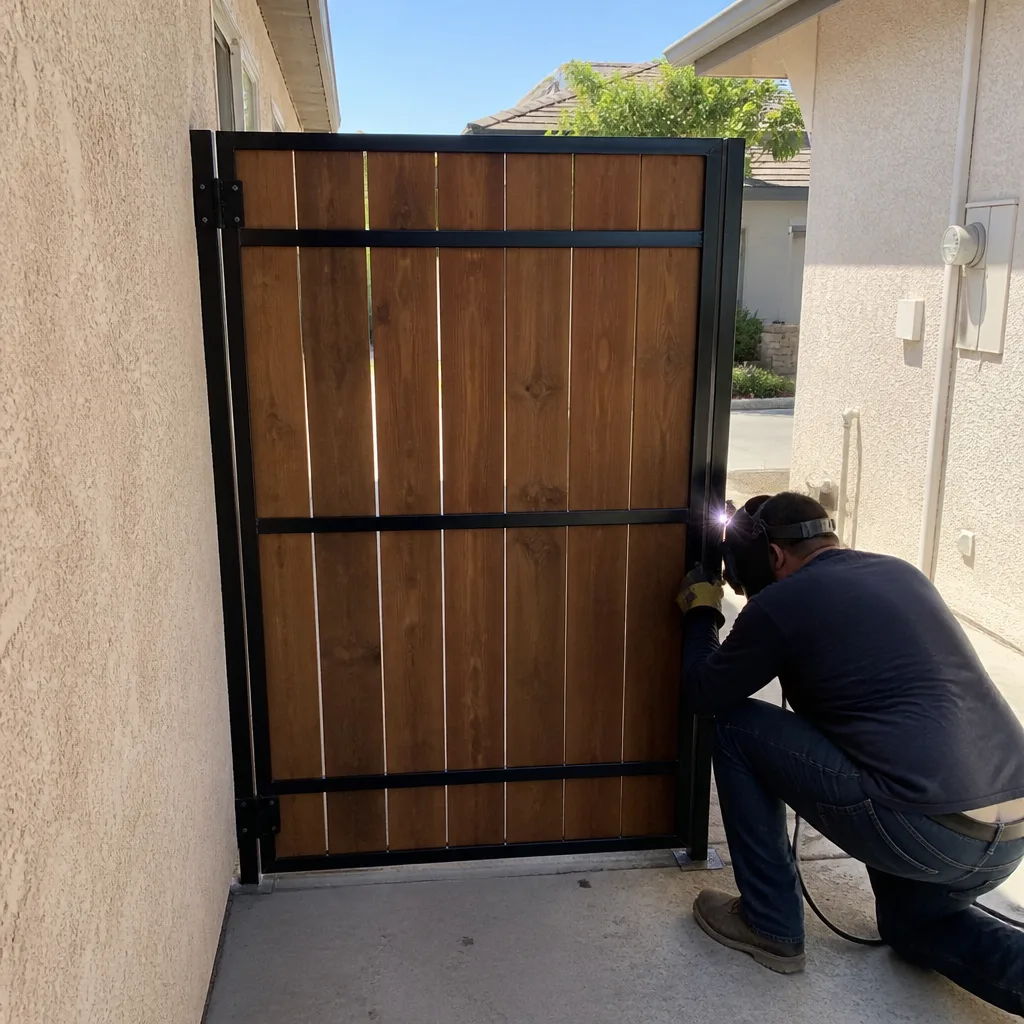 After